



Is the universe's expansion slowing? New data raises questions
For decades, the prevailing view has been that dark energy causes the universe’s expansion to accelerate indefinitely, potentially ending in a scenario known as the “Big Rip,” in which galaxies, stars and eventually atoms are torn apart
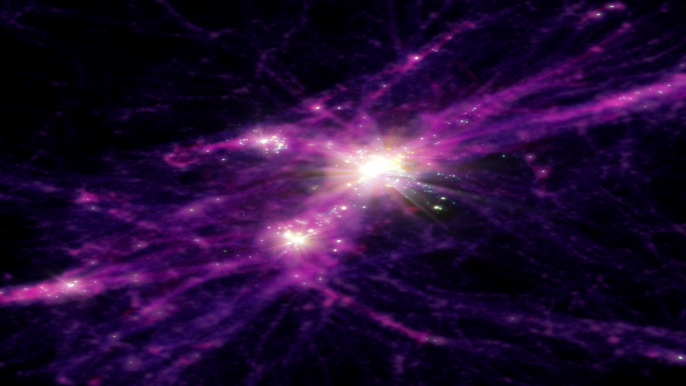
Recent scientific studies have raised questions about whether dark energy, the mysterious force driving the expansion of the universe, is constant or weakening over time, prompting debate among astronomers about the long-term fate of the cosmos.
For decades, the prevailing view has been that dark energy causes the universe's expansion to accelerate indefinitely, potentially ending in a scenario known as the "Big Rip," in which galaxies, stars and eventually atoms are torn apart. However, new analyses of astronomical data suggest that this acceleration may be slowing, says the BBC.
The findings draw on observations from the Dark Energy Spectroscopic Instrument (DESI), as well as research led by Prof Young Wook Lee of Yonsei University in South Korea. Lee's team re-examined supernova data after accounting for the ages of the galaxies in which the exploding stars formed, an adjustment they say had not been fully considered in earlier studies.
 Keep updated, follow The Business Standard's Google news channel
That reassessment indicated that the strength of dark energy may not be constant, challenging a core assumption of modern cosmology. If dark energy continues to weaken, gravity could eventually halt the universe's expansion and reverse it, leading to a collapse known as the "Big Crunch."
The results remain controversial. Some scientists caution that the conclusions may reflect unresolved complexities in supernova behaviour rather than evidence of new physics. Others argue that uncertainties in stellar evolution and measurement techniques could still account for the observed effects.
Lee's team, however, says the statistical likelihood of their findings being a coincidence is extremely small, describing it as having a "one-in-a-trillion" chance of being a fluke.
If confirmed by further observations, the research could point to a "new mechanism" governing the universe and force revisions to existing cosmological models. Astronomers stress that additional data from DESI and other surveys will be critical in determining whether the apparent shift reflects a fundamental change in dark energy or a limitation in current measurement methods.
For now, the findings underscore how little is known about the force that dominates the universe's large-scale behaviour and how future observations could reshape scientists' understanding of its ultimate fate.


