Bangladesh-US deal raises concern in Indian textile sector about possible erosion of competitive edge
Even though India's overall tariff rate of 18% is lower than that of Bangladesh (19%), the zero-tariff provision under the deal for Bangladeshi garments made using American cotton may change the competitive equation with India.
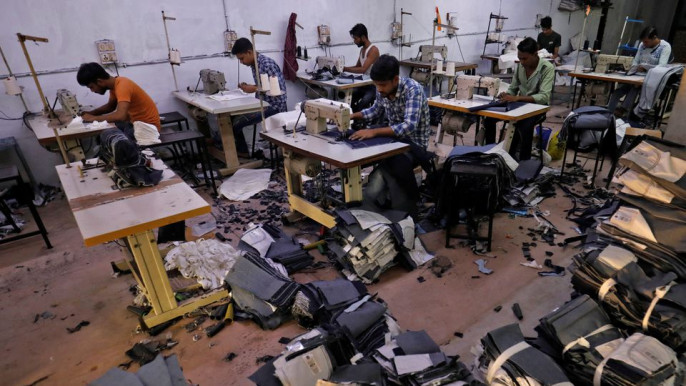
Hours after the trade deal between Bangladesh and the United States, the stocks of leading Indian textile and spinning companies took a knock today due to selling pressure after an encouraging surge in the last few days.
The stocks of companies like Gokaldas Exports, Nitin Spinners, KPR Mills and Vardhaman Textiles slided today between 2.5 % to 5% today (10 February) on concerns that the Bangladesh-US deal could undercut India's position.
The development comes just days after optimism had lifted Indian textile stocks on hopes around an India–US trade framework.
 Keep updated, follow The Business Standard's Google news channel
Even though India's overall tariff rate of 18% is lower than that of Bangladesh (19%), the zero-tariff provision under the deal for Bangladeshi garments made using American cotton may change the competitive equation with India, cotton and textile sector stakeholders said.
India's main opposition party, Congress, used the US-Bangladesh deal to target the government of Prime Minister Narendra Modi by flagging the zero-tariff clause on Bangladeshi textile exports which the party said it hurts Indian cotton farmers and yarn spinners.
The Modi government has been projecting the India-US deal as its major diplomatic success.
"This trade deal weakens India's textile industry and puts millions of livelihoods at risk," Congress said.
Congress said major Indian textile hubs like Tirupur, Surat, and Panipat would be hit with an 18% tariff disadvantage in the US market and risk of losing Bangladesh as a key buyer of Indian cotton and yarn.
Another opposition leader and Rajya Sabha MP Priyanka Chaturvedi of Shiv Sena (Uddhav Thackeray faction) tweeted that "the (Indian) commerce minister will now tell us the benefit Indian textile exporters will get with 18% tariff over Bangladesh's 0%."
As far as the Indian textile sector is concerned, there are two areas of concern over the US-Bangladesh trade deal: first, cotton exports from India to Bangladesh may fall further.
Secondly, the cotton-linked zero tariff provision for Bangladesh may make Indian textile and apparel products less competitive in the US market due to higher costs.
Bangladesh is the world's largest cotton importer and is also the largest buyer of Indian cotton. Until a few years back, 70% of India's cotton exports used to go to Bangladesh.
Chaturvedi said India imports US cotton worth $200 million, while Bangladesh imports $250 million.
India exported 570 million kg of cotton yarn worth 1.47 billion USD to Bangladesh, which was the biggest destination for Indian yarn in 2024-25.
"I think the immediate impact will be on Indian cotton yarn as Bangladesh can buy US cotton and spin at its mills", said Chandrima Chatterjeee, Secretary General of the Confederation of Indian Textile Industry.
She said the US could see more imports of Bangladesh garments, particularly knitted and woven products.
Sanjay K Jain, chairman of Indian Chamber of Commerce national expert committee on textiles, said the US-Bangladesh deal could see India's competitive advantage erode in 100% cotton products like T-shirts and tops in the women wear segment.
However, Siddhartha Rajagopal, executive director of Cotton Textiles Export Promotion Council, has a word of caution for those in India voicing concern over the US-Bangladesh agreement.
"Bangladesh has to buy man-made fibre yarn or cotton from the US for the reciprocal tariff of 19% to be waived. But the time taken to import US cotton and the transport and storage cost need to be taken into consideration.
Secondly, not all products can be made from US cotton. So, the product mix has to change and the supply chain realigned in Bangladesh, which will be time-consuming, " he said.
According to A. Shaktivel, Chairman of Apparel Export Promotion Council, there is an executive order by the US govt issued last April that the ad valorem rates apply only on non-US components of a product when there is at least 20% value addition.
"We will appeal to the Indian government to seek a provision similar to the one given to Bangladesh for Indian apparel exporters also," he said.
With still a month to go before the final trade deal between India and the US is signed, India may well raise this concern and secure concessions.
Rajagopalan said the US-Bangladesh deal does not specify which textile or apparel categories will qualify for zero tariffs, the exact volume of imports that will be eligible or the timeline for implementation.
He said that given these uncertainties, it is quite possible that the zero-tariff window for Bangladesh would not materially disrupt India's competitive position.