BAB welcomes reform-driven budget FY2026–27; pledges full partnership with Government

The Bangladesh Association of Banks (BAB) described the FY2026-27 national budget as a pivotal step towards financial sector reform.
The industry group urged authorities to accelerate the recovery of misappropriated assets, ensure equitable tax treatment for banks, and safeguard private-sector credit from being crowded out by government borrowing.
In a statement, the Executive Committee of BAB said it welcomes the national budget for FY2026-27, presented in Parliament on 11 June by the Finance Minister.
 Keep updated, follow The Business Standard's Google news channel
The association commended the government for prioritising the stability of the banking and financial sector in its economic strategy and for presenting an ambitious and forward-looking budget at a crucial juncture for the country.
BAB particularly welcomed the allocation of approximately Tk40,000 crore for the recapitalisation of weak banks, the introduction of a risk-based supervisory framework aligned with international standards, the commitment to ending political interference in banking, and initiatives to develop corporate and municipal bond markets.
The association noted that raising the excise-duty exemption on deposits to Tk4 lakh and rationalising excise duty to a single charge per loan facility would directly benefit depositors and borrowers.
It also said the Tk60,000 crore Stimulus Package 2026—with a 6% interest subsidy—together with the deregulation agenda covering dividend repatriation, streamlined trade procedures, and single-window investment services, sends a strong signal of confidence to investors and the broader market.
BAB also welcomed the decision to finance a greater share of the fiscal deficit through external sources.
Member banks of BAB expressed readiness to serve as partners in delivering stimulus financing, supporting new economic zones and export industries, and enabling the digital, cashless economy envisioned in the budget.
In the same spirit, the association highlighted several areas crucial to the success of the reforms.
First, BAB stressed that recovery must accompany recapitalisation.
BAB said public funds allocated for recapitalising weak banks will yield lasting results only if matched by prompt legal recovery of misappropriated assets, strict enforcement against wilful defaulters, and transparent treatment of irregularly acquired shareholdings.
The association added that depositors' confidence depends on accountability.
BAB also said the budget should have included a dedicated allocation for establishing an Asset Management Company (AMC) to clean up weak banks' balance sheets, reduce non-performing loans, and ease capital shortfalls across the sector.
Second, the association said the bank resolution framework must protect the credibility of reforms.
BAB said the proposed bank resolution framework should include clear safeguards to prevent parties responsible for the distress of financial institutions from re-entering the system.
Third, BAB said private-sector credit must be protected.
The association warned that the planned borrowing of Tk1.12 lakh crore from the banking system, at a time of historically low private-sector credit growth, risks crowding out the investment and market activity the budget aims to stimulate.
BAB urged disciplined adherence to the external financing plan and expedited development of the bond market as a genuine alternative.
Fourth, BAB said expanding the tax net must not undermine financial inclusion.
The association said that requiring a Taxpayer Identification Number (TIN) for bank accounts and integrating tax and banking databases—measures it supports in principle—should be implemented gradually, with appropriate thresholds for small and rural depositors.
This, BAB said, would ensure the expansion of the tax net does not reverse two decades of progress in financial inclusion.
Fifth, the association said fiscal policy should support capital rebuilding in the banking sector.
BAB said publicly listed banks should be taxed on the same basis as other listed companies.
BAB called on the government to consider a medium-term roadmap for bank taxation, currently at 37.5%, so fiscal policy supports rather than constrains capital strengthening.
For weak banks, BAB urged corporate tax relief for a defined period, enabling retained earnings to address capital and provisioning shortfalls, strengthen capital adequacy, and accelerate balance-sheet repair.
Sixth, BAB said dividend taxation should not discourage institutional investment in the capital market.
Banks are among the largest institutional investors in the stock market, and dividend income from listed securities is paid from profits already taxed at the company level.
The association said taxing this income again at the full corporate rate would deter banks from investing in listed equities and push them towards risk-free government securities, which would contradict the objective of developing a deeper, more liquid capital market and stronger market participation.
BAB therefore urged that tax on dividend income from stock market investments be waived for banks and institutional investors.
It also called for the withdrawal of the additional 10% tax on stock dividends, especially when such dividends are issued by banks to meet Bangladesh Bank's capital adequacy requirements.
Seventh, BAB said provisioning shortfalls should, in time, be treated outside taxable income.
While primarily an accounting policy issue, BAB encouraged the government and Bangladesh Bank to allow loan-loss provisions and provisioning shortfalls to be treated outside taxable income.
This, the association said, would ensure banks are not taxed on income already absorbed by regulatory provisioning and capital requirements.
Eighth, BAB said the transition to a cashless and digitally inclusive economy must be supported by fiscal policy.
BAB said the budget's vision of a digital and cashless society will require substantial investment by banks in technology, including core systems, payment infrastructure, cybersecurity, data centres, and supporting hardware and software.
BAB urged the government to exempt from duties and taxes the software, hardware, and digital infrastructure banks must deploy, so that taxation does not hinder digital financial inclusion.
"This is a budget of ambition and direction—one that recognises a simple truth: there can be no strong economy without strong banks, and no strong banks without trust. BAB welcomes its central commitments: recapitalising weak banks, implementing risk-based supervision, eliminating undue influence, developing bond markets, and advancing a digital, cashless economy," the association said.
"Yet ambition must be matched by discipline and accountability. The wealth misappropriated from the banking sector must be traced, recovered, and returned to depositors through due legal process. Government borrowing from the private banking system must remain disciplined to avoid crowding out the private credit on which investment, exports, and employment depend. Fiscal policy must reinforce, not erode, the capital banks are working to rebuild," it added.
"Our member banks will match the government's commitment in full. We ask only that reform be completed, not merely initiated—that recovery follows recapitalisation, and implementation follows intent. If achieved, this budget will be remembered as the turning point for Bangladesh's financial sector," BAB said.
The association reaffirmed its full support for the government, Bangladesh Bank, and the National Board of Revenue, and said it looks forward to ongoing consultation on the Finance Bill 2026 and its implementing circulars.
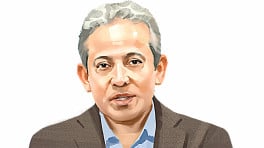
Abdul Hai Sarker, Chairman of the Bangladesh Association of Banks, signed the statement.