BB to continue tight monetary policy despite businesses’ call for lending rate cut
Policy rate to remain unchanged at 10% for Jan-Jun

Highlights
- Monetary Policy Statement to be unveiled tomorrow
- Private sector credit growth target to remain unchanged at 8%
- Businesses have been calling for lowering lending rates
- Governor says rate cut not possible as inflation yet to be tamed
The Bangladesh Bank has decided to keep its policy repo rate unchanged at 10% for the second half of the current fiscal year 2026-27 in a bid to contain inflation, defying calls from the business community to lower lending rates.
The central bank's board approved the Monetary Policy Statement (MPS) for January-June yesterday, with a formal announcement scheduled for tomorrow, officials said.
 Keep updated, follow The Business Standard's Google news channel
The policy repo rate – the rate at which the Bangladesh Bank lends to commercial banks – will remain at 10% as inflation has yet to fall to the targeted 6.5% set for FY26 in the previous policy. Although inflation declined slightly above 8% in December, it remains well above the central bank's comfort level.
In its earlier MPS, the Bangladesh Bank pledged to maintain a tight monetary stance until inflation fell below 7%.
The private sector credit growth target will be kept unchanged at 8% against actual growth of 6.2%. On the other hand, public sector credit growth is likely to increase to 19% from the previous ceiling of 18%.
Although a tight monetary policy has been in place since last year, both lending and deposit rates have edged up slightly amid sluggish private sector demand following the political transition in August 2024.
Over the past six months, the average lending rate has hovered around 12%, while deposit rates have remained above 6%, according to central bank data.
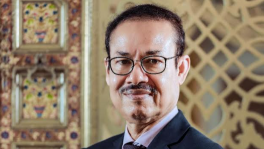
Bangladesh Bank Governor Ahsan H Mansur acknowledges the concerns of businesses seeking lower interest rates but stresses that the timing is not yet right for a policy shift.
"I fully understand the sentiments of the business community – I also want to reduce interest rates. But at this stage, we cannot do so from a policy perspective," he told The Business Standard.
He said, "Inflation has fallen from 12.5% to 8.5% – that is progress, but not enough. Our target is to bring inflation down to 3-4% within two years. Once we reach that point, the policy rate will naturally come down."
The governor added that managing inflation expectations would require time. "People now assume that prices will rise by 10%. Breaking this mindset takes time. We have managed to neutralise exchange rate pressures to a large extent, but domestic pressures are not yet fully under control."
Forex market gains
In May 2025, the central bank moved towards a more flexible exchange rate regime aimed at enhancing stability. Since August 2024, it has not sold a single dollar in the market; instead, it has purchased $3.7 billion, marking a sharp turnaround from previous years.
Governor Mansur said the current account was now broadly balanced, while the financial account – which had long been in deficit – had recorded a substantial surplus.
"Our overall balance was positive last year and remains strongly positive this year," he said. "As a result, our reserves are gradually increasing."
The governor noted that during his tenure, the International Monetary Fund had disbursed around $700 million, while the Bangladesh Bank had purchased more than double that amount from the market.
"When the IMF said it would not release funds before the formation of a new government, we told them there was no problem – we were not in crisis and did not urgently need the funds," he said.
The Bangladesh Bank aims to raise reserves to $35-36 billion by June this year, based on its own calculation method, with further increases expected alongside growth in imports and exports.
The country's gross foreign exchange reserves stood at over $28 billion on 22 January, according to IMF methodology, up from $26.7 billion in June. The exchange rate has remained stable at Tk122-123 per US dollar over the past year.
The governor also described the reversal of capital outflows as a key achievement, noting that foreign investors who had previously withdrawn funds were now returning with fresh investments.