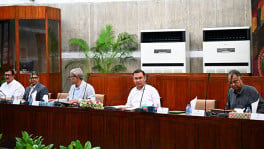
SC Secretariat ordinance removes dual administrative constraints: Chief justice
“As a result, the judiciary has now gained the capacity to independently create new posts, allocate budgets, enhance training, and formulate policies – enabling judicial reforms to move forward as a long-term and sustainable process,” he says

The Supreme Court Secretariat Ordinance, 2025 has finally resolved the long-standing complications stemming from a dual administrative structure in the judiciary, Chief Justice Syed Refaat Ahmed said today (6 December).
"As a result, the judiciary has now gained the capacity to independently create new posts, allocate budgets, enhance training, and formulate policies – enabling judicial reforms to move forward as a long-term and sustainable process," he said.
The chief justice made the remarks while speaking as the chief guest at a seminar – held at a hotel in Chattogram – titled "Operationalising Commercial Courts", jointly organised by the Bangladesh Supreme Court and the United Nations Development Programme (UNDP).
 Keep updated, follow The Business Standard's Google news channel
"The transformation achieved in the judicial system over the past one and a half years marks a new era in the country's judicial history," he added.
He noted that the ordinance has ensured full administrative and financial autonomy for the judiciary, enabling reforms to progress within a long-term structural framework.
'Commercial courts to be launched soon'
The chief justice highlighted that the demand for specialised commercial courts to expedite commercial dispute resolution has been longstanding.
"The draft law prepared by the Supreme Court's research team has since been enriched through stakeholder consultations, roadshows, Bida's recommendations, and development partners' technical input. After refinement by the law ministry, the draft recently received the Cabinet's policy approval," he said.
He also mentioned that the proposed law incorporates modern provisions including a clear definition of commercial disputes, establishment of adequate courts, a separate appeal bench in the High Court, mandatory mediation, limited adjournments, summary procedures, and public disclosure of case information.
"These measures are expected to ensure faster, more efficient, and transparent commercial justice."
For successful operation of the commercial courts, the chief justice emphasised the need for proper infrastructure, human resources, digital capacity, and coordinated efforts from all stakeholders.
He added, "The Supreme Court is prepared to issue practice directions and guidelines when necessary."
UNDP Bangladesh Resident Representative Stefan Liller delivered the welcome remarks at the event.
Other distinguished guests included Sweden Embassy's Head of Politics, Trade and Communication Olli Lundin, Australian Deputy High Commissioner Clinton Pobke, Canadian High Commissioner Ajit Singh, Swedish Ambassador Nicolas Weeks, and EU Ambassador Michael Miller.