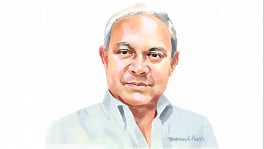
NBR Chairman signals possible VAT, turnover tax reforms for jewellery businesses
If VAT is properly applied on value addition with full input tax credit, the effective burden should not be excessive, he said

National Board of Revenue (NBR) Chairman Md Abdur Rahman Khan indicated that the government may reconsider the current VAT and turnover tax system for the country's jewellery businesses, stressing the need for fair taxation and better sectoral discipline.
"If VAT is properly applied on value addition with full input tax credit, the effective burden should not be excessive," he said at a Meet the Business programme with Bangladesh Jewellery Samity (BAJUS) organised by the NBR today (14 January).
The NBR chairman also said that arbitrary rates discourage compliance and are difficult to enforce.
 Keep updated, follow The Business Standard's Google news channel
He invited the sector to propose a rational formula for VAT based on value addition, assuring that the NBR is willing to amend laws accordingly, possibly in the next finance act.
Similar flexibility, he said, could be considered for the existing 1% minimum turnover tax if a transparent and reliable recording mechanism is introduced.
He agreed in principle with traders that imposing VAT on the full sales value of high-value products like gold ornaments is unreasonable, as the real value addition lies mainly in labour or making charges.
The NBR Chairman said restoring discipline in the country's jewellery sector is crucial for ensuring better revenue collection, strengthening rule of law and safeguarding the long-term sustainability of the industry.
"We believe businesses should do business and our responsibility is to make their path easier, provide cooperation and ensure transparency," the NBR chief said.
He said that the jewellery sector though one of the oldest trades in the country has long remained outside a disciplined and formal framework.
He said gold is not just a commodity but is deeply linked to people's emotions, social security and financial safety. "Yet, despite various policy initiatives over the years, the sector has failed to move fully into the formal economy."
Recalling past reforms, the NBR Chairman said Bangladesh had gradually moved from an era of complete restrictions on gold imports to a formal import policy including reduced taxes and fixed duties for passenger-carried and commercial imports.
Official records still show negligible formal gold imports despite the market being well supplied, he said.
"This gap between records and reality is a major obstacle to establishing financial discipline, the rule of law and overall governance," he said.
Smuggling and informal practices harm not only revenue collection but also expose traders to serious financial and legal risks.
Rejecting the argument that Bangladesh needs more time to establish discipline because it is a young country, he pointed to examples like Singapore, which prioritised the rule of law and discipline from the very beginning.
Khan said NBR wants to move towards full, real-time transaction recording to eliminate suspicion on both sides.
"We are ready to develop simple, sector-specific digital software for jewellery traders, especially small shops, so that real transactions are recorded, and the real picture emerges," he said.
Once accounts are transparent and verifiable, the need for presumptive or turnover-based taxes will gradually disappear, allowing income tax to be assessed strictly on actual profits or losses.
On import facilitation, the NBR chairman said greater openness and competition would help restore discipline.
He assured that issues related to import licensing, LC opening and banking procedures could be taken up with Bangladesh Bank and the Ministry of Commerce, urging traders to submit formal proposals.
He also reaffirmed the fundamental principle of duty drawback for exporters, stating that exporters are entitled to refunds of duties paid on imported raw materials used for exports. Any practical bottlenecks in audit or verification, he said, would be reviewed to ensure legitimate exporters are not deprived.
Calling for collective responsibility, the NBR chief said discipline in the jewellery sector is essential not only for revenue but also to protect lives, livelihoods and future generations from the dangers associated with illegal trade.