Govt assures police of risk allowance, overtime and other benefits
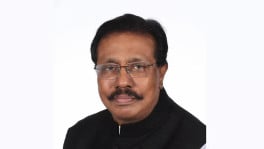
Home Minister Salahuddin Ahmed stated that the government will implement the "logical" demands in phases, based on the state's financial capacity

The government has assured police personnel of gradually implementing a range of benefits, including risk allowances, overtime pay, a separate pay scale, and interest-free motorcycle loans, following a police "Welfare Parade" on the occasion of Police Week 2026.
The assurance came after demands were placed before Prime Minister Tarique Rahman during the event at the Rajarbagh Police Auditorium yesterday (10 May).
Home Minister Salahuddin Ahmed, the home secretary, the inspector general of police (IGP), and senior officials were also in attendance.
 Keep updated, follow The Business Standard's Google news channel
According to officials present at the meeting, the prime minister listened to the grievances and expressed a positive outlook toward their gradual implementation.

The demands
A primary demand focused on the lack of defined working hours.
Kamrul Hasan Talukdar, president of the Bangladesh Police Association and officer-in-charge (OC) of Uttara's Airport Police Station, noted that personnel regularly perform duties beyond their rosters.
Consequently, the force sought an additional 50% bill for overtime and a dedicated risk allowance.
For sub-inspectors (SIs) engaged in investigations, the force demanded interest-free motorcycle loans and fuel allowances. Proponents of the move argued that most police stations lack sufficient vehicles, forcing officers to bear travel costs personally.

They said such benefits will significantly accelerate the pace of criminal investigations.
The long-standing demand for an independent pay scale, similar to those of the judiciary and the armed forces, was also reiterated.
Furthermore, a female constable from the Khulna Metropolitan Police proposed a system of honorary promotions before retirement. Under this proposal, personnel from the rank of constable to inspector would receive honorary rank elevations to boost morale, mirroring practices in the army.
Other significant proposals included the resumption of funding for infrastructure projects – such as police messes, barracks, outposts, stations, and other operational units – which has reportedly been stalled for a long period.
To combat rising digital threats, officials proposed the establishment of full-fledged, independent cyber units in all divisional cities, noting that current centralised operations limit local-level capacity.
The force also highlighted the need for expanded healthcare, specifically psychiatric support, to manage the mental stress caused by policing.
Govt to implement 'logical' demands
Responding to the demands, Home Minister Salahuddin Ahmed stated that the government will implement the "logical" demands in phases, based on financial capacity.
He added that a special policy is under consideration to provide overtime allowances for those performing extra duties.
Prime Minister Tarique Rahman emphasised that building a technology-dependent and humane police force is a top priority.
He stressed the importance of expanding the use of artificial intelligence, big data analytics, and cyber policing to meet the challenges of the Fourth Industrial Revolution, affirming the government's commitment to developing a modern and efficient police system.