'No option but to drown in debt': Rising farm wages, falling prices hit hard Boro farmers
Farmers say wages for agricultural labourers have risen by at least Tk200-300 compared with last year, while paddy prices have fallen by Tk200-300 per maund
Highlights
- Paddy prices dropped to Tk900-Tk1,000 per maund
- Down Tk200-Tk300 from last year
- Fertiliser, pesticides, diesel, irrigation costs further increased
- Labour wages risen by Tk200-300
- Millers have not yet started buying paddy
- Govt has fixed a procurement price
- Farmers warn many may cut back cultivation if fair prices not ensured
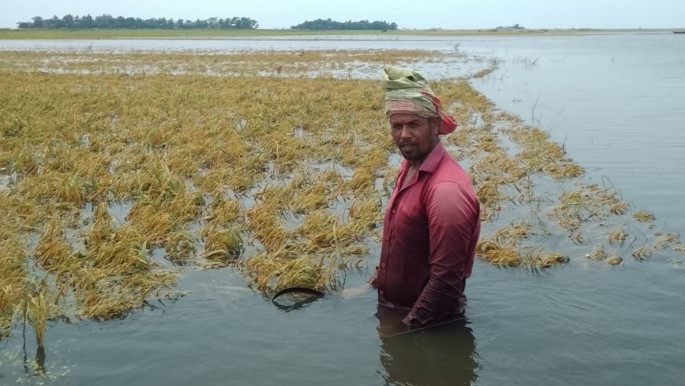
Tuhin Islam, a Boro farmer from Natore, cultivated Boro paddy on three and a half bighas of land this season. He had to pay nearly Tk6,600 in labour wages just to harvest paddy from 12 decimals of land.
Harvesting the remaining three bighas will cost at least another Tk24,000 in labour expenses alone. Yet he is selling paddy at Tk900 per maund, at least Tk200-300 less than last year.
 Keep updated, follow The Business Standard's Google news channel
The farmer from Haltir Beel in Naldanga upazila told TBS, "I have to pay each labourer Tk1,000-1,100 a day. On top of that, I must provide two meals and snacks. Labour costs have never been this high. Workers are hard to find. Yet I sold paddy at only Tk900 per maund."
At the start of the Boro season, farmers bought fertiliser and pesticides at higher prices. Later, diesel and electricity shortages also raised irrigation costs. Now, during harvest, farmers across the country, like Tuhin Islam, are worried about soaring labour wages.

Farmers said daily wages for agricultural labourers have risen by at least Tk200-300 compared with last year, while paddy prices have fallen by Tk200-300 per maund. As a result, many are worried they may not even recover production costs this year.
Bipath Chandra from Bijoykandi village in Raninagar, Naogaon, said production costs including land lease, cultivation, fertiliser, pesticides, irrigation and harvesting reached Tk25,000-26,000 per bigha. But with an average yield of 22 maunds per bigha, current market prices bring only Tk20,000-22,000 in revenue.
"How will we run our families like this? There is no option but to drown in debt," he said.

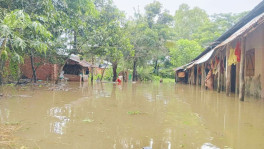
According to the Department of Agricultural Extension (DAE), Boro was cultivated on 50.47 lakh hectares this year, including 4,55,000 hectares in haor areas. However, heavy rain and floods badly damaged haor crops. Farmers warned that if paddy prices do not improve despite rising production costs, many will be forced to abandon Boro cultivation.
Golam Mostafa of Bhimpur village in Naogaon Sadar, who has suffered losses in potato and onion farming in recent years, cultivated Boro on eight bighas this season.
Farming for the last 20 years, he said, "This year labourers are charging at least Tk900 each, plus two meals. Labour has never been this expensive in our region. Fertiliser, pesticides and diesel shortages have already hurt production. On top of that, paddy prices are only Tk900-1,000 per maund. If this continues, farmers will quit farming and drive rickshaws in cities or work in garment factories in Dhaka."
Mizanur Rahman from Dupchanchia in Bogura cultivated paddy on 25 bighas. He said farmers are already trapped in debt after losses in potato, taro and onion farming, and are now heading towards ruin through paddy cultivation.
"If the government does not pay attention, farmers may reduce cultivation. Then food shortages could arise. Imported Indian rice has been used to deliberately hurt local farmers. Policymakers must understand that if farmers do not survive, the country cannot survive."
Farmers and traders said raw paddy sold for Tk1,300-1,400 per maund last year, but this year the same paddy is selling for only Tk900-1,000. Some farmers also still have unsold old stock at home, which is another key reason for lower new-season prices.
In haor districts, labour costs are even higher, while paddy prices are lower than in many other districts.
Zahirul Haque from Ashugram in Brahmanbaria Sadar said he paid six workers Tk1,600 each to harvest one and a half bighas of land. Including threshing, total costs reached Tk10,000, and he also had to work in the field himself, besides providing two meals and snacks.

He said harvesting one bigha by harvester machines costs Tk22,000–25,000, but rain damages straw and harvesters are insufficient. Labour shortages are also severe. "I harvested a bit early and paid Tk1,600 each. Later, others had to pay Tk1,800 to Tk2,000 per worker."
Another farmer, Mohammad Ali, said he hired three labourers at Tk1,500 each and worked alongside them all day. Since the field was beside his house, all four carried the paddy home themselves. "Now I will thresh it. Yet raw paddy is selling for only Tk700 per maund," he said.
Responding to the issue, Senior Agriculture Marketing Officer of Bogura, Md Morshed Al Mahmud, said paddy prices are low mainly because millers have not yet started buying. Market arrivals are also still limited.
"When supply increases, prices will naturally fall. Imported Indian rice is also still in the market, and there is high demand for Indian Katari rice. That is why the situation is like this."
He added that this year farmers will get an opportunity to sell paddy directly to auto rice mills in groups instead of through traders. Committees have been formed by agricultural marketing authorities, with each group consisting of 25 farmers.
"This will help farmers avoid middlemen and sell at better prices," he said.
Deputy Director of Bogura DAE, Sohel Md Shamsuddin Firoz, said 13% of paddy harvesting in the district has been completed so far. "But paddy prices are very low, so farmers are bound to incur losses. However, the government has fixed the procurement price. Once buying begins at that rate, prices may improve somewhat. Labour prices depend on demand – sometimes they also fall," he added.

On the overall situation, former president of the Bangladesh Agricultural Economists Association and former vice-chancellor of the University of Global Village (UGV) Dr Jahangir Alam Khan told TBS that daily wages have risen across the country due to a shortage of labourers. This will increase farmers' production costs.
At the same time, farmers have had to spend more than in previous years on irrigation, fertiliser and pesticides. Yet paddy prices remain low. The government has also announced paddy procurement at the previous rate. "That price should be increased. Otherwise, farmers will lose interest in paddy cultivation," he said.