Election security concerns and expectations: Voices of women voters
Many say post-election stability will influence their decision to vote

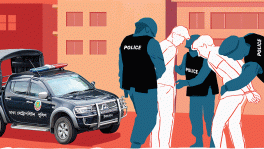
Security and voter turnout are emerging as concerns in the capital and across the country ahead of the 13th national parliamentary election. Women voters say safety at polling centres, secure travel and the post-election situation could affect their decision to cast ballots, though many also have expectations from the next government.
In the capital and nearby areas, young women voting for the first time expressed interest but remained uncertain about security. With polling day approaching, safety has become a key concern.
Jagannath University student Ayantika Biswas said her concern was about what would happen after the election.
 Keep updated, follow The Business Standard's Google news channel
"Everything seems fine now. Political parties are talking about maximum security to secure votes. But we have to see how much of those promises are kept once they come to power," she said.
Homemakers and working women echoed similar concerns. Many said they were worried about early morning travel to polling centres, overcrowding and the presence of political activists.
Nazifa, a homemaker from Mirpur and a voter of Dhaka-6, will cast her vote for the first time, but is not fully assured about security.
She told The Business Standard, "This election feels different. I still do not know how security will be tomorrow. It feels reassuring if there are more women police officers and separate queues at the centre. I just hope there is no trouble."
Although many women say they can feel a festive mood around the election, security concerns remain.
Rina Akter, a resident of Paltan in Dhaka, said she is eager to vote but remains cautious. She said security must be ensured not only at polling centres but also on roads so voters can exercise their rights without fear.
"For the first time in many years, I can feel the election atmosphere. Whichever party comes to power should work for women. I will cast my ballot, but I cannot say I am free of concern. If strong security is ensured at polling centres and on the roads, women will be able to vote with peace of mind," she said.
Outside Dhaka, women voters said social pressure and the presence of influential local figures also add to security concerns. Some said increased administrative activity and the movement of political leaders have created tension in towns.
Wasifa Zafar Adree, a working woman from Rangpur, said that although no unrest had been seen so far, many people feared trouble could break out by midday on polling day.
"Because of that fear, some are hesitant about going out to vote. The biggest issue is that our generation is about to witness what may be the most unpredictable election," she said.
Expectations from next government
Women from different backgrounds said they expect the incoming government to ensure security, employment and equal rights. They said policies should reflect women's lived experiences and needs to strengthen social and economic participation.
However, Marzina, a 56-year-old domestic worker in Wari, said she was not very hopeful.
"Even after voting, we gain nothing. I have seen this for years. Once elected, they give benefits to their own people. Those of us who work hard are forgotten after the election. I have little hope, but if change comes this time, that would be good," she said.
In contrast, Sazia Afrin Srishti, a sales manager at a supermarket in the capital, said she was excited to vote for the first time. She said she expects political change and stronger protection of women's rights.
"I could not vote before. This time, I feel I will be able to vote according to my choice. We are tired of the old parties. We want someone new to come forward, to work for women and not interfere in women's freedom. Only then can the country move forward," she said.
The responsibility for ensuring voters' security rests with law enforcement agencies.
Dhaka Metropolitan Police Deputy Commissioner Mohammad Talebur Rahman said security plans had been designed to allow voters to cast their ballots without disruption.
"We are ensuring an environment where everyone, regardless of gender, can exercise their voting rights. If any complaint arises, we will take immediate action," he said.