From Venezuela to Iran: Jeffrey Sachs on US regime change
Sachs, a professor at Columbia University and a former adviser to the United Nations, said the United States has pursued what he called a “regime change playbook” in countries such as Venezuela and that this model could now be applied to Iran, with potentially serious global consequences

US foreign policy is driven less by elected leaders than by a permanent military and security apparatus that prioritises overthrowing governments it disfavors, US economist and academic Jeffrey Sachs said in recent interviews with India Today.
Sachs, a professor at Columbia University and a former adviser to the United Nations, said the United States has pursued what he called a "regime change playbook" in countries such as Venezuela and that this model could now be applied to Iran, with potentially serious global consequences.
"The United States is governed by a military security apparatus," Sachs said, referring to the CIA, the Pentagon and other security agencies. "The deep state runs United States foreign policy, not presidents. Presidents come and go, but the deep state remains."
 Keep updated, follow The Business Standard's Google news channel
Jeffrey Sachs is a US economist, political analyst and professor who has advised governments and international institutions for decades and is frequently cited on issues of global development and international relations.
Sachs is a prominent critic of current US foreign policy, arguing that decision-making is dominated by a permanent military and security establishment rather than elected leaders.
Venezuela and regime change
Sachs criticised recent US action in Venezuela, where forces aligned with Washington have detained President Nicolás Maduro following a military operation. He described Maduro's capture as a "military abduction" and said it was a "flagrant violation of international law."
He traced US efforts to destabilise Venezuela back more than 20 years, citing a 2002 coup attempt, protests in 2014 and extensive economic sanctions during the first term of former President Donald Trump. He said those measures contributed to a collapse in Venezuela's economy and reflected longstanding US hostility toward the government because it is left-wing and controls large crude oil reserves.
"Most American regime change operations actually fail. They fail to achieve the political outcomes the United States seeks," Sachs said, arguing that the seizure of Venezuela's president had not resulted in the regime change Washington sought.
He said the focus on Venezuela fits a broader pattern of interventions using tools ranging from wars and coups to economic sanctions.
Warnings about Iran
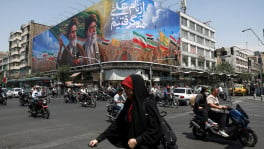
Looking beyond Venezuela, Sachs said he fears Iran could be the next target of US regime change efforts.
"My fear is that Iran is next," Sachs said, pointing to joint statements by US and Israeli leaders as signals that preparations for confrontation are under way.
"Israel is obsessed with Iran and wants to overthrow the Iranian government. The United States, for reasons that are not 100 percent clear, is basically beholden to Israel. The United States fights wars that Israel tells it to fight," he said.
Sachs said Washington could use issues such as human rights concerns or crackdowns on protests as a justification for intervention. "This is clearly a typical deep state provocation — lining up the human rights argument to invade Iran to 'protect the people of Iran.' This is a standard playbook," he said.
He warned that a conflict with Iran could have far broader consequences than US actions in Venezuela, calling it "hotter than Venezuela" and "potentially disastrous" because Iran is a major regional power with advanced missile capabilities and proximity to other nuclear-armed states.
Broader critique of US policy
Sachs also criticised what he described as a constitutional crisis in the United States, arguing that the executive branch increasingly conducts military operations without proper congressional authorisation.
"There is no rules-based order. That is a fairy tale of the United States," he said.
He called on other major powers, particularly members of the BRICS grouping, to uphold the United Nations Charter and push back against actions he sees as violations of international law. "They have to say it's not right in Greenland, but it's also not right in Venezuela, it's not right in Iran," Sachs said.
Sachs has made similar arguments in remarks to the UN Security Council, warning that unilateral coercive measures undermine international law and risk prolonged instability rather than political resolution.