Is Bangladesh’s LNG dependency threatening its energy sovereignty?
Bangladesh becoming South Asia’s second-largest LNG importer by 2035 isn’t merely an energy transition—it is a fundamental reshaping of national sovereignty, with billions of dollars in future fortunes hanging in the balance

For decades, Bangladesh's industries, power plants, and households drew their strength from domestic gas fields that fueled growth and everyday life. Those wells are now running low, their declining output whispering warnings of an impending crisis.
This shift has transformed Bangladesh's energy landscape almost overnight, pushing the nation toward a precarious dependence on imported liquefied natural gas (LNG), which now threatens to strain the country's economy and energy security over the next decade.
The International Energy Agency's recent World Energy Outlook 2025 sounds an alarm that cannot be ignored, projecting that Bangladesh will become South Asia's second-largest LNG importer by 2035. This isn't merely an energy transition—it is a fundamental reshaping of national sovereignty, with billions of dollars in future fortunes hanging in the balance.
 Keep updated, follow The Business Standard's Google news channel
An unfolding crisis
Bangladesh, once largely self-sufficient in natural gas, now imports nearly one-fifth of its total consumption. The statistics paint a startling picture: in 2025 alone, Petrobangla imported over 108 LNG cargoes—the highest in its history—with demand projected to rise another 20% by year's end.
The IEA projects that by 2035, combined LNG imports by Bangladesh and Pakistan will reach about 80 billion cubic meters—a staggering 60% increase from 2024 levels. Under the agency's Stated Policies Scenario, Bangladesh's LNG intake is expected to reach between 42 and 44 bcm by 2035, overtaking Pakistan as the region's second-largest importer.
This dependency creates a perfect storm of interlinked challenges: surging energy demand, depleting domestic gas reserves, and growing exposure to climate-related risks that threaten the country's energy infrastructure. The IEA notes that "high import prices, limited storage and regasification facilities, and climate vulnerability make the current LNG-dependent model economically and environmentally unsustainable." What makes this trajectory particularly concerning is that it represents a policy choice—one that prioritises quick fixes over long-term security.
The vicious cycle of dependency
The financial burden of these imports has become immense, with the country now spending approximately Tk400 billion annually on LNG—a figure expected to rise to nearly Tk580 billion in the next fiscal year.
Recent studies reveal a striking imbalance: Bangladesh now spends more than fifty times as much on LNG procurement as it does on gas exploration or renewable energy development. That disparity carries weight not just in numbers, but in what it signals: a nation investing in survival instead of security.
This energy dependency creates a vicious cycle that weakens Bangladesh's economic position. The World Bank's recent $350 million guarantee to Petrobangla, which enables access to over $2.1 billion in private capital to finance LNG imports, illustrates how debt becomes woven into the fabric of energy security.
Meanwhile, the practice of capacity payments—contractual obligations requiring government utilities to purchase power from private producers even when demand is low—further strains the economy. These payments not only weaken the energy sector but also create permanent fiscal drains that could haunt future budgets.
The road not taken
While LNG imports have filled the immediate supply gap, this has come at the opportunity cost of developing indigenous alternatives. Bangladesh has pledged to generate 30% of its electricity from renewable sources by 2040, but progress has been painfully slow, with less than 5% of current capacity derived from renewables.
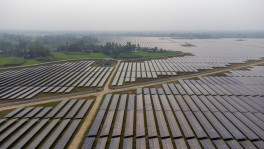
This stagnation persists despite the country's significant renewable potential. The rooftops of textile and other industries alone could accommodate a total of 5,000 MW in solar installations. Similarly, agrophotovoltaic systems—which combine energy generation with food production—could enhance land-use efficiency by up to 70% while addressing land allocation challenges.
Policy barriers further hamper renewable adoption. Importers of solar panels and accessories face VAT ranging from 11.33% to 38.47%, despite earlier recommendations for exemptions. This contrasts sharply with success stories like Vietnam, where a well-designed feed-in tariff sparked a solar boom, adding 4,500 MW of capacity in less than two years. Bangladesh's story could have been different—the rapid global decline in solar and wind costs since 2007 has made the renewable transition more feasible, yet the country remains locked in a fossil fuel import paradigm.
The opportunity cost extends beyond renewables. Investment in domestic gas exploration has become minimal compared with massive LNG expenditures. By ramping up local gas exploration, Bangladesh could reduce its dependence on imported fossil fuels and strengthen national energy security. This strategy, combined with the promotion of renewable energy, would lower the country's vulnerability to external shocks in international fossil fuel markets—a vulnerability starkly exposed during the Ukraine crisis.
Beyond economics
The LNG-dependent model introduces alarming climate vulnerabilities. Bangladesh's coastal LNG terminals remain exposed to extreme weather events, as demonstrated in 2023 when cyclones and flooding disrupted supplies, forcing the temporary shutdown of several power plants. The IEA warns that "such incidents underline the fragility of coastal energy facilities to climate shocks," adding that without investments in climate-resilient infrastructure, the country's gas supply reliability will remain uncertain.
The human costs extend far beyond supply disruptions. Air pollution was responsible for more than 16,000 premature deaths every day worldwide in 2024, while South Asia's pollution-related economic losses exceeded 11% of regional GDP. Although Bangladesh has taken limited steps to reduce industrial emissions, transitioning to renewable energy remains the most effective path to cleaner air.
The IEA notes that universal access to clean cooking fuels across developing Asia could be achieved by 2033 with targeted government investment and incentives for electric stoves—a goal that remains elusive while resources continue to flow toward maintaining fossil fuel imports.
Reclaiming energy sovereignty
First, Bangladesh must address energy price distortions that favor imported fuels over domestic alternatives. Phasing out subsidies gradually and removing the price advantage that industries receive from captive generation would create more accurate market signals. Modernising grid infrastructure is equally crucial to ensure reliable electricity supply and reduce the need for backup systems.
Second, the country needs realistic renewable targets backed by concrete implementation plans. This includes removing VAT barriers on renewable equipment, implementing effective net-metering systems, and exploring innovative approaches like agrophotovoltaics that address land use concerns. The government should also estimate future energy demand more accurately, accounting for factors like rising disposable income, electric vehicle adoption, and potential energy efficiency gains.
Third, Bangladesh must balance its energy portfolio by ramping up domestic gas exploration while simultaneously accelerating renewable deployment. This dual approach would provide transitional stability while building toward a more sovereign energy future. Improving energy efficiency—both in generation, where publicly owned power plants operate at only about 41% efficiency, and in industrial processes, where efficiency improvement opportunities range from 25% to 76%—represents another crucial avenue.
An uncertain future for the next generation
The IEA forecasts that average LNG prices in Asia will fall to around $7.5 per million British thermal units during 2030–2035, about 40% lower than current levels. While this might make LNG appear more attractive, it doesn't eliminate the fundamental vulnerabilities of import dependency. Bangladesh's future hinges not just on fuel choices, but on its ability to adapt to the growing impacts of climate change while balancing development needs with sustainability.
The choices made today will determine whether the next generation inherits a deeper reliance on imported fuel or the capacity to stand on its own. The fading wellsprings that once powered Bangladesh can be remembered not as the end of an era, but as the wakeup call that sparked a true energy transformation. The nation has navigated greater challenges; its energy sovereignty should not become a casualty of convenience.

Zakir Kibria is a Bangladeshi writer, policy analyst and entrepreneur based in Kathmandu, Nepal. His email address is zk@krishikaaj.com.
Disclaimer: The views and opinions expressed in this article are those of the author and do not necessarily reflect the opinions and views of The Business Standard.