NCP unveils Tk8.52 lakh crore shadow budget for FY27
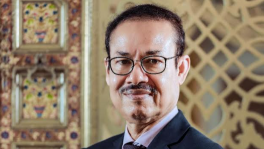
NCP leader Hasanat Abdullah said the current administration had inherited a “crisis-ridden economy”, alleging high non-performing loans and heavy dependence on imported energy.

The National Citizen Party (NCP) has unveiled a shadow budget of Tk8,52,157 crore for the 2026-27 fiscal year, titled "Bangladesh 2.0: Sustainable Growth through Reform, Employment and Investment", placing strong emphasis on job creation, education, inflation control and investment-led growth.
The party said the proposal is not merely an alternative to the government's national budget but a broader economic vision and governance framework aimed at building a "reformed and accountable state" based on transparency, efficiency and inclusive development.
At a press briefing at the party's central office, NCP leaders said the shadow budget seeks to reduce inflation, expand employment opportunities, boost investment and improve citizens' living standards through structural reforms.
 Keep updated, follow The Business Standard's Google news channel
NCP leader Hasnat Abdullah said the current administration had inherited a "crisis-ridden economy", alleging high non-performing loans and heavy dependence on imported energy.
He argued that fiscal discipline and welfare expansion could be achieved simultaneously without increasing debt burdens or imposing additional taxes on citizens.
The shadow budget was presented by Atiq Mujahid, lawmaker from Kurigram-2, who described it as a forward-looking economic blueprint rather than a post-budget critique.
The proposed budget size is Tk8.52 lakh crore, about 7.87% higher than the current fiscal year. The party has pledged to keep the fiscal deficit within 3.09% of GDP.
The NCP has set key macroeconomic targets, including reducing inflation from 9.2% to 8% in the next fiscal year and further to 6% in the following year. It also aims to raise foreign exchange reserves above $32 billion.
To boost revenue mobilisation, the party proposed an additional Tk 76,000 crore from six key sectors. One major proposal links mandatory tax return submission to electricity connections for consumers using more than 75 units per month, alongside wider digital reforms.
Other measures include integration of TIN–NID–MFS systems, a national digital asset registry, port digitisation and listing at least six state-owned enterprises on the stock market.
For middle-income taxpayers, the proposal raises the tax-free income threshold to Tk4.5 lakh, with higher exemptions for women and persons with disabilities. It also proposes recognising Zakat as a tax rebate, introducing inheritance tax and reducing corporate tax to 25%.
The budget also proposes VAT exemptions on eight essential commodities—rice, wheat, edible oil, salt, sugar, pulses, potatoes and onions—for five years, alongside reduced mobile internet tax.
Education and employment remain central, with Tk1,24,425 crore allocated to the education and technology sector, representing 14.6% of the total budget.
Key proposals include school feeding programmes in all government primary schools, a Tk5,000 crore teacher development fund, nationalisation of 5,000 private schools and expansion of technical institutes in every upazila.
The party has also pledged to create 10 million jobs over five years, including 2 million formal jobs in the first year.
In health, allocation has been increased by 25% to Tk52,338 crore, with plans for a national health insurance scheme for low-income groups.
The proposal includes up to 70% subsidy for critical treatments such as cancer, dialysis and bypass surgery, alongside plans for two super-speciality hospitals, 500 ambulances and a threefold rise in disability allowance to Tk 2,500.
In agriculture, the focus is on ensuring fair prices through modern marketing centres, reducing middlemen influence and guaranteeing a 15% profit margin over production costs. Direct fertiliser subsidies and food security programmes will continue.
In energy, NCP proposed a "Solar Energy Sovereignty Act" making solar products tax-free for five years and a Tk6,000 crore renewable energy programme targeting 2,000MW solar generation within a year.
Other measures include tax cuts for electric vehicles, conversion of 2 million e-rickshaws to lithium batteries and expanded water and sanitation investment.
For women's development, the budget proposes Tk1,200 crore allocation, six months' paid maternity leave and one month's paternity leave. It also suggests interest-free loans of up to Tk25 lakh for women entrepreneurs.
Governance reforms include revised pay structures, an independent promotion commission and greater use of artificial intelligence in administration.
In banking, the party proposes strict laws to reduce non-performing loans, creation of a "bad bank" and disclosure of financial statements of all scheduled banks.
For defence, allocation is set at Tk39,745 crore, with plans for modern air defence systems, UAV drone brigades and training for 30,000 reservists annually.
The proposal also includes launching a "Hisab Dao" accountability portal for public disclosure of senior officials' income and expenditure.
The 71-point shadow budget, divided into 12 sections, was described as a roadmap for a corruption-free, equitable and investment-friendly Bangladesh.