Feb polls: NCP proposes 10m jobs, Tk100b entrepreneurship fund in election manifesto
The party unveiled the document under the slogan “Bangladesh through a new lens"

Highlights:
- Focus on reform, accountability, justice
- Tk100 hourly minimum wage proposed
- 10 million jobs pledged in five years
- 100 directly elected seats for women
- Tk100 billion entrepreneurship fund announced
- 25% power from renewables in five years
- Truth and reconciliation commission to be formed
- Special cell for minority rights protection
- Public asset disclosure through "Hisaab Dao" platform
- Performance-based civil service promotions promised
- Imams and mosque staff under national pay scale
- Tax relief for low- and middle-income people
- Cashless economy transition pledged
- Education reform commission to be formed
- Separate salary structure for teachers
- Government vehicles to shift to electric
The National Citizens Party (NCP) has unveiled its election manifesto outlining a 36-point reform agenda, pledging to create 10 million decent jobs within five years and announcing a Tk100 billion entrepreneurship fund.
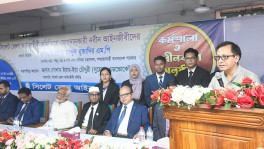
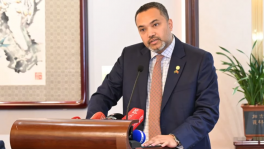
The manifesto, titled "Manifesto of Youth and Dignity," was formally launched at 4pm today (30 January) at a city hotel in Gulshan, Dhaka, in the presence of party leaders, supporters, and members of the media.
 Keep updated, follow The Business Standard's Google news channel
NCP Convener Nahid Islam attended the event as the chief guest, while party spokesperson and also the chairman of the party's Central Election Management Committee, Asif Mahmud Shojib Bhuyain, was present as a special guest. Senior leaders from the party's central and affiliated bodies also joined the programme.
Spanning 86 pages across 12 chapters, the manifesto addresses a wide range of issues, including governance, human rights, economic restructuring, education, healthcare, environmental protection, women's empowerment, employment, expatriate welfare, foreign policy, and national security.
The party unveiled the document under the slogan "Bangladesh through a new lens."
A major focus of the manifesto is accountability and justice. The NCP pledged to form an independent commission to oversee the implementation of the July Charter provisions requiring legislative and administrative reforms.
The party also committed to ensuring justice for crimes against humanity, including the July killings, Shapla Chattar killings, the BDR massacre, enforced disappearances, and extrajudicial killings, alongside establishing a truth and reconciliation commission.
To protect minority and human rights, the manifesto proposes establishing a special investigative cell under the Human Rights Commission with the authority to conduct independent investigations into discrimination, communal violence, and ethnic persecution.
On governance and transparency, the NCP promised to publicly disclose the annual income and asset statements of ministers, members of parliament, elected representatives, and senior officials through a digital platform named "Hisaab Dao" (Accountability).
The party also promised reforms in the civil service, including increased lateral entry, fully performance-based promotions through an independent commission, inflation-adjusted pay scales, and the inclusion of imams, muazzins, and khadims in the national salary structure.
Economically, the manifesto proposes setting a national minimum wage of Tk100 per hour, enforcing labour safety insurance and pension schemes, reducing the tax burden on low- and middle-income groups, and increasing the tax-to-GDP ratio to 12% by curbing tax evasion.
The NCP also pledged to move towards a cashless economy.
The party announced plans to create 10 million decent jobs within five years, with special support for SMEs, women, and youth entrepreneurs through cash-flow-based loans and a Tk100 billion entrepreneurship fund.
Additionally, the manifesto outlines government-regulated training programmes to prepare 1.5 million skilled migrant workers annually.
In education and research, the NCP proposed forming an education reform commission, introducing a separate salary structure for teachers, nationalising 75% of MPO-registered institutions within five years, and making six-month internships or thesis research mandatory at the undergraduate level.
Measures to reverse brain drain and establish a national computing server were also announced.
Healthcare commitments include establishing specialised healthcare zones (SHZs) in the northern and southern regions, launching a GPS-tracked national ambulance and emergency response system, upgrading district hospitals with modern ICUs and CCUs, introducing NID-based digital health records, and gradually implementing a national health insurance system.
To enhance women's participation and welfare, the manifesto proposes 100 directly elected reserved seats for women in the lower house, mandatory paid maternity and paternity leave, optional period leave in government offices, workplace daycare facilities, and decentralised distribution of essential women's health products.
Environmental and infrastructure plans include shutting down polluting brick kilns, enforcing mandatory Effluent Treatment Plants (ETPs) in industries, generating 25% of electricity from renewable sources within five years, transitioning government vehicle procurement to electric vehicles, and introducing integrated public transport systems in Dhaka and Chattogram.
On foreign policy, the NCP stated it would take a firm stance on unresolved issues with India, including border killings and water-sharing disputes, and pursue international legal avenues if necessary.
The party also reiterated its commitment to a humanitarian solution to the Rohingya crisis and expressed its intention to work towards Asean membership.
In terms of national defence, the manifesto outlines plans to create a reserve force twice the size of the conventional armed forces, establish a UAV brigade within five years, and acquire medium-range surface-to-air missile systems.
Party leaders said the manifesto represents a roadmap for building a youth-driven, accountable, and dignified Bangladesh, emphasising institutional reform, social justice, and national sovereignty.