Ride-sharing bikers find freedom on two wheels, but survive on thin margins
Though bikers complain about low fares, they mention the lack of job opportunities as the reason for staying in this profession

After returning to Bangladesh from Jordan, Anamul Karim now works as a full-time motorcycle ride-sharing driver. He has developed a schedule that allows him to avoid traffic and complete more rides.
"I have a strategy: I start at 9pm and continue until early morning. Traffic is more relaxed during this time. There are plenty of ride requests, and the roads are also free. I earn Tk1,500 to Tk2,000 every day," he said.
However, Anamul's experience reflects only one side of the story.
 Keep updated, follow The Business Standard's Google news channel
While ride-sharing still offers flexible working hours and an immediate source of income, many drivers say the growing number of rides and users has not necessarily translated into higher earnings. They claim incomes are shrinking, fares are becoming unsustainable, and promotional discounts are pushing them into losses.
According to Ekhlas Ahmed, another driver, competition among the platforms has driven fares down.
"I drive on all the apps — Uber, Pathao and inDrive. But the apps only think about themselves, not the drivers. As you can see, the fares used to be much better. We earned enough to make a decent profit, but now there is unhealthy competition among these ride-sharing apps, so they offer very low fares. Customers benefit from this, but we riders bear the losses," he claims.
Some drivers even say that they may eventually leave the profession. But the numbers tell a different story.
Rides continued amid fuel crisis
Despite repeated complaints about low fares, platform commissions, promotional discounts and rising operating costs, the number of ride-sharing users and registered drivers continues to increase.
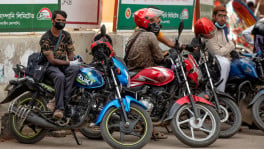
Even during the March–April fuel crisis, when drivers say they waited up to 18 hours outside filling stations, the volume of rides did not decline significantly. However, the pressure on drivers became severe. Amid fears that the Iran war could disrupt Bangladesh's fuel supply, long queues formed outside filling stations.
This profession gives us freedom, but if we continue to suffer these losses, we may have to leave. For the past three to four years, these platforms have been treating us unfairly. They only think about customers and keep fares so low that it has become difficult for us to make a living.
For ride-sharing drivers, the shortage meant losing both working hours and potential income.
Abdul Hakim, another driver, said, "During the March–April fuel crisis, we had to wait 14 to 18 hours outside fuel stations in the scorching sun just to get fuel. But the fares did not increase; they remained the same. We suffered huge losses. Doesn't spending 14 hours under the sun have any value?"
Yet even during that period, demand for ride-sharing did not collapse. Drivers continued working because, for many, it remained more accessible than finding another job.
When asked why they are not leaving the profession, Abdul Hakim said, "This profession gives us freedom, but if we continue to suffer these losses, we may have to leave. For the past three to four years, these platforms have been treating us unfairly. They only think about customers and keep fares so low that it has become difficult for us to make a living."
On 20 April, ride-sharing drivers working with platforms staged protests in Dhaka, demanding a revision of the existing fare structure.
They called for the per-kilometre fare to be raised to Tk35 and a minimum fare to be fixed. The protest was prompted largely by rising fuel prices, which, together with higher vehicle maintenance costs and unchanged ride fares, have placed growing financial pressure on drivers.
The discount paradox
Promotional campaigns and discounts have become a source of distrust. While customers benefit from them, riders often see them as a curse.
Iqbalur Rahman Khalil, another ride-sharing driver, said discounts offered to customers sometimes reduce what drivers receive at the end of a journey.
"Promotions and promo codes are also killing us. We see a ride for Tk150, but when we drop the customer, the bill comes to Tk80. This does not even cover our fuel cost," he said.
But the platforms affirm that fares are determined through intelligent, data-driven systems rather than fixed calculations alone.
According to platform officials, apps monitor each journey and adjust the final fare if the destination changes, a vehicle remains stuck in traffic, or the driver follows a longer route than the one suggested by the application. Depending on the journey, the price can be automatically increased or decreased.
Pathao and Uber representatives could not immediately respond to requests for a comment.
The battle over pricing
Nahid Ahmed, Growth, Business Intelligence and AI Automation Lead at Hishabee, said his experience with Pathao, Uber and inDrive reflects the intense battle over pricing.
"InDrive used to be my go-to for the lowest fares, but lately, their offers have crept up slightly above the norm, and it is getting harder to get a ride; wait times are stretching out," he said.
"That is when I dove deeper into Uber. They have two bike options: regular bikes, around Tk130 to Tk150 for four to five kilometres, and the newer Bike Saver, Tk90 to Tk110. Bike Saver seems like a recent launch, but the catch is that requests often go unanswered for ages. I am guessing, and I could be wrong, that riders might not need to pay the daily subscription fee for these. I once glimpsed at a rider's screen, which showed the message: 'No fee required'."
He said he usually turns to Pathao when he needs an early-morning ride quickly.
"Their dynamic pricing algorithm is spot-on," he said. "They start with a fixed rate like Uber's Bike, Tk130 to Tk140, but without bargaining options for bikes. Instead, they surprise you with random offers. I have scored rides between Tk109 and Tk120 in that bracket, and if it is urgent, Pathao wins because riders accept instantly. They have no clue about the discounts until the end."
Uber bikers say the platform charges them Tk70 daily and offers regular Bike and Bike Saver services. Bike Saver initially offered fares as low as Tk70 to Tk80 before prices were adjusted upwards to seek a balance between user affordability and driver acceptance.
Pathao bikers say the platform charges approximately 15% commission, with many payments made in cash and commissions settled later.