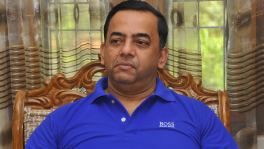
Adnan Azad and the untold story of animal welfare in Bangladesh
Today, Adnan is one of Bangladesh’s most recognised animal rescuers. But behind the scenes, he was supported by a benefactor, one who now holds the highest office in the country

Long before animal welfare became a part of public discourse in Bangladesh, a small network of rescuers and volunteers across the country was quietly working to keep injured animals alive.
Among them was Adnan Azad. Today, he is one of Bangladesh's most recognised snake rescuers. Videos of him pulling venomous cobras from homes, drains and underground tunnels regularly circulate online.
Thousands of people now contact rescuers instead of immediately killing snakes. This cultural shift, however, took years of awareness-building.
For Adnan, what started as childhood fascination slowly became full-time conservation work. He had begun rescuing snakes from homes, releasing them back into nature and trying to educate people that snakes were part of the ecosystem rather than creatures that should be killed.
 Keep updated, follow The Business Standard's Google news channel
But passion alone could not sustain the work. Fuel costs, emergency transport, rescue equipment, treatment for injured animals, and volunteer operations all required constant funding.
"The biggest obstacle was always financial," Adnan said. "You can rescue one or two animals with passion. But when hundreds of calls come every month, you need structure and support."
In the early days, there was little to no institutional support.
Yet one influential figure was providing support behind the scenes. Adnan says that person was now-Prime Minister Tarique Rahman, motivated by nothing more than his love and sense of responsibility for innocent animals.
"He was supporting animal welfare long before it became publicly visible," Adnan said during an extended conversation about conservation, rescue work and the growth of organised animal welfare in Bangladesh.
"At that time, people did not take this work seriously. Most of us were funding everything out of our own pockets."
That, he says, is where PM Tarique stepped in quietly.
According to Adnan, the support began years ago through personal connections.
"For a decade, the prime minister has been supporting three to four people working for wildlife and stray dogs. Yes, he was in London. He used to do it through his current Additional Press Secretary Atiqur Rahman Rumon, in the form of financial and strategic support," he explained.
"He did all these things quietly. It has no political interest."
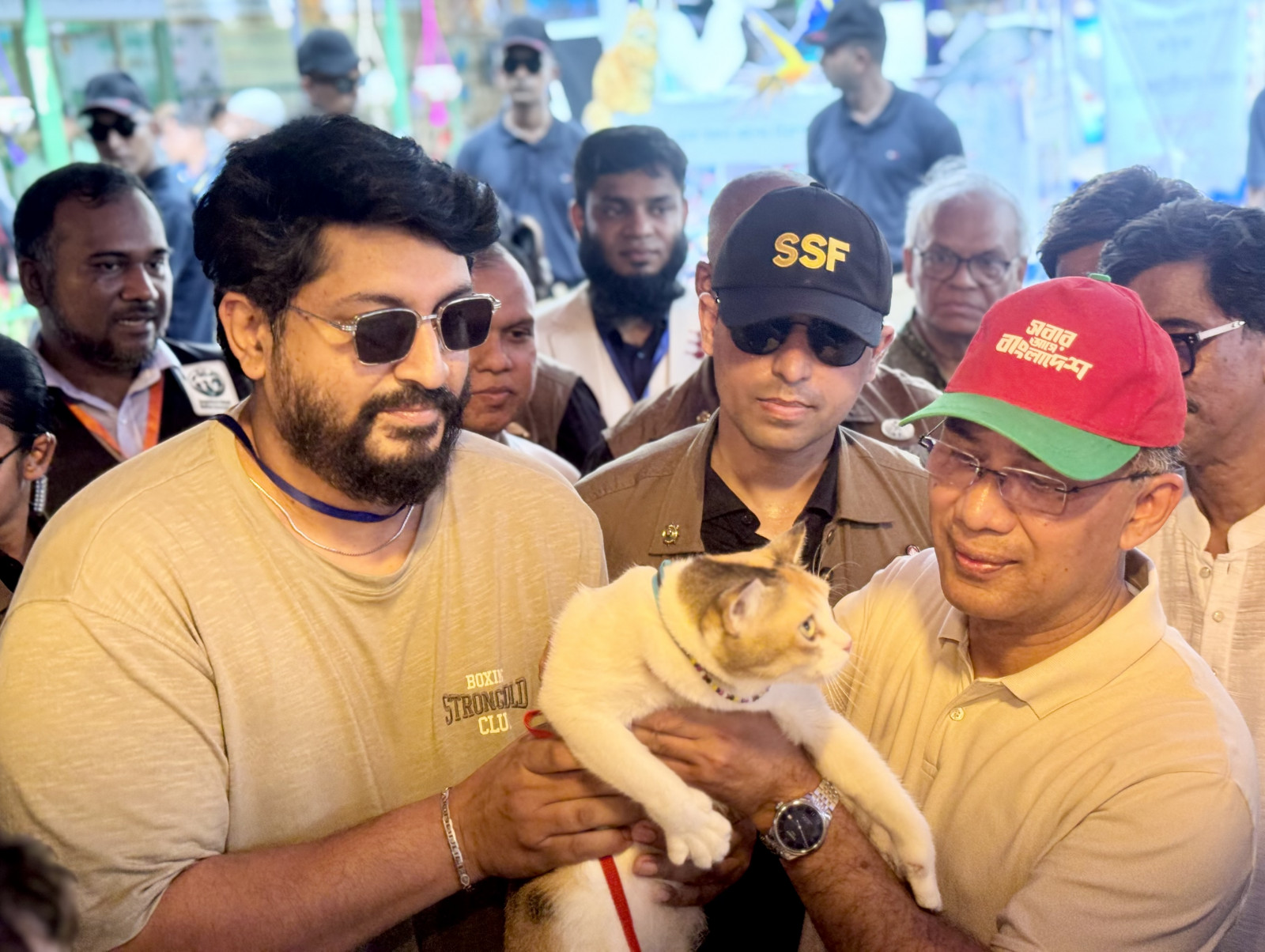
Adnan says when Tarique Rahman learned about his work, he began offering assistance discreetly through intermediaries, particularly through people close to him. For nearly a decade, Adnan claims, various rescue and welfare activities received financial and logistical support without public acknowledgement.
"He never wanted public appreciation," Adnan said. "Many volunteers working beside us did not even know where the support was coming from."
The support went far beyond snake rescues.
Funding reportedly helped rescuers provide treatment for injured street dogs and cats, organise feeding drives, respond to wildlife emergencies and expand volunteer networks across different districts.
Adnan believes one of the prime minister's strongest motivations was his deep concern about animal abuse cases. He recalls receiving late-night calls after disturbing incidents involving animals surfaced online.
In one case, after reports emerged from Bogura that a cat had been brutally killed, Tarique Rahman contacted him immediately and instructed him to ensure legal action was taken.
"He was deeply disturbed by it," Adnan said. "He wanted the person responsible to be brought to justice."
Rescue teams later travelled to Bogura, filed complaints and coordinated with law enforcement regarding the incident.
In another incident, Adnan says he received calls regarding abandoned and injured cats near Rabindra Sarobar in Dhaka after the matter appeared online.
"He would see these things before many of us did. And he would immediately ask us to respond."
After 5 August 2024, Tarique Rahman told Adnan that he wanted to do something on a bigger scale, for wildlife rescue. That call eventually gave birth to Bangladesh Animal Welfare Association (BAWA) in September 2025, an organisation designed to connect volunteers, rescuers and animal welfare workers nationwide.
For Adnan, that was the most important contribution — helping create a broader structure for animal welfare work in Bangladesh.
He acknowledges that the organisation was established with direct encouragement from Tarique Rahman.
"He told us not to divide animals into categories. He said if you truly care about wildlife, then you must also care about street dogs, cats and abandoned animals."
That philosophy shaped the organisation's broader focus — combining wildlife rescue with urban animal welfare.
"The organisation was established with direct encouragement from Prime Minister Tarique Rahman. He told us not to divide animals into categories. He said, 'If you truly care about wildlife, then you must also care about street dogs, cats and abandoned animals.' That philosophy shaped the organisation's broader focus — combining wildlife rescue with urban animal welfare."
One of the organisation's most visible projects became a free ambulance service for animals in Dhaka.
The ambulance, according to Adnan, was also provided with support from Tarique Rahman and now transports injured or sick animals free of charge across the capital.
"It was the first free animal ambulance service of its kind here," Adnan said. He mentioned that two more ambulances will be added in 2026, to operate across different districts.
The organisation later expanded into feeding programmes, vaccination campaigns and emergency rescue operations.
One major intervention came during a tourism slowdown in Saint Martin's Island, when hundreds of stray dogs reportedly began suffering from severe food shortages after hotels and restaurants stopped operating normally.
According to Adnan, teams travelled to the island carrying cooked food and medical supplies for the animals.
Another area of work involved anti-rabies vaccination drives for stray dogs in multiple districts, including Dhaka and Bogura.
Adnan's work did not go unnoticed. He is set to receive the Bonno Prani Award, with the official ceremony scheduled for 23 June.
Adnan pointed to recent efforts to strengthen Bangladesh's animal welfare laws.
He says discussions are ongoing around revising gaps in the country's existing animal welfare framework so that ordinary citizens can more easily pursue legal action in cases of animal abuse.

According to him, those conversations accelerated because of growing institutional attention toward animal welfare.
Beyond policy and organisational work, Adnan believes political attention itself changed how authorities respond to animal-related issues.
He described situations where ministers, local leaders and administrators became directly involved in rescue operations — something that would have been unimaginable years ago.
"The mindset changed," he said. "When leadership takes these issues seriously, others also begin taking them seriously."
That shift is now visible in everyday rescue work.
In many parts of Bangladesh, people increasingly contact rescuers instead of immediately killing snakes or attacking stray animals. Social media awareness, combined with organised rescue networks, has gradually changed public behaviour.
Still, Adnan says the work remains emotionally and physically exhausting.
Some days involve rescuing venomous cobras from underground tunnels beneath homes. Other days mean treating injured dogs, transporting abandoned cats or responding to wildlife trapped inside rapidly expanding urban areas.
Yet through all of it, he believes one thing helped the movement survive long enough to grow: "Without support, many of us simply could not continue."
To get in touch with Adnan, contact him at 01717929359.