Jamaat pledges tax cut, unveils broad governance agenda at Policy Summit
At the heart of the proposal is a plan to gradually reduce tax and value-added tax (VAT) rates, with a long-term goal of lowering corporate and income tax to 19% and VAT to 10%.

Jamaat's governance plans:
- Lowering corporate and income tax to 19% and VAT to 10%
- Zero tolerance for corruption,
- Expansion of the tax base
- Regulatory reforms designed to make business environment better
- Gas, electricity, water tariffs for industries not to be increased for 3 years
- Interest-free loans for 5 lakh graduates
- Finance 100 students for their education at top-ranked int'l universities each year
- Free medical services for citizens aged over 60, children under 5
Jamaat-e-Islami has unveiled an extensive reform roadmap at its Policy Summit 2026, placing tax reduction at the centre of a broader agenda aimed at restructuring governance, boosting investment, strengthening social protection, and transitioning the economy towards a knowledge-based model.
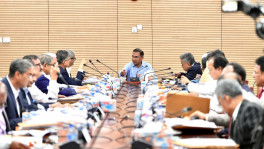
The summit, held at Hotel InterContinental in Dhaka, brought together diplomats, political leaders, academics, industrialists, journalists, and representatives from civil society. During the day-long programme, Jamaat outlined policy commitments across six thematic sessions.
 Keep updated, follow The Business Standard's Google news channel

The event opened with an inaugural address by Jamaat Ameer Dr Shafiqur Rahman, who framed the summit as a platform to articulate long term policy priorities and initiate dialogue on systemic reforms.
At the heart of the proposal is a plan to gradually reduce tax and value-added tax (VAT) rates, with a long-term goal of lowering corporate and income tax to 19% and VAT to 10%.
Jamaat leaders said the proposed tax rationalisation would go hand in hand with zero tolerance for corruption, expansion of the tax base, and regulatory reforms designed to make the business environment more predictable and investment-friendly.
Reaffirming its governance stance, the party announced plans to introduce a Smart Social Security Card that would integrate National ID, Tax Identification Number (TIN), health services, and social welfare benefits into a single digital platform. According to the announcement, the initiative is intended to improve transparency, reduce leakages, and ensure targeted delivery of public services.
To stabilise the industrial sector, Jamaat pledged that gas, electricity, and water tariffs for industries would not be increased over the next three years. It also proposed reviving closed factories through public-private partnerships, with workers receiving 10% ownership, a move the party said would enhance productivity while protecting labour interests.
Simplified licensing procedures and regulatory ease were also highlighted as part of a broader effort to create a business-friendly policy environment. Small and medium-scale farmers, meanwhile, would be supported through interest-free loans to boost agricultural productivity.
In the education sector, Jamaat outlined a series of measures aimed at easing financial pressure on students and improving access to global opportunities.
The party announced interest-free "Qard-e-Hasana" loans of up to Tk10,000 per month for a maximum of two years for 5 lakh graduates, covering the period between graduation and securing employment. In addition, 100,000 students would receive monthly interest-free education loans based on merit and financial need.
Each year, the party plans to finance 100 students to pursue higher education at top-ranked international universities, including Harvard, MIT, Oxford, and Cambridge, ensuring that financially disadvantaged but talented students are not excluded from world-class academic institutions.
Structural reforms were also proposed, including the merger of Eden College, Begum Badrunnesa College, and Home Economics College to establish what Jamaat described as the world's largest women's university.
Large colleges under the National University would be upgraded into independent universities, while all public recruitment processes would be conducted strictly on the basis of merit.
Healthcare reform featured prominently in the policy agenda, with Jamaat pledging free medical services for citizens aged over 60 and children under five. The party also announced plans to establish 64 specialised hospitals across the country, one in each district, to expand access to advanced medical care.
A key social protection initiative outlined at the summit was the "First Thousand Days Programme," which aims to bring maternal and child healthcare under a comprehensive safety net. The programme would cover the period from pregnancy through a child's first two years, focusing on nutrition, primary healthcare, and early development to reduce long-term health risks.
Placing youth employment at the centre of its development strategy, Jamaat proposed the creation of a new ministry dedicated to skilled manpower development and job placement. Over the next five years, the party aims to train 1 crore young people with market-oriented skills, establish Youth Tech Labs in every upazila, and create District Job Youth Banks to ensure job access for five million youths. The plan also includes developing 5 lakh entrepreneurs, prioritising women, youth, and marginalised groups, producing 15 lakh freelancers, and launching targeted skill programmes for low-educated and semi-skilled young people.
In the digital sector, Jamaat announced "Vision 2040" as its long-term ICT transformation blueprint. The vision targets the creation and placement of 20 lakh ICT jobs by 2030, the establishment of a National Payment Gateway to facilitate freelancing and digital exports, $5 billion in ICT export earnings, and $1.5 billion in government cost savings through increased efficiency and digitisation. Party leaders said the overarching goal is to move Bangladesh away from a labour-dependent economy towards a knowledge-driven economic model.
Remittance growth also formed a key part of the policy framework. Jamaat pledged to double or triple remittance inflows within five to seven years by expanding overseas employment opportunities for skilled workers. Beyond financial remittances, the party introduced the concept of "intellectual remittance," proposing to bring expatriate Bangladeshi professionals, researchers, and academics back into national development efforts by leveraging their expertise and global experience.
Party leaders said the policy framework announced at the summit would be further refined through expert consultations and public engagement, describing the initiative as a foundation for systemic reform, fiscal rationalisation, and inclusive growth.
The day-long conference was attended by Jamaat's Nayeb-e-Ameer Syed Abdullah Mohammad Taher, Secretary General Mia Golam Porwar, National Citizen Party Member Secretary Akhtar Hossain, and Chief Organiser Sarjis Alam, alongside policy experts, academics, and industry leaders.
Among them were Dr Ashiqur Rahman, Regional Manager for Asia at the Centralized Support to the ENFPs Network; Md Abdullah Al Mahmud, CEO of Thriving Skill; Professor Dr Waresul Karim, Dean of the School of Business and Economics and a PhD holder from the University of Leeds, UK; Professor Dr HM Mosarof Hossain, Chairman of the Department of Finance at the University of Dhaka; Shamim Sara Khan, former additional secretary of the industry ministry; and Dr Nasiruddin Ahmed, policy adviser at the International Growth Center and former chairman of the National Board of Revenue, among others.