



Beneath burning sky: Everyone feels heat, but informal workers pay highest price
As heatwaves intensify across Dhaka, rising temperatures are shrinking incomes, worsening health risks and exposing the vulnerabilities of the city's informal workforce

As extreme heat becomes an increasingly common feature of life in Dhaka, those working outdoors are finding themselves on the front line of a growing climate crisis.
For the city's thousands of rickshaw pullers, street vendors, cobblers, construction workers, and day labourers, soaring temperatures are not only a health hazard but also a threat to their livelihoods. Every hour spent resting in the shade often means less money earned, forcing many to choose between their well-being and their income.
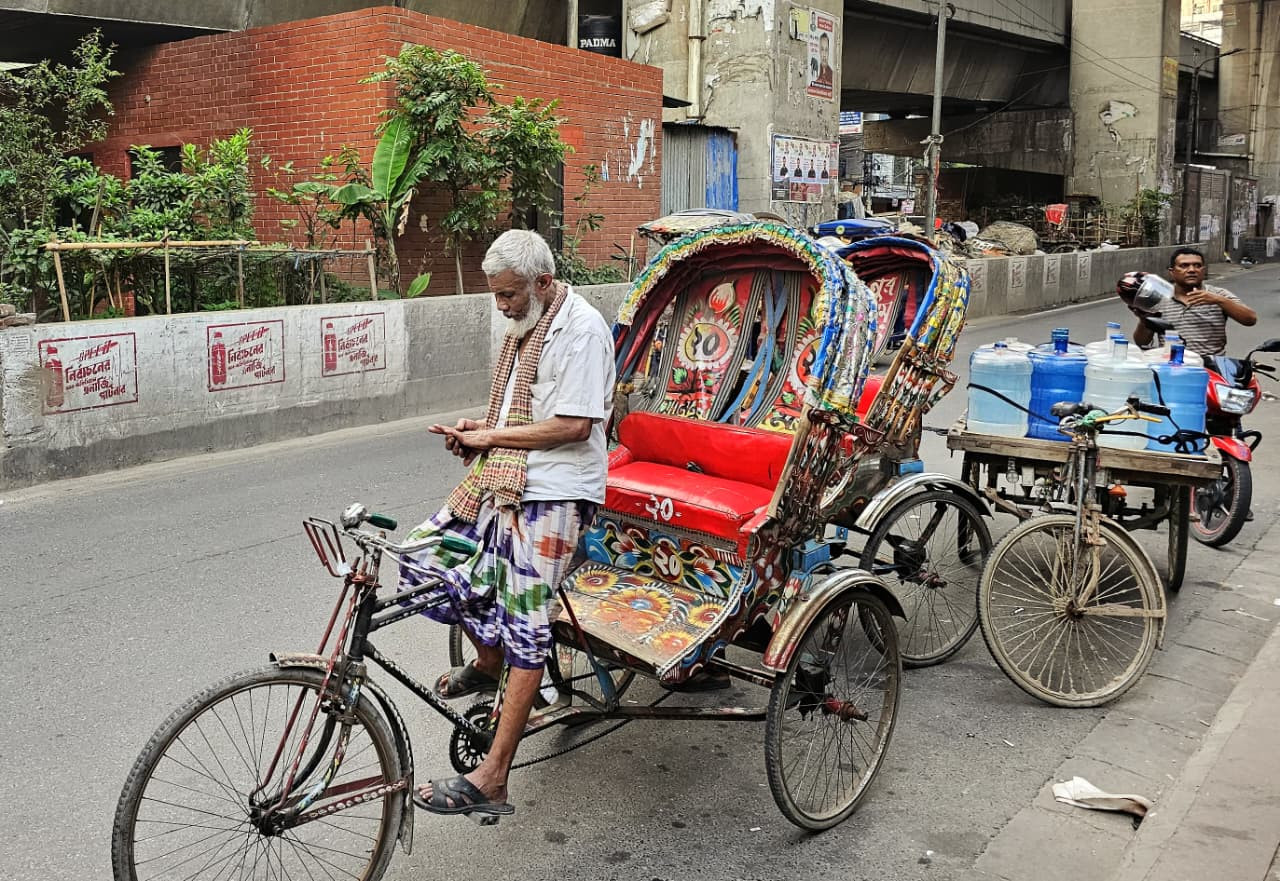
"During periods of extreme heat, the number of passengers drops, and I cannot work as long as I normally do. As a result, my daily income falls from around Tk1,200 to Tk700-800," said Salamat, a rickshaw puller who has spent 17 years on Dhaka's streets.
His experience reflects two simultaneous impacts of heatwaves. On the one hand, his ability to work declines; on the other, passenger numbers fall. As a result, heat not only places pressure on the body but also directly affects daily income.
 Keep updated, follow The Business Standard's Google news channel
At Moghbazar intersection, cobbler Moni Rishi has witnessed a similar change.
Working under a small umbrella, he repairs shoes throughout the day despite the heat. Rishi said temperatures have increased noticeably over the years while his earnings have declined.

Although he has become accustomed to working outdoors, he believes the city is far hotter than it used to be.
For many informal workers, however, stopping work is not an option.
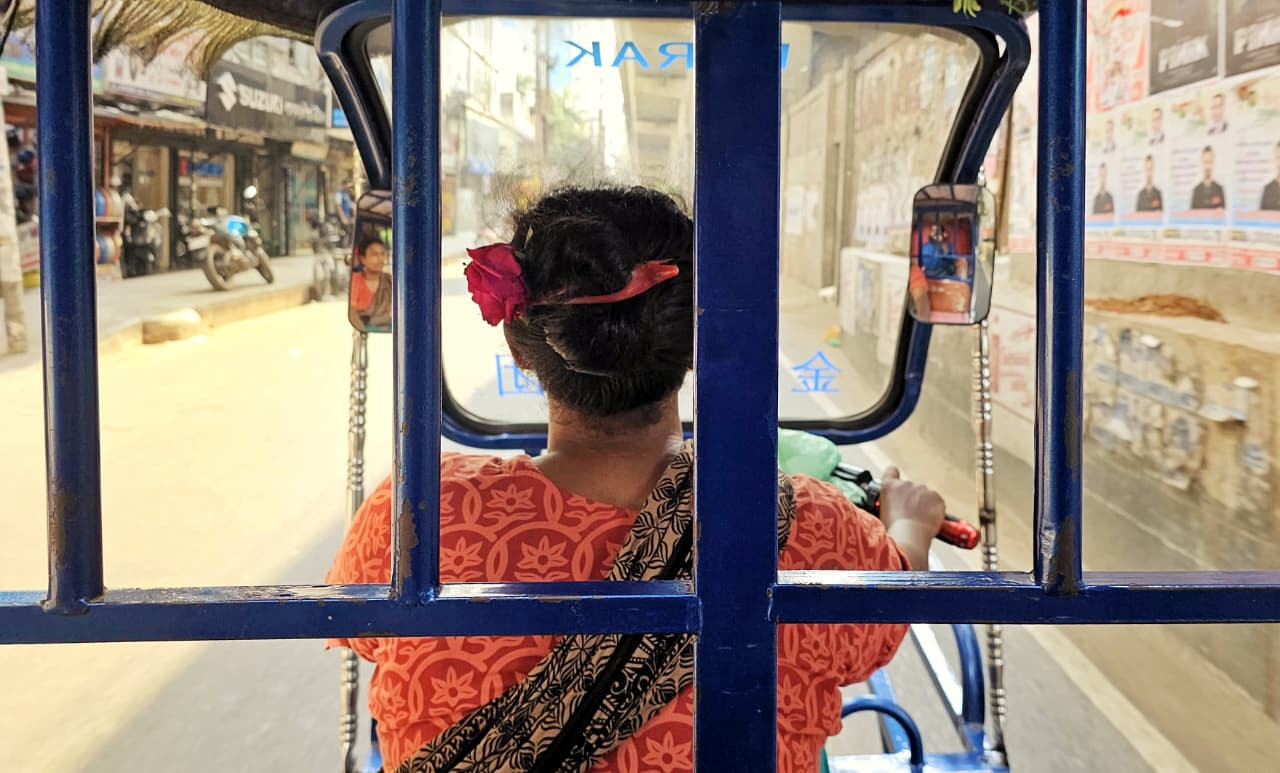
Khaleda, who has been driving a battery-run rickshaw in the alleys of Mugda-Manda area for the past five years, said the heat has added another expense to her daily routine.
She carries water while working, but after hours under the sun it often becomes too hot to drink. As a result, she regularly buys additional water and cold drinks, increasing her daily expenses.
Driving a rickshaw becomes difficult during extreme heat, she said, but she continues because she must support her son's education.
The struggles described by these workers reflect a broader reality across Bangladesh.
According to 2025 data compiled by Statista from the International Labour Organization (ILO), Bangladesh and much of South Asia fall within the 75%-89% range for informal employment. A large number of workers depend on daily earnings from jobs performed largely outdoors and with limited workplace protections.
Heat stress is increasingly emerging as a threat to both livelihoods and public health.
A 2025 report by Climate Rights International (CRI), titled My Body is Burning: Extreme Heat and Labor Rights in Bangladesh, documented widespread experiences of fatigue, dizziness and muscle pain among workers exposed to excessive temperatures. In some cases, symptoms became severe enough to prevent them from continuing work.
The report also identified inadequate access to drinking water, rest facilities and toilets as major obstacles to coping with extreme heat.
Research from elsewhere in South Asia suggests such conditions can create additional health risks. A 2019 study led by Indian climate scientist Vidhya Venugopal found that many workers particularly women deliberately reduced their water intake to avoid using workplace toilets, increasing the risk of dehydration and other heat-related illnesses.
Apart from informal workers like Salamat, Rishi and Khaleda, those challenges are also familiar to Sukanta Halder, a traffic constable with the Ramna Traffic Division, who spends eight hours a day directing vehicles at Moghbazar intersection.
He said there are no toilet facilities near his duty station. As a result, he often limits his water intake to avoid having to look for a washroom during work hours.

Dhaka's urban environment is also amplifying the problem.
Around 120,000 people living in 32,000 households across selected slum communities in Dhaka and Gazipur are among the populations most vulnerable to extreme heat, according to icddr,b.
Tin-roofed homes, overcrowded living conditions and high population density intensify the urban heat island effect, trapping heat and making already difficult living conditions even more challenging.
The economic consequences could be substantial.
The ILO estimated in 2019 that rising temperatures could result in the loss of 2.2% of total working hours globally by 2030, equivalent to nearly 80 million full-time jobs and economic losses of $2.4 trillion.
In Bangladesh, Climate Rights International estimates the country could lose 4.8% of its total working hours to heat stress by 2030 if adequate adaptation measures are not introduced. That would be equivalent to around 3.8 million full-time jobs.
The burden is falling disproportionately on workers who are least responsible for climate change, experts noted.
"The city has become unsafe for everyone, but it is even more unsafe for informal workers," said Dr Mohammad Moniruzzaman Khan, associate professor and director of Disaster Management and Vulnerability Studies at the Dhaka University
He added Dhaka's development model has made the city increasingly unsafe for its residents, with informal workers facing the greatest burden.
Dr Moniruzzaman also stressed that informal workers should be included in urban planning initiatives, noting that providing shaded spaces and safe drinking water for street workers would require little infrastructure investment, while safer working conditions are both practical and necessary given the essential services they provide.
Although heat islands and heatwaves may appear natural, they have been shaped by destructive patterns of urban development, pointing to the loss of water bodies and canals across the city as evidence that urban safety requires a new planning approach, he added.
Sohanur Rahman, a Bangladeshi youth leader and climate activist, said heatwaves should not be viewed merely as periods of excessive heat.
According to him, in the South Asian context, they represent a manifestation of the climate crisis in which labour, poverty and inequality intersect.
He said the greatest burden falls on people who have contributed almost nothing to carbon emissions but whose lives and livelihoods face the greatest risks.
Sohanur said heatwaves have become a climate justice issue, with many workers forced to labour outdoors during the hottest hours of the day while others work in air-conditioned environments.
He argued that the inequality is not only environmental but also structural.
He said heat protection policies, revised working hours, mandatory access to drinking water and rest facilities, and stronger social protection systems would be necessary to address the crisis.
Sohanur said a national heat action protocol is needed, including temperature-based work schedules, mandatory rest periods, emergency work stoppage guidelines during extreme conditions, access to water and shade at roadside and construction workplaces, and stronger social protection for informal workers.
"Climate policy should focus not only on reducing emissions but also on ensuring fairness in people's lives and livelihoods," he said. "That is at the heart of a just transition."


