Special HC bench delivers first verdict, acquits man sentenced to death in wife's murder case
The High Court bench comprising Justice Bhishmadev Chakrabortty and Justice KM Rasheduzzaman Raja acquitted Abdullah
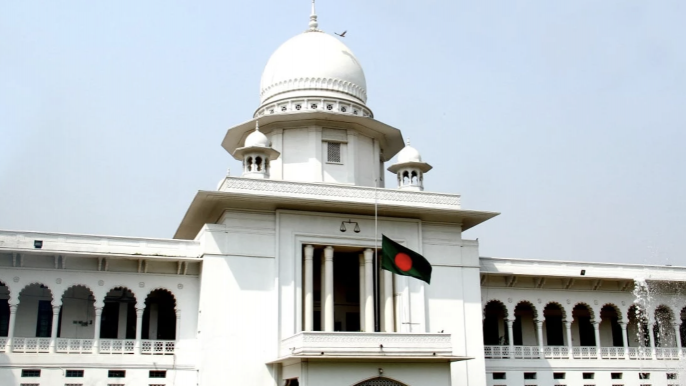
A newly formed specialised High Court bench tasked with prioritising death references and appeals under the Women and Children Repression Prevention Act delivered its first verdict today (16 June), acquitting a man who had been sentenced to death for the murder of his wife in Jashore in 2008.
The High Court bench comprising Justice Bhishmadev Chakrabortty and Justice KM Rasheduzzaman Raja acquitted Abdullah, citing weaknesses in the investigation and a lack of adequate evidence to support the conviction. Deputy Attorney General Imam Hossain Tarek confirmed the development.
According to case details, Sabura Begum suffered severe burn injuries at her home in Abhaynagar, Jashore, at around 3pm on 15 January 2008. On 21 January, her father, Samsur Sheikh, filed a case against his son-in-law Abdullah and several others.
 Keep updated, follow The Business Standard's Google news channel
Sabura recorded her statement before a magistrate on 22 January and died on 28 January.
In 2019, the Jashore Women and Children Repression Prevention Tribunal-1 sentenced Abdullah to death in the case. The death reference was subsequently sent to the High Court for approval, while Abdullah also filed a jail appeal after his arrest.
The Chief Justice constituted the special bench on 10 June to hear death references and appeals under the Women and Children Repression Prevention Act on a priority basis. Hearings in this case began before the bench on 14 June.
Speaking to the media, the deputy attorney general said the prosecution had alleged that Abdullah had tied Sabura's hands and legs, gagged her, and set her on fire using kerosene after demanding dowry.
However, he said the prosecution failed to prove the dowry demand allegation. He also noted that investigators did not include in the seizure list any kerosene or other materials allegedly used to start the fire.
He further said that although the incident occurred on 15 January, the case was filed six days later. During her treatment, Sabura gave birth to a stillborn child on 16 January, and the child was received at the hospital by Abdullah.
"If the husband had set her on fire, the question arises as to why he did not flee. Instead, he arranged for the victim's treatment at the hospital," Tarek said.
He added that the prosecution failed to establish Abdullah's presence at the scene at the time of the incident or prove that he had left the house immediately afterwards.
"The prosecution could not prove how the fire was started. Had there been even a single piece of evidence placing the husband at the scene, or had any witness testified to that effect, the maximum punishment could have been upheld," he said.
Tarek also noted that the fire occurred at around 3pm and engulfed the entire house, rather than affecting only the victim.