SC lifts HC bar on construction at Mirsarai economic zone
Beza says the zone has secured $18b in investments, including $3-4b from foreign firms

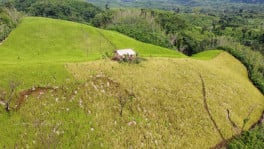
The Supreme Court has lifted a High Court-imposed bar on all construction and development work at the sprawling Mirsarai Economic Zone, now rebranded as the National Special Economic Zone (NSEZ). The intervention comes despite allegations that the project has illegally cleared thousands of acres of reserved forest and coastal mangroves in Chattogram.
According to the Bangladesh Economic Zone Authority (Beza), the zone has already secured approximately $18 billion in investment commitments, with $3-4 billion originating from international firms. Land has been allotted to 155 investors; 15 factories are operational, and 28 more are under construction.
On 9 September, the High Court halted all activity at the site after a public interest writ petition filed by Supreme Court lawyer Barrister Kazi Akhtar Hossain cited investigative findings published in The Business Standard.
 Keep updated, follow The Business Standard's Google news channel
The latest instruction, issued by Justice Farah Mahbub of the Appellate Division on 16 November and certified on 3 December, suspends the High Court's freeze and allows Beza and Bepza to resume land development until the High Court fully hears and disposes of the Rule.
The stay order came in the Civil Petition for Leave to Appeal filed by the Bangladesh Export Processing Zones Authority (Bepza) and another petition challenging the September 9 order. After hearing lawyers for both sides, the chamber judge stayed the High Court order.
The Appellate Division also instructed that the Rule be heard by a High Court bench led by Justice Foyej Ahmed, with a directive to complete the hearing "as expeditiously as possible," preferably within four weeks of receiving the order.
This marks a major turn in one of Bangladesh's most consequential environmental cases, a dispute that could reshape how development is allowed in ecologically fragile zones.
The petition and High Court Rule
The writ petition filed by Barrister Kazi Akhtar Hossain alleged that the ambitious economic zone was being built at the cost of "irreparable ecological destruction." It also cited an in-depth investigation by the environmental news portal The Climate Watch.
A two-judge bench of Justice Md Mozibur Rahman Miah and Justice Biswajit Debnath issued a Rule Nisi, asking the government to explain by 7 October why the mega-project should not be declared unlawful for violating the Forest Act of 1927. The bench said it found a prima facie case that the establishment and expansion of the NSEZ had razed vast areas of protected forest and mangrove ecosystems, causing "serious damage to ecology, biodiversity and the lives of millions of people and other species."
The writ named the Ministry of Environment, Forest Department, Department of Environment, Mirsarai Forest Range Office, Bepza and Beza as respondents. Pending disposal of the Rule, the High Court ordered all authorities to maintain the status quo for three months, freezing work across the 33,805-acre site.
The petitioner also sought full cancellation of the project and restoration of the area "to its earlier position before the initiation of industrial development." The court asked the petitioner to serve notices on all respondents within 48 hours.
The order, issued in the presence of Chief Justice Syed Refaat Ahmed, placed new scrutiny on coastal economic zones, which environmentalists say have been expanding at the expense of natural storm barriers that protect millions from cyclones and tidal surges.
'A vital step to protect a devastated ecosystem'
Following the High Court's intervention, The Legacy Attorneys, the firm that filed the case pro bono — said the ruling created space for environmental accountability.
"The Rule Nisi and the halt on further development ensure that no additional forest clearing can take place until the case is fully heard," the firm said on 17 September 2025. "This litigation is a vital step toward restoring the lost greenery of Mirsarai, protecting endangered wildlife habitats and preserving ecological balance for future generations."
Hossain said the writ was filed after disturbing evidence emerged through reports by The Business Standard and further findings by The Climate Watch. "After seeing the alarming forest loss linked to the NSEZ project, we felt compelled to intervene," he said.
The HC freeze had stalled a massive industrial undertaking
The freeze halted activity across nearly 34,000 acres, an area touted as a flagship industrial hub but widely criticised for its environmental cost.
The High Court pointed to allegations that the zone had been built through "systematic and unlawful destruction" of thousands of acres of reserved forest and mangroves. These ecosystems are protected under domestic law and recognised globally for buffering coastal communities against cyclones and storm surges.
The bench asked the government why the project should not be declared "without lawful authority and of no legal effect" and acknowledged the petitioner's call for the complete cancellation of the NSEZ.
"This is not only about trees," Hossain said. "It is about the rights of local people, the rule of law and the future of our coastal resilience."
His legal team argues that the destruction of forest land has exposed coastal communities to heightened climate risks by stripping away natural protection.
Hossain told TBS, "I respectfully urge that the writ petition be heard urgently, in line with the Appellate Division's directive. I remain hopeful that the Rule will ultimately succeed and that the project will be discontinued to protect millions of people and countless other species. The biodiversity of the region must be protected, and no further land acquisition or deforestation should be permitted."
Environmentalists call for restoration
The case has strengthened calls for a major policy shift in the zone. Environmental groups want all undeveloped industrial plots cancelled and the area brought under an intensive restoration programme.
M Zakir Hossain Khan, chief executive of Change Initiative said industrialisation had already weakened natural defences along the coast. "Mirsarai's reserve forest was a shield for the region. Destroying forests in the name of development is a crime against nature," he told TBS, urging that heavy industries be relocated and only low-impact cottage enterprises allowed.
Forest researcher Professor Kamal Hossain described the destruction as "massive and irreversible," though he said partial ecological recovery remains possible. "Undeveloped land should be cancelled immediately. A large-scale plantation programme must be launched, including vegetation buffers along the super dike and internal roads," he said.
Sharif Jamil, Waterkeepers Bangladesh Member Secretary, said, "An economic zone that chopped down thousands of trees on the coast of a climate-vulnerable country, leading to the displacement of the fishermen community, cannot be treated as a sustainable development project. This requires serious revision and a comprehensive, transparent, science-based based and inclusive environmental impact assessment can determine the expected way forward."