



Lula criticises global powers for ignoring UN, attacks veto power and calls for reform
Speaking at the IV Meeting in Defence of Democracy in Barcelona, Lula said no country, regardless of its influence, should act outside international frameworks

Brazilian President Luiz Inácio Lula da Silva called for sweeping reforms to the United Nations Security Council, criticising unilateral military actions by major powers and warning that global governance structures are failing to prevent conflict and economic inequality.
Speaking at the IV Meeting in Defence of Democracy in Barcelona, Lula said no country, regardless of its influence, should act outside international frameworks.
"No president from any nation across the globe, no matter how influential or powerful they might be, has the right to be dictating rules to other countries—absolutely none," he said.
 Keep updated, follow The Business Standard's Google news channel
He cited a series of conflicts to argue that major powers frequently act without consultation or approval from the United Nations, undermining the principles of multilateralism.
"These are unilateral decisions that don't respect the very forum where these people participate," he said.
The Brazilian president warned that such actions, combined with what he described as growing extremism and disregard for international norms, were contributing to rising global instability.
"This extremism, this lack of respect for the UN charter, and lack of respect for harmony between countries is very dangerous," he said, adding that the world is experiencing its highest level of armed conflict since the end of the World War II.
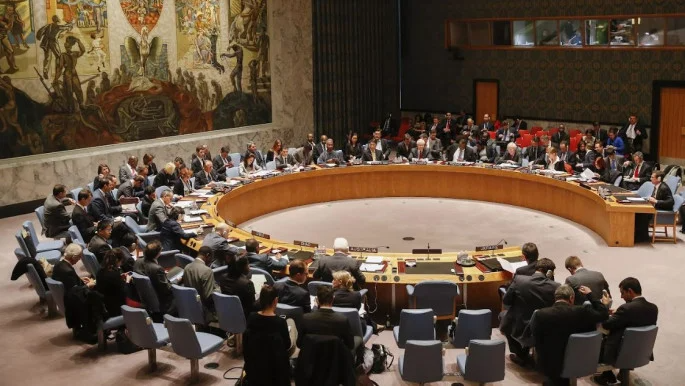
Central to his remarks was criticism of the Security Council's structure and functioning, particularly the veto power held by its permanent members, which he said renders the body ineffective.
"When they try to approve something, they possess the right of veto, rendering it ineffective. Any one of them can simply veto it," Lula said.
He also criticised the level of engagement by leading powers. "The United Nations Security Council does not convene—its permanent members do not attend; it's always just the ambassadors' representatives."
Lula proposed expanding the Council's membership to address what he described as imbalances in representation, calling for greater inclusion of developing regions and emerging powers.

"Where is the African representation? On the African continent alone, we have three countries with over 120 million inhabitants. Where is the participation from Mexico, from Brazil, from Argentina, from Colombia? Where is India's participation?" he said.
He also pointed to Germany, Japan and Indonesia as countries that could play a larger role in global decision-making.
In addition to expanding membership, the Brazilian president called for reforms to the veto system and urged greater accountability among permanent members.
"The five members of the UN Security Council must meet to change their behavior," he said.
He suggested that if permanent members fail to uphold their responsibilities, more fundamental changes may be required.
"If they don't feel they are truly fulfilling their sacred duty, then they must resign, or else we must fundamentally change the UN charter once and for all," he said.
Lula also advocated empowering the United Nations Secretary-General to convene extraordinary meetings independently of the Council's permanent members.
"I believe that heads of state must demand that the UN Secretary General convenes extraordinary meetings, even without asking the five members of the Security Council. The UN cannot remain silent and simply watch what is happening in the world," he said.

Linking geopolitical tensions to economic consequences, Lula said conflicts triggered by unilateral decisions have a disproportionate impact on poorer populations worldwide.
"If Trump invades Iran, suddenly bean prices rise in Brazil, corn prices go up in Mexico, and gasoline becomes more expensive in another country. It is the poor who ultimately pay for the irresponsibility of wars that nobody truly wants," he said.
He criticised global military spending, contrasting it with persistent poverty and hunger.
"What absolutely cannot be tolerated is the world spending $2 trillion 700 billion on weapons while so many people are left to starve," he said.
Lula framed these issues as part of a broader crisis in multilateralism, arguing that weak international coordination and limited representation have undermined the ability of institutions to address global challenges.

"The world's problem is multilateralism; it is not an internal problem of Mexico or Spain, it is a problem of the United Nations. It is about showing respect for the United Nations Charter," he said.
Reiterating Brazil's foreign policy stance, the Brazilian president emphasised his opposition to conflict and support for international cooperation.
"Brazil does not want war with the United States, China, Russia, or Uruguay. I don't want war; I want peace," he said.
"I want peace. I want my country to develop and my people to live well and be able to study."

He also linked global governance failures to domestic economic and social concerns, arguing that current economic systems often fail to benefit the poor.
"For the poor, over-productivity is worth absolutely nothing; they do not profit from it," he said.
Lula added that addressing such disparities is essential to restoring confidence in democratic systems.
"We must address these issues so democracy can regain its credibility, which it is slowly losing because it often fails to respond to the aspirations of society," he said.


