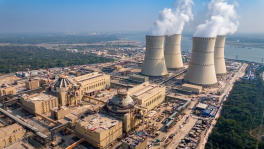
Strengthening nuclear diplomacy to secure Bangladesh's long-term energy future
Establishing a domestic nuclear energy programme requires extensive international cooperation to ensure compliance with nuclear safeguards, safety standards and long-term fuel supply arrangements

Energy resources are strategic assets that are fundamental to a nation's economy, security and infrastructure.
In today's digital and electrified world, control over energy resources and technologies determines a nation's ability to build resilient energy infrastructure, maintain economic stability and secure technological independence.
Very few countries are net energy exporters or rely entirely on self-sufficient domestic energy supplies. True energy independence is rare.
 Keep updated, follow The Business Standard's Google news channel
For resource-constrained nations, energy diplomacy is a matter of national survival, bridging the gap between domestic scarcity and external resources. Today's energy diplomacy is shaped by the challenge of managing the traditional geopolitics of fossil fuels while simultaneously navigating the emerging geopolitics of the global green transition.
Energy diplomacy refers to a country's use of foreign policy to secure its energy needs, safeguard economic stability and manage geopolitical relationships. It enables countries to negotiate trade routes, build strategic alliances and ensure a continuous, reliable and affordable supply of energy while balancing national security with economic prosperity. It also facilitates clean energy investment, diversification of the domestic energy mix and protection against global market volatility.
For countries new to nuclear power, developing a civilian nuclear programme is fundamentally a geopolitical and strategic undertaking rather than merely an energy project.
Because a nuclear power programme depends on foreign countries and companies for decades, a country needs strong diplomatic relations to ensure continued access to technology, nuclear fuel, spare parts, technical expertise and other support throughout a nuclear power plant's 60- to 100-year operational life.
Bangladesh's transition to a diversified, modern and cleaner energy mix hinges on maximising the use of nuclear energy. Achieving this requires a long-term strategic vision that prioritises reliable baseload electricity, reduces exposure to volatile global fuel markets and strengthens energy security.
Nuclear diplomacy provides the foundation for this strategy by supporting Bangladesh's long-term ambition of expanding nuclear generation capacity to between 7,200 MW and 9,000 MW by 2050.
A robust nuclear diplomacy strategy
Bangladesh's long-term energy security depends on reducing its reliance on imported fossil fuels while accelerating the deployment of renewable energy. Given its limited domestic gas reserves, largely unmined coal resources and minimal hydropower potential, nuclear power will be essential to ensuring reliable baseload electricity.
Bangladesh therefore requires a strategic vision for nuclear power development anchored in a long-term plan for energy independence.
The proposed three-phase roadmap envisages nuclear generation capacity reaching 2,400 MW by 2030, expanding to between 4,400 MW and 5,000 MW by 2040, and reaching 7,200 MW by 2050.
This strategy aims to stabilise baseload electricity supply, reduce exposure to volatile fossil fuel markets and strengthen long-term energy independence.
A state-led framework should prioritise four key pillars to expand and localise Bangladesh's nuclear capacity:
Rooppur NPP expansion
Construct two additional Generation III+ reactors at the existing Rooppur site to maximise the use of existing infrastructure, transmission networks and the skilled workforce.
Development of a second NPP site
Strengthen international partnerships to establish a second nuclear power plant site with two to three additional large-scale reactors.
Deployment of small modular reactors
Explore the deployment of 8 small modular reactors (SMRs) to supply decentralised power grids and industrial zones safely and efficiently.
Advanced reactor technologies
Invest in advanced fast-neutron reactor technologies to strengthen long-term energy resilience.
Establishing a domestic nuclear energy programme requires extensive international cooperation to ensure compliance with nuclear safeguards, safety standards and long-term fuel supply arrangements.
Nuclear diplomacy is therefore a prerequisite for developing a national nuclear power programme, as civilian nuclear technology depends on sustained international collaboration.
For Bangladesh, nuclear diplomacy is a two-pronged foreign policy strategy. It seeks to secure peaceful civilian nuclear energy to support economic growth while simultaneously promoting global nuclear disarmament and non-proliferation. It balances critical infrastructure development with Bangladesh's constitutional commitment to peace.
Bangladesh's long-term energy security depends on reducing its reliance on imported fossil fuels while accelerating the deployment of renewable energy. Given its limited domestic gas reserves, largely unmined coal resources and minimal hydropower potential, nuclear power will be essential to ensuring reliable baseload electricity.
Firstly, the three core pillars of Bangladesh's nuclear diplomacy are energy security, geopolitical security and soft power. Together, these strengthen Bangladesh's standing in international forums, particularly the International Atomic Energy Agency (IAEA), as a responsible, compliant and peace-oriented nation while aligning its nuclear development with global climate goals.
Secondly, Bangladesh should strengthen the use of Intergovernmental Agreements (IGAs) to diversify technology partnerships. IGAs establish the legal, financial and safety frameworks between technology suppliers, vendor countries and host nations, making them a prerequisite for developing a national nuclear power programme.
These agreements also provide the sovereign guarantees needed to attract foreign investment and ensure compliance with international non-proliferation obligations.
Successfully implementing Bangladesh's nuclear roadmap will require a coordinated, whole-of-government approach that integrates diplomacy, regulatory capacity and infrastructure investment. Aligning foreign policy with nuclear development is essential to securing technology transfer, financing and long-term grid integration through 2050.
Nuclear energy diplomacy involves a wide range of stakeholders.
In Bangladesh, success will depend on close coordination among government ministries and agencies. The Ministry of Science and Technology should oversee technological development, nuclear safety regulation and capacity-building for large-scale NPPs and SMRs.
The Economic Relations Division should manage external financing, sovereign loans and debt restructuring, including negotiations on repayment terms and project costs.
The Ministry of Foreign Affairs should negotiate intergovernmental agreements, engage with international non-proliferation frameworks and strengthen partnerships with experienced nuclear technology vendor countries to enhance Bangladesh's diplomatic and technical capacity.
Nuclear energy diplomacy offers developing countries access to the investment, technology and infrastructure needed to address energy poverty while building reliable, low-carbon energy systems. As geopolitical shifts reshape global energy markets, they also create new opportunities for strategic international cooperation.
Bangladesh officially entered the global nuclear community with the initial fuel loading of the first unit of the Rooppur Nuclear Power Plant. As the country enters the nuclear era, strengthening its nuclear diplomacy will require expanded intergovernmental agreements, a robust domestic regulatory framework and strategic partnerships to support future large-scale NPPs and SMRs.
Mohammad Shawkat Akbar is a former chairman of Bangladesh Atomic Energy Commission.
Disclaimer: The views and opinions expressed in this article are those of the author and do not necessarily reflect the opinions and views of The Business Standard.