One planet, one chance: Why climate action can no longer wait
It is a present reality shaping economies, societies, and lives across the globe.

Every year, World Environment Day reminds humanity of a simple yet uncomfortable truth: our future depends on the health of the planet we inhabit.
In 2026, that message carries unprecedented urgency – a global call for climate action.
Hosted by the Republic of Azerbaijan under the national theme "Inspired by Nature. For Climate. For Our Future," and this year's observance comes at a time when climate change is no longer a distant threat discussed only in scientific reports.
 Keep updated, follow The Business Standard's Google news channel
It is a present reality shaping economies, societies, and lives across the globe.
Across continents, communities are facing increasingly severe heatwaves, floods, droughts, storms, and wildfires.
Scientific evidence continues to demonstrate that human-induced greenhouse gas emissions are driving long-term changes in the Earth's climate system.
The consequences extend far beyond environmental degradation, affecting food security, public health, economic stability, and social well-being.
The challenge confronting humanity today is not simply one of reducing emissions. It is about redefining the relationship between economic development and the natural systems upon which all development ultimately depends.
For centuries, economic growth was built on the assumption that nature was abundant and inexhaustible.
Forests appeared limitless, rivers endlessly replenishable, and the atmosphere capable of absorbing whatever waste industrial societies produced.
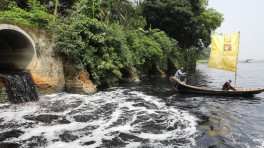
Today, that assumption is increasingly difficult to sustain. Natural ecosystems are under mounting pressure from deforestation, biodiversity loss, pollution, and unsustainable patterns of production and consumption.
Environmental economists have long argued that societies are moving from a world where natural resources seemed abundant to one where ecological limits increasingly shape economic possibilities.
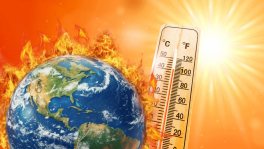
Climate change is perhaps the clearest manifestation of this reality. Rising temperatures, changing rainfall patterns, and ecosystem degradation are revealing constraints that economic systems can no longer ignore.
Sustainable development therefore requires more than economic expansion; it requires protecting the ecological foundations upon which prosperity depends.
Few countries illustrate the unequal burden of climate change more clearly than Bangladesh. Despite contributing only a small share of global greenhouse gas emissions, the country remains among the nations most vulnerable to climate-related risks.
Its geographic location, dense population, extensive river systems, and low-lying coastal regions make it particularly susceptible to floods, cyclones, salinity intrusion, riverbank erosion, and sea-level rise.
For millions of Bangladeshis, climate change is not a future scenario – it is already influencing livelihoods, agricultural productivity, migration patterns, and public health outcomes.
Coastal communities face stronger storms and increasing environmental uncertainty, while farmers must adapt to changing weather conditions that affect crop yields and water availability.
Urban centres are simultaneously confronting rising temperatures and growing pressures from climate-induced migration.
Yet Bangladesh has emerged as a notable example of resilience and adaptation. Over the past two decades, the country has invested significantly in disaster preparedness, cyclone shelters, community-based adaptation programmes, and climate-resilient infrastructure.
These efforts demonstrate that proactive policies can substantially reduce vulnerability, even under challenging circumstances.
More recently, environmental restoration has gained increasing prominence within national climate discussions. Large-scale afforestation initiatives, ecosystem conservation programmes, and efforts to strengthen green infrastructure reflect a growing recognition that environmental sustainability and economic development are not competing objectives.
Rather, they are mutually reinforcing goals. Tree-planting programmes, when carefully designed and effectively managed, can contribute to carbon sequestration, biodiversity conservation, erosion control, and improved local environmental conditions.
However, climate action cannot be reduced to tree planting alone. While afforestation is valuable, long-term climate resilience requires a broader transformation across multiple sectors.
The transition to renewable energy represents one of the most important priorities. Expanding solar and wind energy can reduce dependence on fossil fuels, strengthen energy security, and contribute to national climate commitments.
Bangladesh has already demonstrated innovation through solar home systems and distributed renewable energy solutions. Scaling up these efforts will be essential in the coming decade.
Agriculture must also adapt to a changing climate. Climate-resilient crop varieties, efficient irrigation technologies, improved water management, and strengthened agricultural extension services can help protect food security while supporting rural livelihoods.
Equally important is the future of urban development. Rapid urbanisation without adequate environmental planning can intensify heat stress, air pollution, flooding, and infrastructure vulnerability. Green spaces, urban forests, sustainable transport systems, and climate-sensitive city planning are increasingly becoming necessities rather than luxuries.
At the international level, climate finance remains a critical issue. Developing countries facing the greatest climate risks often possess the fewest resources to respond effectively. Supporting vulnerable nations through adaptation finance, technology transfer, and capacity building is not simply a matter of fairness – it is essential for achieving global climate goals.
This year's World Environment Day theme carries an important lesson. Nature is not merely a victim of climate change; it is also one of humanity's strongest allies in addressing it.
Forests absorb carbon, wetlands reduce flood risks, mangroves protect coastlines, and biodiversity strengthens ecosystem resilience. Healthy ecosystems provide services that no technology can fully replicate.
For Bangladesh, this lesson is particularly significant. The country's rivers, wetlands, forests, and coastal ecosystems have sustained communities for generations. Protecting these natural assets is not simply an environmental responsibility; it is an investment in long-term economic and social stability.
World Environment Day should therefore be viewed not merely as an annual observance, but as a reminder that environmental stewardship is an ongoing responsibility. Governments must strengthen environmental governance, businesses must adopt more sustainable practices, academic institutions must continue generating evidence-based solutions, and citizens must recognise their role in protecting shared natural resources.
The climate crisis is undoubtedly one of the defining challenges of the twenty-first century. Yet it is also an opportunity to rethink how societies pursue development, allocate resources, and define progress.
Economic growth that undermines ecological stability ultimately becomes self-defeating. Sustainable prosperity requires balancing human ambition with environmental responsibility.
Humanity has only one planet. The scientific evidence is clear, the environmental signals are becoming increasingly difficult to ignore, and the costs of delay continue to rise.
Future generations will judge our era not by how well we understood the climate crisis, but by how decisively we acted in response to it.
The window for meaningful action remains open, but it is narrowing rapidly. The choices we make today will shape the world inherited by future generations. There is still time to build a more sustainable future. But there is no longer time to wait.
Sadia Islam is an assistant professor, Department of Environmental and Resource Economics, Dhaka School of Economics
Disclaimer: The views and opinions expressed in this article are those of the author and do not necessarily reflect the opinions and views of The Business Standard.