From Gaza to the far-right, UK’s new PM faces major hurdles
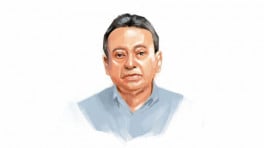
Andy Burnham takes over as UK prime minister amid Labour’s deep political turmoil, facing immediate challenges from public discontent, a resurgent opposition, and questions over his mandate

There was a time when many Europeans looked at the stable politics in the UK with envy, while countries like Italy became a laughing stock on the continent for their frequent change of governments. That's no longer the case.
After prime minister David Cameron's ill-judged referendum on membership of the EU in 2016 led to Britain leaving the European Union, the UK just hasn't been the same. Boris Johnson's controversy-filled three years as prime minister threw the top tier of his Conservative Party into chaos, leading to repeated change in leadership.
Their rival the Labour Party, which came to power in 2024 in a landslide victory, has kept up the tempo by compelling its leader Keir Starmer to resign within two years of taking office.
 Keep updated, follow The Business Standard's Google news channel
The prime ministerial musical chair continues this week, with Andy Burnham being appointed Britain's seventh prime minister in 10 years on Monday.
At the age of 56, Burnham becomes the UK's 59th prime minister.
Burnham already has his work cut out. The far-right Reform UK party, pushing for tougher immigration control and no return to the EU, continues to lead in opinion polls. On the left, the Green Party is making inroads into Labour support, especially profiting from Labour's refusal to condemn Israel for its atrocities in Gaza.
Starmer's refusal to condemn Israel has led to accusations that Labour has lost its moral compass in foreign policy. The Greens, the only UK party to be led by a Jewish politician, has made condemnation of Israel a central plank of its policy.
King of the North
The Liverpool-born Burnham is looking to turn the tide by promising to transfer power from London to the other regions, especially the north. He has already promised to make the North the centre of his power, creating a "second No 10" - the prime minister's office address at Downing Street in London - in Manchester.
Burnham, often called the "King of the North" for his 12-year stint as a highly popular Mayor Manchester, is looking to reconnect with Labour voters by promising what he called "the most significant change moment" in Britain's politics for 40 years.
Some of these changes may include nationalisation of water and energy companies. One of Burnham's key goals is likely to be to reduce inflation and provide relief to average families.
Burnham has hinted he will greenlight as much drilling for oil and gas in the North Sea as existing licenses would allow, including development of new gas fields. This is unlikely to go down well with the party's environment lobby, and hand ammunition to the Greens.
In order to stop the rise of the far-right Reform UK party, which has eaten into the support of bases of both Labour and Conservatives in recent years, the Starmer government tightened immigration and asylum rules.
Tough immigration laws are not normally associated with Labour, and Burnham's policy in this crucial area will no doubt be under a microscope and subject to much public debate.
Starmer's Gaza failure
One area where little change is expected is foreign affairs.
Normally there is very little debate over strategic issues or foreign policy matters, even during elections. Anti-war sentiment, such as those seen during prime minister Tony Blair's participation in the illegal invasion and occupation of Iraq in 2003, are often viewed as "fringe" opinion.
However, Israel's massive response to the 7 October attack by Hamas in 2023, has changed much of that. The utter destruction of the small Palestinian territory and the killing of at least 75,000 Palestinians, mostly women and children, by Israeli forces have outraged public opinion in the UK.
Burnham already has his work cut out. The far-right Reform UK party, pushing for tougher immigration control and no return to the EU, continues to lead in opinion polls. On the left, the Green Party is making inroads into Labour support, especially profiting from Labour's refusal to condemn Israel for its atrocities in Gaza.
This change in British public opinion towards Israel is likely to persuade Burnham to take tentative steps to walk Labour back from total support for Tel Aviv. But Burnham, himself a member of Labour Friends of Israel, is unlikely to go far in his condemnation of Israel, let alone impose any sanctions.
The disconnect with popular feelings, as exemplified by their Gaza policy, made Starmer look increasingly untenable as leader.
Ditching Starmer so soon was certainly not in Labour's plan. But the past two years have been little short of a nightmare for the party which expected to sail through the first two-three years at least.
Starmer had purged the party of many of its left-wing elements close to former leader Jeremy Corbyn, consolidating the power of centre-right factions known as the Blairites. He did not expect any challenge to his leadership from within the party.
One crisis to another
But as things turned out, he got off to a terrible start and never recovered.
Within weeks of taking office, the finance minister scrapped winter fuel benefits for pensioners, in order to fill a big gap in the government's finances. This led to accusations of betrayal of one of Labour's core values.
Then came the murder of three girls in Southport, which triggered widespread riots by right-wing nationalists who falsely claimed the killer was a recent immigrant. This painted a picture of a government losing control of the streets as well as the narrative.
Starmer's rating sank so low so fast, his possible duration as prime minister started being compared to that of former Conservative prime minister Liz Truss who lasted 50 days in the job in 2022. Starmer did better than that, but throughout the period, he was forced to repeatedly deny possibilities of resignation.
Starmer's credibility - his judgement - took a mortal blow with revelations that his choice for UK ambassador to the US, Lord Peter Mendelson, had close association with American paedophile and convicted sex offender Jeffrey Epstein.
For the party, the final straw was April's local government elections, which saw Labour lose control of 30 councils and 1,500 members across England. The debacle was complete when Labour also lost the Assembly elections in Wales for the first time ever.
Burnham's ambition
Burnham's leadership ambition was never a secret. He contested the leadership elections in 2010 and 2015, losing first to the centrist Ed Miliband and then to the left-wing Jeremy Corbyn.
Despite his popularity as Mayor of Manchester, Burnham never took his eyes off the big prize - the prime ministership. But to achieve that, he needed to return to parliament. His opportunity came after the local elections drubbing, when an MP voluntarily resigned to enable Burnham to contest the seat for Labour.
The next general elections are not due till the spring of 2029. But Burnham is likely to come under pressure to call early elections. He has a rock-solid parliamentary majority and his government is most unlikely to lose any confidence motion. But pressure will focus on matters of principle.
For a start, Burnham did not lead the Labour Party in the 2024 polls, therefore the voting public did not, indirectly, choose him as the prime minister.
Worse, Burnham takes up the leadership without facing even an internal party election. Once Starmer announced his resignation, no one except Burnham came forward to challenge for the post. He was elected unopposed.
Lessons of May
Burnham will no doubt enjoy a period of goodwill as he sets about unveiling his own policies and addressing the damage done to the party under Starmer. But once he hits a bump in the road - as he surely will - there will be calls for him to "test his mandate" at the polls. Greater the bumps, the louder the calls will become.
New prime ministers who take over in the middle of a government's term are normally loath to go to the polls before the scheduled date, even though they are derided as "PM without a mandate."
For instance, Gordon Brown hung on for three years after taking over from Tony Blair in 2007 who had led Labour to a third successive victory two years earlier. Likewise, Rishi Sunak stayed the course for nearly two years, completing the term Boris Johnson had won in 2019.
On the other hand, Theresa May, who took over from David Cameron after the Brexit referendum debacle, decided to "test her mandate" as she thought she could bury the Corbyn-led Labour Party.
The media predicted a landslide for May. In the event, Corbyn increased Labour's vote share by nearly 10%, delivering 30 additional seats. May lost her parliamentary majority, and Conservatives remained in government only with the support of the Democratic Unionist Party of Northern Ireland.
Andy Burnham will no doubt have Theresa May in mind when deciding his course of action.
Sabir Mustafa is a journalist and podcaster. He can be contacted at sabir.mustafa@gmail.com. His X handle is @Sabir59.
Disclaimer: The views and opinions expressed in this article are those of the author and do not necessarily reflect the opinions and views of The Business Standard.