Transformative health financing must be a core electoral commitment
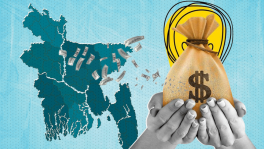
Nearly three-quarters of Bangladesh’s health spending comes directly from people’s pockets, pushing millions into financial distress. This reality demands that health financing reform become a non-negotiable electoral pledge

Bangladesh stands at a critical political juncture. As the country approaches a national parliamentary election, it is expected that political party manifestos will emphasise commitments related to economic growth, employment, inflation control, social protection, and infrastructure development.
Equally important—if not more so—should be clear and credible commitments to reforming the health sector. Health is not merely a social service; it is a foundational investment in human capital, labor productivity, poverty reduction, and overall economic growth. No country can achieve sustainable development with an unhealthy population. Against this backdrop, it is imperative that electoral pledges include a transformative, evidence-based, and adequately financed roadmap for health financing reform.

Health financing rests on three core functions: revenue collection, pooling of resources, and purchasing and allocation of services. Resource pooling enables risk-sharing across the population, while purchasing and allocation determine how efficiently collected funds are translated into health services. The interaction of these three functions ultimately defines the equity, efficiency, and sustainability of a country's health system.
 Keep updated, follow The Business Standard's Google news channel
In Bangladesh, this framework has long remained imbalanced. Out-of-pocket (OOP) expenditure by individuals dominates health financing. According to official government figures, nearly 69% of total health expenditure comes from private household spending; World Bank estimates place this closer to 74%, while real-world evidence suggests the figure may approach 80%.
Approximately two-thirds of OOP spending is incurred on medicines alone. Internationally accepted benchmarks for achieving Universal Health Coverage (UHC) and the Sustainable Development Goals (SDGs) recommend reducing OOP spending to around 30% of total health expenditure. Achieving this requires a far more structured, equitable, and risk-based health financing system.
Public financing, meanwhile, remains severely limited. Only about 23% of total health expenditure comes from public sources. Health's share of the national budget has hovered around 5% for many years, rising marginally to 5.3% in FY 2025–26. Public health expenditure amounts to just 0.74% of GDP—far below the World Health Organization's recommended level of 5%. Even total health expenditure, public and private combined, stands at only 2.34% of GDP, significantly lower than the South Asian average. This chronic underinvestment has structurally weakened the health sector.
Beyond low allocations, implementation inefficiencies have further deepened the crisis. Weak planning, project delays, underutilised funds, and ineffective expenditure management discourage increased investment. The burden falls disproportionately on poor and lower-middle-income households, many of whom are forced to forego needed care due to financial hardship.
Managerial failures, workforce shortages, weak infrastructure, supply-chain gaps, and recurring medicine shortages have rendered many public health facilities ineffective. As a result, people are compelled to seek costly private care, further increasing impoverishment risks. In this context, advancing toward UHC requires not piecemeal reforms, but coordinated structural transformation.
Globally, two main health financing models are followed. The Beveridge model, introduced in the United Kingdom in 1948, relies primarily on tax-based financing. The Bismarck model, launched in Germany in 1883, is based on social health insurance (SHI). Bangladesh has historically followed a tax-financed approach aligned with the Beveridge model. Recently, however, policy debates have intensified around whether to further strengthen this model or gradually transition toward SHI.
The reality is that conditions are not yet conducive for a full-scale SHI system in Bangladesh. Countries where SHI has succeeded typically have large formal labor markets. In Bangladesh, only 12–13% of the workforce is employed in the formal sector, while around 87% remains informal. Collecting regular premiums from such a workforce is administratively complex and costly. This challenge is compounded by Bangladesh's low tax-to-GDP ratio, which remains below 10%, making widespread premium subsidies fiscally unrealistic.
Moreover, public hospitals are not yet institutionally ready to participate effectively in an insurance-based system. Under existing Public Financial Management (PFM) rules, public facilities cannot retain and flexibly spend insurance revenues. Although PFM reform has been discussed for years, implementation has yet to materialise.
Without such reform, service quality cannot improve—and without quality, public trust and willingness to pay insurance premiums will remain weak. Reliance solely on private hospitals is equally unsustainable. Considering these constraints, launching a universal SHI system within the next 10–15 years appears unrealistic.
That said, health insurance should not be abandoned entirely. A phased approach remains viable. SHI can be initiated among formal sector employees, where premium collection is more feasible and administrative costs are lower. Group health insurance can also be promoted in settings conducive to effective risk pooling.
University students offer another strategic entry point. With over one million students nationwide, extending insurance coverage to them could reduce immediate financial risks while fostering an insurance culture among future generations. The University of Dhaka's student health insurance program, launched in 2018 and covering nearly 40,000 students by 2021, has already inspired at least ten other universities to adopt similar initiatives. It demonstrates the feasibility of gradual expansion.
Given these realities, strengthening tax-based health financing remains the most pragmatic path for Bangladesh at present. The challenge lies not only in limited allocations but also in inefficient utilisation of available funds. A complex, multi-layered institutional structure—spanning multiple ministries and agencies inside and outside the health sector—creates major implementation bottlenecks.
The way forward therefore requires increasing health allocations, ensuring full and efficient utilisation of funds, reforming financial management rules, and simplifying institutional arrangements. Simultaneously, phased expansion of SHI among formal sector workers and university students can prepare the ground for a more inclusive mixed model in the future.
Reviving a health system long plagued by mismanagement demands confronting three fundamental questions: Are citizens truly empowered to access public health services? Are service providers adequately motivated and incentivised? And does sufficient political will exist to prioritise health investment? At present, none of these questions can be answered satisfactorily.
Underlying this failure are three deeper information gaps: citizens are unaware of the true value of services they receive; providers lack clarity about the economic and social value of the services they deliver; and the government is unable to adequately measure returns on health investment. Addressing these gaps requires a policy framework capable of generating positive change for citizens, providers, and the state alike.
The core objective of health financing transformation is to establish a sustainable, equitable, and efficient system that ensures universal access, optimises public resource use, and aligns with PFM rules. By integrating revenue collection, pooling, and strategic purchasing, such a framework can simultaneously empower citizens, enhance political credibility, and motivate the health workforce.
To achieve this, a three-tier health financing strategy is essential—covering primary care, intermediate services, and catastrophic or complex conditions—each with tailored financing mechanisms, service delivery models, and benefit packages.
The first tier, primary health care financing, forms the foundation of any effective system. Through tax-based financing, preventive, promotive, and basic outpatient services should be fully funded and provided free at the point of use. Strengthening primary care enables disease prevention, early treatment, and long-term cost containment.
This requires integrating community clinics, family welfare centers, and union sub-centers into a unified primary health care authority to enhance coordination in planning, staffing, and financing. Public providers should play the lead role, while public–private partnerships (PPPs) may ensure service continuity in hard-to-reach areas. Alongside line-item budgets, performance-based incentives should be introduced to improve accountability and service quality.
The second tier, intermediate care financing, serves as a bridge between primary and advanced services. A Family Health Card, with an annual ceiling of TK1,00,000 per family, is proposed to cover referred outpatient care, maternal health, inpatient services, and basic emergency care. Financed through tax revenues, this ceiling-based benefit package would combine block grants, flexible spending, and performance incentives. Public providers would lead service delivery, supplemented by strategically contracted private providers. Diagnosis-Related Group (DRG)-based bundled pricing would support cost control and efficiency.
The third tier, financing for catastrophic illness and injuries, proposes establishing a National Health Fund (NHF) to cover conditions such as cancer, dialysis, stroke, and major trauma, with annual ceilings of TK3,00,000–5,00,000 per family. Funding would combine national budget allocations with innovative sources such as Collecting Tk1 per day or Tk30 per month from each mobile user, health taxes on tobacco and unhealthy foods, and corporate social responsibility (CSR) contributions. Like second tier, public providers would take the lead in service delivery, complemented by accredited private providers through strategic purchasing arrangements.
Diagnosis-Related Group (DRG)–based bundled pricing would be applied to enhance cost containment and operational efficiency. Benefit entitlements would be limited to care delivered within the country, explicitly discouraging medical tourism.
Implementing this three-tier model requires foundational reforms: integrated primary care governance, ceiling-based benefit packages, expanded PPPs, modernised medicine supply chains, universal Family Health Cards, and the establishment of a National Health Authority and National Health Fund.
In conclusion, there is no alternative to adopting a transformative health financing framework to ensure universal access, empower citizens, rebuild trust in public services, and motivate the health workforce.
Through a judicious mix of tax-based financing, innovative revenue sources, and strategic reforms, Bangladesh can build a stable, equitable, and sustainable health system. Efficient and accountable use of existing resources, sustained budgetary increases, and innovative financing mechanisms together offer the only viable path to addressing the country's long-standing health financing crisis.