'Sportswashing' and 'Power-plays' behind the games you love
This is the world of Sportswashing, where nations use sports not just for entertainment, but as a strategic Power-play which shape global image, wield influence and rewrite narratives while turning stadiums and matches into stages for political and economic leverage.

When Cristiano Ronaldo arrived in the desert heat of Saudi Arabia, fans cheered wildly. Headlines celebrated one of the most high-profile football transfers in recent years. But behind the excitement lay a story far bigger than any goal or trophy.
This is the world of Sportswashing, where nations use sports not just for entertainment, but as a strategic Power-play which shape global image, wield influence and rewrite narratives while turning stadiums and matches into stages for political and economic leverage.
Sportswashing is the practice of using high-profile sports events, leagues, or athlete signings to improve a country's image, often diverting attention from criticism related to human rights, politics or governance. While it might be a new term for many fans, its impact is seen in stadiums and screens around the world.
 Keep updated, follow The Business Standard's Google news channel
The essence of sportswashing lies in the power-play like every signing, every mega-event, every stadium opening can serve as a statement about influence, prestige and control. These power plays are carefully crafted to capture global attention, reshape perceptions and signal that a nation is strong, modern and relevant on the world stage.
If we look at one of the most recent and striking examples of sportswashing, Saudi Arabia stands at the center of the conversation. Over the past few years, the kingdom has transformed itself into a global sporting hub almost overnight, an evolution driven not just by passion for sport, but by calculated strategy.
From the high-profile arrival of Cristiano Ronaldo to the influx of stars like Karim Benzema and Neymar Jr, the Saudi Pro League has rapidly gained global visibility. These signings are not isolated sporting decisions, they are part of a broader ambition to reposition Saudi Arabia as a modern, influential and globally connected nation.
Beyond football, the country has invested heavily in hosting major events, from Formula 1 races to boxing showdowns and international golf tournaments. Each event serves as a carefully staged power-play, projecting an image of openness, luxury and progress, while drawing millions of viewers worldwide.
At the heart of this transformation lies Vision 2030, Saudi Arabia's long-term plan to diversify its economy and reduce dependence on oil. Sport, in this context, becomes more than entertainment, it becomes a diplomatic tool, a branding exercise, and a gateway to global influence.
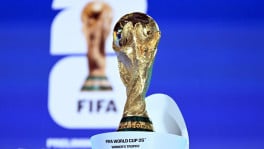
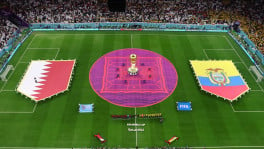
The most significant power-play, however, is yet to come. Saudi Arabia has been confirmed as the host of the FIFA World Cup 2034, a decision that could redefine the global football landscape. Hosting the world's biggest sporting event is more than just an organisational challenge; it is a statement of arrival. Much like Qatar did with the FIFA World Cup 2022, Saudi Arabia now has the opportunity to reshape its international image on an even larger scale.
The World Cup offers unmatched global exposure, billions of viewers, worldwide media coverage, and a chance to present a carefully curated narrative of progress, innovation, and cultural openness. Massive investments in infrastructure, stadiums, tourism, and technology will likely accompany the tournament, further embedding the country into the global sports economy.
But Saudi Arabia's strategy is not limited to football alone. In a source revealing development, the country also reached out to the Bangladesh Cricket Board (BCB), requesting players, coaches as part of its plan to rapidly build a competitive cricket structure. The proposal was part of its broader Vision 2030 agenda, aiming to import talent that could eventually represent Saudi Arabia after completing legal formalities.
However, the request was rejected by the BCB, which cited national interest as the primary reason. This incident highlights a deeper layer of sportswashing—one that goes beyond hosting events or signing superstars. It reflects an attempt to fast-track sporting success by acquiring not just visibility, but also human capital. In essence, it is a power-play that extends into the very foundation of sport itself.
From football mega-events to cricket expansion plans, Saudi Arabia's approach shows how modern sports are no longer confined to the field. They are part of a broader geopolitical strategy, where influence is built not only through victories, but through visibility, investment, and control over the global sporting narrative.
The rise of sportswashing and strategic power-plays is reshaping the very nature of modern sport. What was once seen as a space of pure competition and unity is now deeply intertwined with politics, economics, and global image-building. The line between sport and statecraft is no longer blurred, it is increasingly indistinguishable.
On one hand, these investments bring undeniable benefits. Countries like Saudi Arabia and Qatar have accelerated infrastructure development, created new opportunities for athletes, and expanded the global reach of sports. Leagues grow richer, players earn more and fans are treated to a higher level of spectacle than ever before.
But the costs are harder to measure and often easier to ignore. Sportswashing can normalise or overshadow serious concerns, shifting global attention away from issues that would otherwise dominate headlines. When the spotlight is fixed on goals, trophies and grand ceremonies, uncomfortable conversations risk fading into the background.
Power-plays in sports also raise questions about fairness and balance. When nations with vast financial resources can rapidly build leagues, attract global stars and even attempt to import talent systems, the traditional pathways of sporting development are disrupted. Competition is no longer just about skill or strategy, it is also about financial and political leverage.
For fans, this creates a complex reality. The same match that delivers joy and excitement may also be part of a broader narrative crafted far beyond the pitch. Supporting a team or celebrating a tournament can unintentionally intersect with global power dynamics.
Yet, sport's emotional pull remains undeniable. It continues to unite people across borders, cultures, and identities. That is precisely why it is so powerful and why it has become such an effective tool for influence.
In the end, sportswashing does not necessarily diminish the beauty of the game, but it changes how we understand it. The goals still matter, the rivalries still ignite passion but behind them lies a deeper contest, one that is not played on grass or turf, but on the global stage of perception and power.
Because in today's world, the biggest game is no longer just about who wins on the scoreboard, it's about who controls the narrative beyond it.