Inu gets 30 years in jail, to serve 10 concurrently
The former minister convicted on three of eight charges linked to the killing of six people in Kushtia; acquitted on five other charges as tribunal orders sentences to run concurrently.

Highlights
- ICT convicts Hasanul Haq Inu on three of eight crimes against humanity charges
- Sentenced to 30 years' imprisonment, with terms to run concurrently
- Acquitted on five charges, including allegations over the 5 August Kushtia killings
- Inu calls verdict a "farcical trial"; wife says family will pursue legal remedies
The International Crimes Tribunal (ICT) today (30 June) sentenced Jatiya Samajtantrik Dal (JSD) President and former information minister Hasanul Haq Inu to 30 years' imprisonment after convicting him on three charges of crimes against humanity over his role in offences committed in Kushtia during the July Uprising.
The tribunal found Inu guilty on three of the eight charges brought against him and sentenced him to 10 years' rigorous imprisonment on each count, totalling 30 years.
 Keep updated, follow The Business Standard's Google news channel
However, the court ordered the three sentences to run concurrently, meaning he will serve the terms simultaneously.
The verdict was delivered by a tribunal headed by Justice Nazrul Islam Chowdhury after reading out a 211-page judgment.
Inu, the sole accused in the case, was brought from the tribunal's holding cell to the dock at 1:42pm.
Tribunal member Judge Shahriar Kabir read out the eight charges, while Justice Manjurul Bashid presented witness testimonies and key evidence before the chairman pronounced the verdict.
Responding to questions over whether the punishment should be described as a 30-year or a 10-year sentence, ICT Chief Prosecutor Md Aminul Islam said there should be no confusion.
"This must certainly be called a 30-year prison sentence. He has been sentenced to 30 years in total," he said.
Although the tribunal ordered the sentences to run concurrently, Aminul said it had imposed separate punishments under each of the three convictions.
"We believe the sentences should have been consecutive. There is no reason to describe it as a 10-year sentence," he added.
Convictions and acquittals
The prosecution brought eight charges against Inu. The tribunal found him guilty on Charges 3, 6 and 7, while acquitting him on Charges 1, 2, 4, 5 and 8.
The convictions stem from three separate incidents during the July Uprising.
On 20 July 2024 (Charge 3), the tribunal found Inu guilty of political persecution and related offences after he allegedly telephoned the superintendent of police in Kushtia, instructing the officer to identify protesters from photographs, prepare lists of participants in the July movement and take action against them.
He was sentenced to 10 years' rigorous imprisonment on this charge.
On 29 July 2024 (Charge 6), the tribunal convicted him for conspiracy, instigation and complicity in crimes against humanity after finding him responsible for attending a 14-party alliance meeting chaired by former prime minister Sheikh Hasina, where he allegedly repeated his description of protesters as BNP, Jamaat, terrorists and communal elements and proposed banning Jamaat-e-Islami.
The prosecution argued that these actions helped legitimise the killings and repression carried out by law enforcement agencies and ruling alliance activists.
He was sentenced to 10 years' rigorous imprisonment and fined Tk1 lakh.
On 4 August 2024 (Charge 7), the tribunal found Inu guilty of conspiracy after concluding that he endorsed the government's decision to impose a curfew and open fire on protesters, conspired with Sheikh Hasina over the phone to implement those measures and directed party leaders and activists accordingly.
He was sentenced to another 10 years' rigorous imprisonment and fined Tk1 lakh.
The tribunal acquitted Inu on the remaining five charges after finding the prosecution had failed to establish his criminal liability on those counts.
These charges are:
On 18 July 2024, Inu described protesters as BNP, Jamaat, terrorists and communal elements during an interview with Mumbai-based television channel Mirror Now in an attempt to discredit the movement and incite violence.
On 19 July, he attended a 14-party alliance meeting at Ganabhaban chaired by former prime minister Sheikh Hasina, where the prosecution alleged a decision was taken to deploy the military and order security forces to open fire on unarmed protesters.
He maintained regular communication with Sheikh Hasina and allegedly participated in planning the suppression of the movement through lethal force, helicopter attacks, arrests and torture.
On 27 July, he allegedly repeated his characterisation of protesters during an interview with News24 and publicly endorsed the government's curfew and use of force.
On 5 August, acting in conspiracy with Sheikh Hasina and former Awami League Joint General Secretary Mahbubul Alam Hanif, Inu was allegedly involved in the attack in Kushtia in which six people – Ashraful Islam, Suruj Ali (Babu), Abdullah Al Mustakin, Md Usama, Bablu Farazi and Yusuf Sheikh – were killed.
Trial proceedings
The tribunal received the investigation report against Inu on 11 September 2025.
Testimony began on 30 November 2025. During the trial, the tribunal heard 10 prosecution witnesses and two defence witnesses.
After concluding final arguments from both sides on 14 May this year, the tribunal kept the case under curia advisari vult (CAV), reserving the judgment for a later date.
The proceedings were broadcast live on Bangladesh Television with the tribunal's permission.
Inu rejects verdict
After the verdict, Inu described the judgment as a "farcical trial" while being escorted from the courtroom.
"They have given a sentence through a farcical trial. I have been freed from this ordeal," he told journalists.
His wife, Afroza Haque Rina, rejected the verdict and said the family would decide its next legal course after consulting lawyers and party leaders.
"We reject and condemn this verdict. We are aggrieved. We will discuss with our lawyers, family members and party before deciding our next course of action," she said.
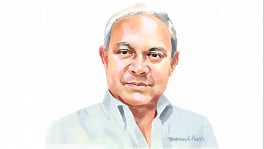
Who is Hasanul Haq Inu?
Born on 12 November 1946, Hasanul Haq Inu graduated in chemical engineering from the Bangladesh University of Engineering and Technology (Buet) in 1970.
He was a founding vice-president of JSD in 1972, became the party's general secretary in 1986 and has served as its president since 2002.
After losing parliamentary elections in 1991, 1996 and 2001 from Kushtia-2, he was elected MP in 2008, 2014 and 2018 as a candidate of the Awami League-led alliance.
He served as information minister from 2012 to 2019 before losing the 2024 parliamentary election from the same constituency.