Too hot to learn, too hot to play: How extreme heat is reshaping childhood
Across cities and towns, parents are keeping children indoors, schools are shortening hours, and outdoor play is becoming increasingly rare

Bangladesh's heatwaves are doing more than breaking temperature records, they are quietly reshaping childhood.
Across cities and towns, parents are keeping children indoors, schools are shortening hours, and outdoor play is becoming increasingly rare. What was once a seasonal inconvenience is emerging as a challenge that affects how children learn, socialise and grow.
For 10-year-old Arab, that reality means spending most afternoons inside rather than on the playground.
 Keep updated, follow The Business Standard's Google news channel
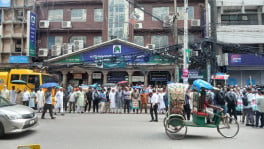
Outside his home, the streets shimmer under the summer sun, while the small neighbourhood playground that once drew children after school sits largely empty during the hottest hours of the day.
Instead of running, cycling or playing cricket with friends, Arab spends much of his time inside, where fans and shaded rooms offer some relief from the relentless heat. His younger brother, seven-year-old Arham, follows a similar routine.
For their mother, Marzana Akter Mumu, this has become the new normal.
"The weather has become too extreme," she said. "There were days when I did not send my children to school because I was afraid they would become ill from the heat."
Across Bangladesh, scenes like this are becoming increasingly common. As heatwaves grow more frequent and intense, childhood itself is changing.
What was once viewed as a seasonal discomfort is emerging as a challenge with lasting implications for children's health, education and social development.
The shift is subtle but significant. Childhoods once defined by outdoor games, neighbourhood friendships and open-air activities are increasingly being spent behind closed doors.
For Mumu, protecting her children from the heat has become part of daily life. Water bottles are constantly refilled, outdoor activities are restricted, and afternoons are planned around temperature forecasts. Yet she worries about what children may be losing in the process.
"Yes, I am concerned," she said. "Children are spending too much time indoors now. This may affect their physical health, social skills and overall development in the future."
The same concerns are echoed in schools, where the effects of extreme heat are becoming harder to ignore.
Students often arrive tired and distracted, while concentration fades as classroom temperatures rise.
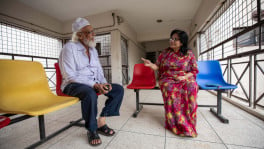
"Students are finding it harder to concentrate," said Alpona Snigdha Ria, an assistant teacher at Padma Cantonment Public School and College. "The extreme temperature affects both their physical comfort and their ability to focus on lessons."
According to her, many schools in Dhaka lack adequate cooling systems and proper ventilation, leaving students and teachers to cope with uncomfortable conditions throughout the day. Attendance often declines during particularly hot periods, while outdoor activities have become increasingly difficult to organise.
"The quality of education is being affected," she said. "Subjects that require greater concentration suffer more, and outdoor activities are almost impossible during this weather."
Experts have long warned that rising temperatures would reshape daily life in vulnerable countries such as Bangladesh. Today, those warnings are materialising in schoolyards, classrooms and family routines.
Dr S Mosaddeq Ahmed, professor and head of the Department of Natural Science (Chemistry) at AIUB, said heatwaves are likely to have far-reaching consequences for younger generations.
"Heatwaves are expected to have significant effects on the younger generation, both now and in the future," he said, citing health risks, mental health challenges, educational disruptions, reduced productivity and wider social and economic impacts.
Taken together, these experiences point to the emergence of what some parents and educators describe as an "indoor generation" – children growing up with fewer opportunities for outdoor play, face-to-face interaction and physical activity.
While online learning and hybrid education may provide temporary solutions during extreme weather, they cannot replace the benefits of playgrounds, sports fields and classroom interactions that are essential to childhood development.
As Bangladesh adapts to a hotter future, educators and parents argue that schools must do the same. Improved ventilation, reliable access to safe drinking water, greener school grounds and heat-sensitive schedules are increasingly becoming necessities rather than luxuries.