Russia, China, France block UN push for force to reopen Hormuz Strait
The draft resolution, spearheaded by Bahrain and backed by several Gulf countries, is expected to be put to a vote on Friday (3 April). However, diplomats said it remains uncertain whether further negotiations will bring the three veto-wielding powers on board.

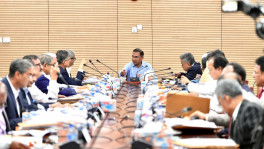
Russia, China and France yesterday effectively blocked a bid by Arab nations at the United Nations Security Council to authorise military action against Iran to reopen the Strait of Hormuz, citing opposition to any language permitting the use of force, reports The New York Times.
The draft resolution, spearheaded by Bahrain and backed by several Gulf countries, is expected to be put to a vote on Friday (3 April). However, diplomats said it remains uncertain whether further negotiations will bring the three veto-wielding powers on board.
The proposal, now in its fourth revision after weeks of closed-door discussions, includes a contentious clause that would allow member states to use "all necessary means" to ensure safe passage through the strait – a key global oil transit route.
 Keep updated, follow The Business Standard's Google news channel
Tensions have escalated since Iran closed the Strait of Hormuz shortly after the United States and Israel launched strikes on 28 February. The shutdown has disrupted global energy supplies, driven up oil and shipping costs, and rattled financial markets.
Iran has also launched retaliatory attacks on Gulf countries hosting US military bases, reportedly causing civilian casualties and damaging infrastructure.
Bahrain's Foreign Minister Abdullatif bin Rashid Al Zayani told the Security Council that Iran's actions were "treacherous" and violated international law, accusing Tehran of targeting civilian facilities including airports, ports and water infrastructure.
Despite the mounting pressure, Iran indicated it intends to maintain control over shipping in the strait.
Analysts say the resolution faces practical and political challenges. Gulf states have limited military capacity to confront Iran independently, while concerns remain about escalation risks. French President Emmanuel Macron described proposals to forcibly reopen the strait as unrealistic, warning of significant military threats in the area.
Experts also noted that the crisis marks a sharp deterioration in Iran's relations with its Arab neighbours, many of whom had pursued diplomatic engagement in recent years. Countries like Qatar and Oman, once mediators between Tehran and Washington, are now reassessing their positions.
The closure has had severe economic consequences across the region. Qatar, a major natural gas exporter, has halted production and declared force majeure, estimating losses of up to $20 billion annually.
Analysts warn that any military move to reopen the strait could further escalate the conflict rather than resolve the underlying political crisis.