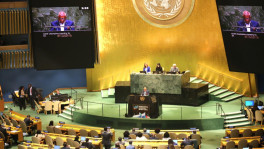
What Jamaat ameer said while unveiling election manifesto
Highlighting the manifesto’s key pledges, he said Jamaat had prioritised creating a safe environment for women, ensuring proper development of children and bringing a “revolutionary change” in the lives of farmers.

Bangladesh Jamaat-e-Islami wants to move beyond revenge-driven politics and work towards the "victory of 18 crore people", not just the victory of a single party, the party's Ameer Shafiqur Rahman said today (4 February).
"We do not want a party-based government, nor do we seek Jamaat's victory alone. We want the victory of 18 crore people. We also reject dynastic politics," he said while speaking at the unveiling ceremony of Jamaat's election manifesto at a hotel in Dhaka.
Shafiqur said he had faced continuous personal attacks and character assassination but chose forgiveness over retaliation.
 Keep updated, follow The Business Standard's Google news channel
"Missiles have been launched at me from all sides, but I will not launch any anti-missile. Revenge politics has brought us ruin. My temperament does not go with revenge," he said, adding that Jamaat wanted to introduce "new politics" and move forward with the youth.
The Jamaat ameer said the country's political journey had repeatedly reversed the principle that the nation should come before parties and individuals.
"The party is bigger than an individual and the country is bigger than the party. But in reality, over the last 54 years, we have seen the opposite," he said.

Referring to key milestones in Bangladesh's history, he said the Language Movement of 1947, the Liberation War of 1971 and the opportunity for reform after the 2024 July Uprising were all interconnected.
"Without 1947 we would not have had a map, without the map we could not have fought in 1971, and without a state in 1971 we would not have had the chance to repair it in 2024," he said.
The Jamaat ameer expressed concern that many people had forgotten past repression after 5 August 2024. "If we had not forgotten, we would have kept the July fighters close to our hearts. Instead, many have become busy securing their own futures," he said.
Calling for restraint, he said Jamaat had urged victims not to turn into oppressors. "I don't know how much we have been able to make them understand," he added.
Highlighting the manifesto's key pledges, he said Jamaat had prioritised creating a safe environment for women, ensuring proper development of children and bringing a "revolutionary change" in the lives of farmers.
On industrial development, the Jamaat chief said industries would be nurtured "like newborn babies" so they could create employment and shape the country's future. He stressed coordination between owners and workers, saying no conflicts would be instigated between the two sides.
He also outlined plans regarding women workers, saying policies on working hours would be implemented gradually and the government would compensate women for shorter working hours. "We will ensure that expectant mothers never have to leave their jobs," he said.
Among other commitments, Shafiqur said Jamaat aimed to develop medical colleges in all 64 districts and to establish a revolving fund for expatriate workers. If Jamaat comes to power, he said, the bodies of deceased expatriates would be brought back at state expense and with state honours.
He also promised what he termed a "groundbreaking and revolutionary change" in the living standards of tea garden workers.