Higher prices, longer queues: How to make every litre of fuel count
Saving fuel is no longer just about spending less. It is about avoiding queues, stretching your range, and making sure you are not stranded when the next pump runs dry

On the night of 18 April 2026, a gazette notification from the Power, Energy and Mineral Resources Division confirmed what many feared. From 12am on the following day, fuel prices were revised upward. Diesel rose from Tk100 to Tk115 per litre, while octane jumped from Tk120 to Tk140.
But even before the price hike, Bangladesh was already dealing with something that felt like a full-blown crisis. And while the adjustment may have eased pressure slightly, the situation is far from normal.
Across the country, cars and motorcycles are lining up for hours just to refuel. In extreme cases, the wait stretches close to 12 hours. The cause lies far beyond our borders. The ongoing Iran war has disrupted supply chains, tightened availability, and triggered panic refuelling.
 Keep updated, follow The Business Standard's Google news channel
What this really means is the cost of fuel is no longer just measured in taka. It is measured in time, uncertainty, and inconvenience.
That changes how we should think about fuel. Saving it is no longer just about spending less. It is about avoiding queues, stretching your range, and making sure you are not stranded when the next pump runs dry.
Here are five ways to make every litre count.
Drive smoother, not faster

Most drivers underestimate how much their driving style affects fuel consumption.
Hard acceleration and sudden braking burn unnecessary fuel. In Dhaka's stop-start traffic, aggressive driving doesn't even save time. You surge forward, then stop again almost immediately.
A smoother approach works better. Ease into the throttle, maintain a steady speed where possible, and read the road ahead. Anticipating traffic lights and congestion reduces the need for constant braking and re-acceleration.
It's a small shift, but over a week of driving, it adds up more than you'd expect.
Cut down on idling

Leaving the engine running while parked feels harmless, but it quietly eats into your fuel.
Whether it's waiting outside a shop or sitting with the AC on, idling burns fuel without moving the car an inch. In normal times, it was wasteful. Right now, it's costly in a different way.
If you're stationary for more than a minute or two, switch the engine off. Modern cars are built to handle frequent restarts without issue.
It's one of the simplest habits to change, and one of the easiest ways to save fuel immediately.
Your SUV drinks more than you think
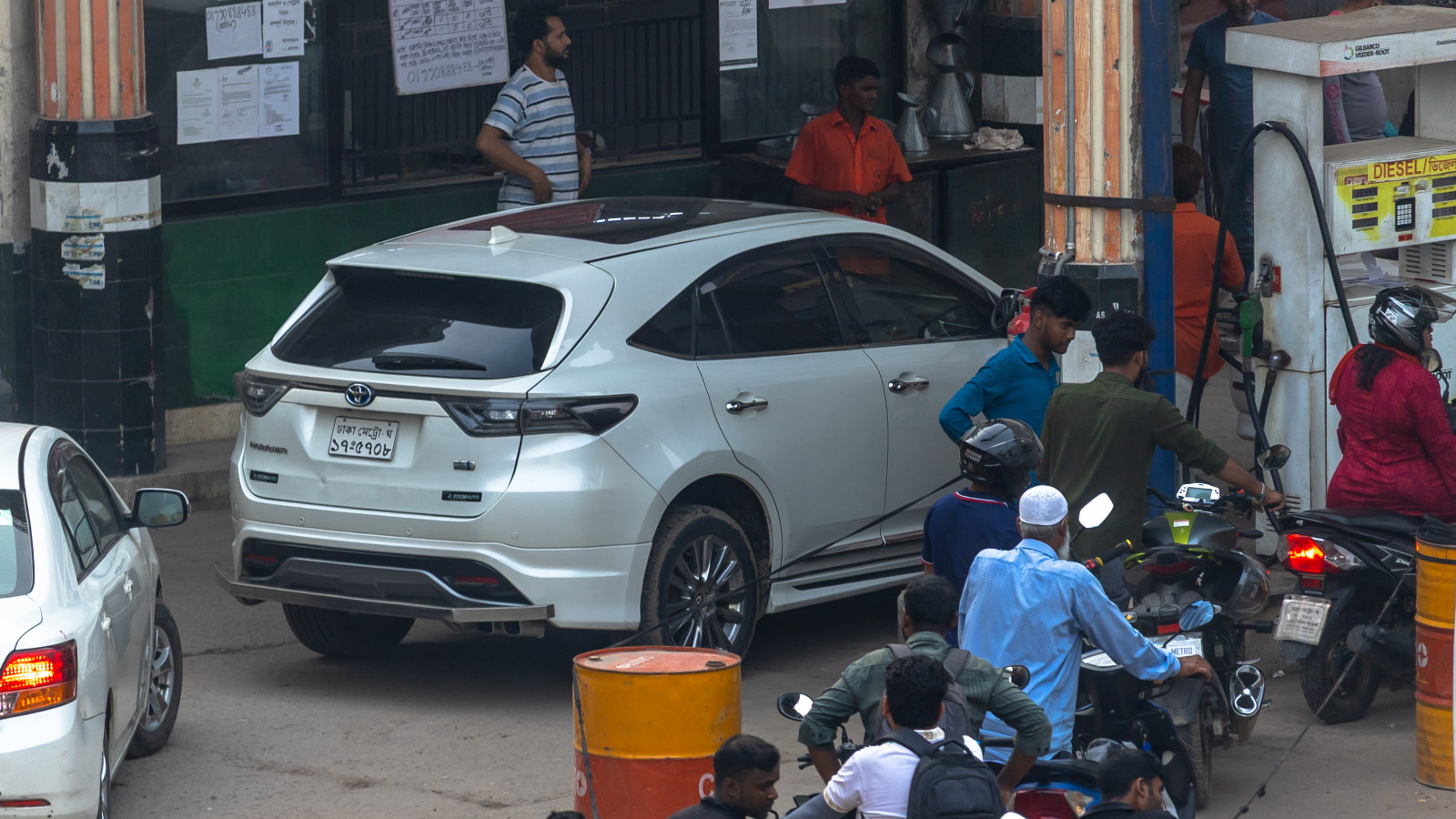
The shift toward SUVs in Bangladesh has been massive. From Toyota Harriers to Nissan Xtrails, bigger cars have become the go-to choice for many buyers.
But larger vehicles come with a trade-off.
They weigh more, sit higher, and usually run bigger engines. All of that increases fuel consumption. Compare that to a compact hybrid like an Aqua or even a small 1500cc sedan, and the difference is hard to ignore.
In today's situation, that gap matters more than ever. A fuel-hungry SUV doesn't just cost more to run, it also means more frequent trips to the pump and more time spent in queues.
If you already own one, the focus should be on smarter usage. Combine trips, avoid unnecessary drives, and keep an eye on how quickly the tank drops.
Tyres and maintenance aren't minor details

Fuel efficiency isn't just about driving style. The condition of your car plays a big role too.
Underinflated tyres create more resistance against the road, forcing the engine to work harder. That translates directly into higher fuel consumption.
Keeping tyres properly inflated is quick, cheap, and effective.
The same applies to routine maintenance. A clogged air filter, worn spark plugs, or low-quality engine oil can all reduce efficiency. These aren't dramatic issues, but together they can quietly increase how much fuel your car uses.
In a situation where fuel itself is harder to access, these small inefficiencies start to matter a lot more.
Plan trips instead of reacting

The biggest shift right now is mental. Fuel is no longer something you can casually top up on the way home. Availability is uncertain, queues are long, and timing matters.
That makes planning essential.
Try to combine errands into a single trip instead of making multiple short drives. Avoid peak traffic hours when possible. Choose routes with fewer stops and less congestion.
And importantly, don't wait until the tank is nearly empty. With the current situation, that's a gamble. A bit of planning can reduce how often you need to refuel, and that alone can save you hours over the course of a week.