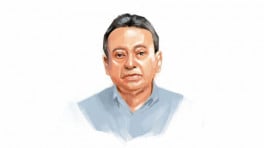
Surviving death row: Returning from the gallows, and life afterwards
For years, they counted the moments until death. Then one day, they were released as innocent people. They were able to breathe fresh air again. But can the life they lost as death-row prisoners ever be returned?

In 2007, a housewife from Gangachara in Rangpur, Majeda Begum, was thrown into an unimaginable nightmare. Police arrested her without any evidence on charges of killing a child. The torture began right after the arrest. She was also threatened with rape. By frightening her in different ways, they forced her to sign a false confession. It said that Majeda herself had strangled the child to death.
In 2015 came the verdict: death sentence. With a death warrant hanging over her head, Majeda entered the condemned cell. She spent the next six years in that solitary, windowless room. Inside the prison, she continued raising her young son Maruf. Confined within four walls, Maruf learned to speak and to walk.
In the end, the court understood that her confession had been the result of police torture and threats. Majeda was declared innocent. But by then, she had been cut off from society. Maruf's childhood too, had been condemned to that cell.
 Keep updated, follow The Business Standard's Google news channel
Like Majeda, Sheikh Jahid also lost many years to a condemned cell. On the first day he went to jail, the authorities took a passport-size photograph of him. He too was sentenced to death in his trial, after which Jahid spent 20 long years in prison.
When he finally saw freedom after two decades, his face could no longer be recognised in that photograph. With time, the image in the photo had faded, just like his life.
During this long period, Jahid lost almost everything. His parents passed away while he was imprisoned.
"Every time I saw someone being taken away to be hanged, I felt this was my last night. That fear never went away," he recalls. Even after his release, the fear remains. "When I lie down at night, I feel as if a rope is hanging over my head. It feels so real that I cannot close my eyes."
Not just these two. Thirteen innocent prisoners, thirteen families. Almost all of them have the same story. For years, they counted the moments until death inside dark cells. Then one day, they were released as innocent people. They were able to breathe free air. But can the life they lost as death-row prisoners ever be returned?
Photographer Moshfiqur Rahman Johan has searched for this story of "surviving without dying" through the lens of his camera. A selection of those photographs was shown in his solo photography exhibition, Surviving Death Row, at the Nalinikanta Bhattasali Gallery of the National Museum. The exhibition ended on 15 June.
When photography becomes a language of protest
Johan studied Anthropology. Because of this education, he developed an eye for seeing people's inner stories, their psychology, and society up close. His work deals with sensitive subjects such as state violence, flaws in the justice system, and the protection of the human rights of death-row prisoners.
Earlier, he worked for a long time on enforced disappearances. During that time, he came to know about people who, despite being innocent, had been sentenced to death and had spent years in prison.
"I first came to know about Aynaghar in 2021. At that time, I felt that Aynaghar and condemned cells actually have many similarities. Just like those in Aynaghar, the people who live in condemned cells also go through extreme trauma. That was when I started looking for people who had been able to come out of condemned cells," Johan said.

Starting in 2022, Johan spent four long years searching for these "unfortunate" people. He spent time with each of them and tried to understand them. "Over these four years, I met 56 people. I listened to their stories. Even though they were innocent, what a horrifying life they lived; how everything was lost from their lives; how their families were pushed out of society. After listening to and understanding these experiences, I began taking photographs," he added.
The main goal of Johan's work is to bring the dark sides of society into the light. "In the case of people sentenced to death, what happens is that with the announcement of the verdict, their 'social death' actually takes place. They, and even their families, become cut off from society. After returning 15 to 20 years later, they see that nothing is the way it used to be."
Surviving Death Row is Johan's fifth solo photography exhibition. The exhibition tells the life stories of 13 people who were given the ultimate punishment of death by lower courts, and then, after long and exhausting legal battles, were proved completely innocent and acquitted by higher courts.
'Every day is death in the condemned cell'
Almost all the people he spoke to while doing this work had lived through a terrifying life. Johan is opposed to the death penalty as the highest form of punishment. After hearing the life stories of different victims, that belief became even stronger in his mind.
"People actually want to live. When they saw that tonight one of their friends in jail had been hanged, they thought maybe tomorrow it would be them. The prisoners in every cell see a death-row prisoner being bathed, being taken to the gallows. Can anyone bear to see that with their own eyes? Death-row prisoners die countless times every day," Johan said.
For prisoners awaiting execution, the condemned cell is another name for a grave. In the photograph is Sonaruddin, who once stayed in a condemned cell.
Alamgir Hossain was in prison for almost nine years despite being innocent. As a death-row prisoner, he went through brutal experiences in jail.
"When I was in prison, Abdur Shukkur bhai of Bogura was hanged. It must have been 10:01 at night when he was hanged. When he was being bathed for the execution, he was completely still. I saw everything through the window. When he was being taken away, he sat down in the middle of the road. At that time, I heard a strange sound from the sky — a kind of rumbling noise. And the birds all around were calling so loudly that it hurt the ears. Everyone was shouting 'Allah, Allah.' That scene still floats before my eyes. I cannot forget it in any way."

In 2014, Abdur Rahim was trapped in a case and imprisoned in Lakshmipur jail. In 2017, the court sentenced him to death. He had to spend seven long years in the extreme loneliness and indescribable suffering of a condemned cell. During those days without his loved ones, there was intense anxiety for his family on one hand, and on the other, the sudden fear of hanging chased him every moment. Although he was released from prison after eight long years, that terrible trauma and fear have not left him.
"Day and night, 24 hours, I was afraid — when might they hang me? When I was in the condemned cell, sometimes I felt maybe they would hang me that very day. And sometimes in dreams, I would see that I had returned home. Then I would think, what do my sons eat, what are they doing? My mother is sick, where is she staying? These thoughts kept circling in my head all the time," Abdur Rahim recalled.
Even after legal freedom from prison or the condemned cell, the real struggle for people like Abdur Rahim and Alamgir Hossain begins after they come outside. Because society does not accept them normally, they face neglect and loneliness at every step. They do not receive any financial or social support from the state to rebuild their broken lives.
Life after death row
In 2005, Anwar Hossain was arrested in a false murder case and spent nearly 18 years in prison. He was tortured in remand and went through the terrible experience of the condemned cell. At one stage, he became separated from his family and society. Even after his release, the social stigma still continues to chase him.
"When it was reported in the media, my family members came to know that I was in jail, and they came to see me. But when everyone learned that I was accused in a murder case, people in society reduced their contact with me. My family sold their land and property and moved elsewhere. They did not even come to see me anymore."
After his release, Anwar's lawyer arranged work for him at a clothing shop in Jatrabari. But in the eyes of society, he is still not free. "People say all sorts of things behind my back, whispering, as if I am a criminal. This loneliness is eating me up from the inside."
Like Anwar, when someone is freed from the death warrant after spending years in prison, the state does not take any responsibility for him; this inhuman reality is what has emerged in this photography exhibition. Johan said that the main inspiration behind his four-year struggle was the desire to restore the dignity of these victims.
"The only reason I did this work was to dignify them. I did not try to show them in any other way in my photographs. Because they need dignity, they need compensation, they need recognition.
"Jahid Sheikh was a death-row prisoner for 20 years. After he was proven innocent, the court told him that they were sorry. What is the use of the court saying 'sorry'? Did he receive compensation? Did he receive recognition? His entire time has been lost from his life," Johan said these words with anger.

For Awal Hossain, being acquitted from a death sentence was like receiving a new life. After spending years in the narrow and inhuman environment of the condemned cell, he had broken down mentally. The burden of this long case took away his land, home, and financial security. Even though he was released, the lost time, loved ones, and broken life can never be restored.
Johan said he will continue working so that the state gives these people back their dignity and arranges proper compensation for them. "Jahid Sheikh still sometimes wakes up from sleep and sees that a rope is hanging, that the noose comes around his throat. Anwar Hossain is still in trauma. If someone lives in constant trauma for 15 or 16 years, coming out of it is difficult. The psychological condition of almost all of them is extremely painful," he said, adding that the state must take responsibility.
Every photograph in the exhibition Surviving Death Row is like a living document. A story of human helplessness is hidden in each frame. The suffocating feeling of spending years inside a small, four-cornered room has been captured precisely in every composition. The photographs contain the lament of a caged life, a deep and settled despair, a suffocating feeling — one that will easily touch any sensitive person.
The organisers said that from the very beginning, the exhibition has received a wonderful and active response from visitors. Turning the pages of the visitors' book gives proof of that. One visitor wrote there, "I entered out of curiosity; now I am leaving with tears in my eyes. Truly, an extraordinary amount of work has been done."