Khaleda’s female education stipend became a global model
Many of Khaleda Zia’s policies and strategies were abandoned by later governments after they came to power. However, they could not discard this one

The contribution of former prime minister Khaleda Zia to the development of education is something that Bangladesh will remember for ages.
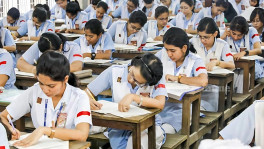
She was the first to consider providing stipends for girls. This stipend for advancing female education was subsequently raised step by step to various levels and was an absolutely "epoch-making" decision.
The most astonishing thing is that the subsequent governments continued with that initiative. Many of Khaleda Zia's policies and strategies were abandoned by later governments after they came to power. However, they could not discard this one.
This measure paved the way for the progress of female students and subsequently advanced the status of women in society. Describing the provision of stipends she arranged as "revolutionary" would be an understatement. It became a model everywhere in the world. At the time, it received recognition as a model for Third World countries.
 Keep updated, follow The Business Standard's Google news channel
Many people across the world could not believe this stipend model and had things to say about how Bangladesh would manage to do it. But subsequently, large organisations like the World Bank gave it recognition.
This measure paved the way for the progress of female students and subsequently advanced the status of women in society. Describing the provision of stipends she arranged as "revolutionary" would be an understatement. It became a model everywhere in the world.
As I was involved in female education programmes, I know these things well. When Khaleda Zia took the decision to provide these stipends to female students, the World Bank did not look favourably upon this initiative. This stipend was entirely at government expense, without any foreign aid.
She undertook it herself with courage and carried it forward. That is her unforgettable achievement, and we are now reaping the benefits of it. This initiative by Khaleda Zia increased women's participation in education.
It is recognised in global research — a UN Population Fund (UNFPA) study — that if a woman can study up to class eight, her child will never be illiterate or suffer from malnutrition. From that perspective, we have seen the fruit of her contribution to female education, which is the Bangladesh of today.
Women have advanced in everything, from the garment industry to small entrepreneurs and agriculture. This is, however, a direct outcome of Khaleda Zia's stipend project and free education.
From this standpoint, we believe — and I do not wish to be presumptuous in judging Khaleda Zia — if we consider how far this wisdom of hers has advanced Bangladesh, the new generation will remember it.
When speaking of women's empowerment, the first thing that must be said is that, from the day she rose to her role as the leader of the parliament, she herself became an institution. She created an institution and a model for other women. And many women advanced in politics by following her path.
Political empowerment of women is certainly very crucial. Among all forms of empowerment — education, health, social welfare, and everything else — political empowerment is such an indicator through which women find their own path. Without it, women's contribution to society does not increase, and they cannot take a strong position. In that area, however, Khaleda Zia became a role model.
Let me give you an example of a personal experience I had in Sylhet after 5 August last year.
There was a girl in a remote village in Sylhet, a Class Four student. She worked alongside her studies. I asked her what she wanted to be when she grew up.
She immediately replied, "Prime Minister." I laughed and said she could be; in response, the girl asked, "Why? If Khaleda Zia can become one, why can't I?" This shows how she inspired even a primary school student.
We talk about a role model, but a role model truly means that people will follow in their footsteps, generation after generation. That is exactly what has happened in Khaleda Zia's case.
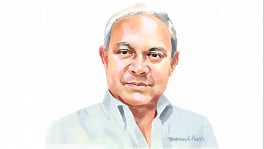
The author is former adviser to the caretaker government and executive director of Campaign for Popular Education.