



Grain, blur and a longing for tactility: Why Gen Z is hunting for old digicams
In the age of smartphone cameras equipped with the latest AI processing tech, a growing number of young Bangladeshis are turning to decade-old digicams and vintage point-and-shoots — chasing imperfection over refinement

The world before the pandemic and the world after it does not feel the same. The lockdowns changed our lifestyles, our daily habits and our tastes in ways we are still trying to figure out.
When we were forced to spend months isolated inside, staring at our glowing phone screens, inevitably boredom took over. Out of our five senses, touch suffered the most due to the social distancing protocols. Almost all of us longed to hold on to our loved ones.
Invariably, people began looking backwards to simpler times. They wanted things they could touch, things that felt like childhood. They wanted to go back to the late '90s and the early 2000s, an era before social media and algorithmic feeds took over.
 Keep updated, follow The Business Standard's Google news channel
For Nuha Muhtashima, a university student, this shift led her to a small, silver digital camera. She ended up spending Tk6,000 on a pre-owned Canon PowerShot from a Facebook page.
Almost all of us carry a highly advanced computer in our pockets every day, equipped with camera systems backed by billions of pounds of research and artificial intelligence. These devices have democratised photography on an unprecedented scale. And when it comes to pure convenience, the smartphone has clearly won, accounting for around 92.5% of all pictures taken globally.
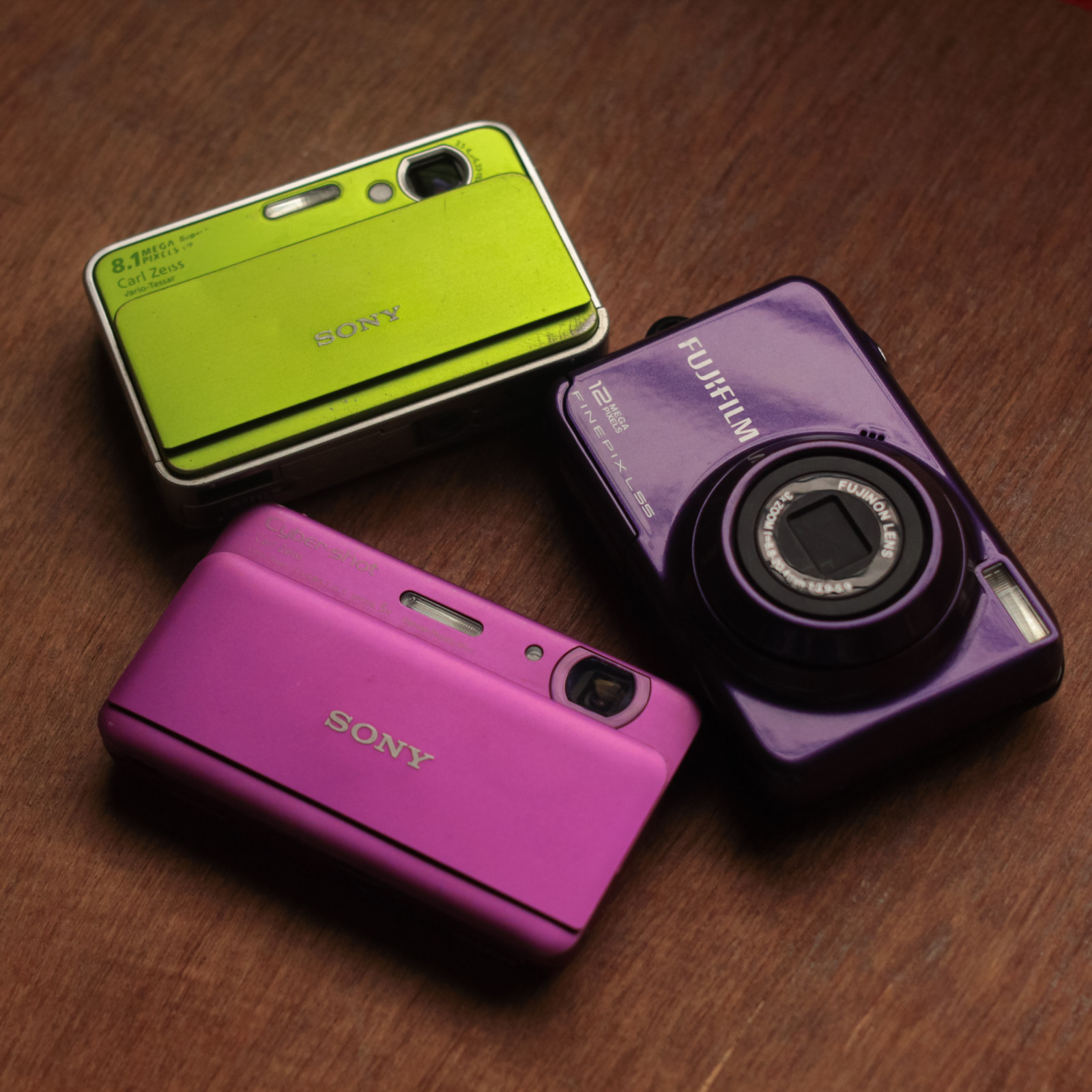
Yet, despite this convenience, people are starting to push back. Younger buyers are actively hunting for 20-year-old Canon PowerShots, while modern, retro-style cameras like the Fujifilm X100VI are so popular that waiting lists and stock shortages have lasted for years.
This shift is more than a temporary phase; it is a psychological reaction to a daily life that feels too automated and controlled by algorithms, leaving many people feeling over-optimised and unable to genuinely express themselves.
"I felt like my phone cameras did not have any emotion or any particular aesthetic," Nuha says. "They were just clear and sharp. But when I used to revisit old photo albums and my childhood photos, they felt natural and intentional. Those photos used to feel like someone had carefully captured them and put in enough effort to deliver those emotions."
Umair Afnan, a 21-year-old student, felt a similar exhaustion. He bought his first cheap digital camera back in 2021 right after the pandemic, a purchase that eventually led him to start his own online camera store, Shutter Forge.
"I did not like my phone camera because it provides sharp, AI-refined, perfect photos," Umair says. "Those used to feel fake, artificial, and lacked any depth or life. I saw that internationally, digital cameras were already in trend back then, but in our country, it still wasn't. So I bought a camera and started using it. Since then, I don't click photos on my phone unless I am forced to."
Modern phones do not just snap a picture; they run it through heavy computational processing. Shadows are artificially lightened, skin is smoothed, and colours are saturated by default. In the quest for technical perfection, the raw, human element of a photograph often gets lost.
To satisfy this sudden hunger for imperfect photos, a complicated, somewhat chaotic supply chain has sprung up in the back alleys of local camera shops and online spaces of Dhaka. Sourcing these old pieces of plastic is a major challenge, and the voices of those who do it reveal a frantic, competitive trade.

In Gulistan's Baitul Mukarram Masjid Market, a crowded electronics hub in Dhaka, a seller named Akram has to look beyond Bangladesh to find stock. "The cameras resold in our country are usually not in good shape," he says. "So we buy from eBay or other international platforms."
Umair also relies on imports to keep Shutter Forge running, but he has to deal with the unpredictability of buying in bulk. "We collect these products in lots from eBay, and some Japanese auction platforms," Umair explains. "They sell cameras in bulk, so there are good functional cameras, and there are some damaged ones. We check the quality and run tests for a few days before putting them up for sale on our page."
For Umair, this testing process is what separates him from other online sellers. "We also post original pictures taken by the exact same camera," he says, noting that many local Facebook pages take shortcuts, using stock images downloaded from the internet or sample photos collected from Instagram.
Meanwhile, Masum, who runs a shop in Paltan's Darus Salam Arcade, takes a more local approach to finding his stock. "We buy mostly from the local market or old customers," Masum says. "Sometimes when I see a good offer on Bikroy.com, I buy from there as well."
Because sourcing is so unpredictable, the economics of the digicam and vintage camera market have turned upside down. Masum remembers when these devices were treated as clutter.
"The digital camera and their additional parts, for example, battery and charger, used to fill up space and be messy in my shop," Masum says. "There were times when we had to just give them away or sell them at a very low price. But now these are in real demand. Whenever products come, they don't stay. They get sold instantly. They even buy a camera and charger separately."
Akram has watched the prices rise to levels that would have been unthinkable a few years ago. "Before, it was hard for us to sell these cameras for Tk2,000-3,000; nobody would buy them," Akram says. "Now the price is too high. We sell digital cameras starting from Tk8,000 to even over Tk30,000. They get sold so much faster than our other products."
This sudden price gap has created a breed of online middlemen who buy cheap from physical shops and flip the cameras online for a massive markup. A clerk in Akram's shop, who once tried to tap into the online market himself, explains why he eventually stepped away.
"Two popular Facebook pages collect their products from us," the clerk says. "We can't mention their names for business purposes. But after buying things from us, they sell them at more than double the price in their shops. These Facebook pages are doing really well. I tried running one myself. I was even able to sell cameras for around Tk20,000. But after a few months, I realised this is not for us, because the time it consumes is not worth it. So I gave up."
Despite the high prices, the buyers keep coming, driven by a desire for a specific aesthetic.
"School, college-going students, and sometimes university-going students buy these digital cameras from us," Masum says. "They say they like the colour and nostalgia of it, and most of them are female customers. They sometimes ask for pink or red cameras. Maybe it is a new trend on Facebook."
This craving for older tech is not unique to the markets of Dhaka. It is part of a global shift, and this international trend is about reclaiming control over our own attention. When we use our phones to take pictures, we are always one swipe away from our emails, text messages, or social feeds. A dedicated camera forces us to pause. It creates a small pocket of time where we are just looking through a lens, separating the act of making an image from the noise of the internet.
Unlike modern smartphone apps that try to mimic the look of film, a real digicam is a tiny chaos machine. It does not give you a perfect, instant preview. You press the button and you get whatever the older sensor decides to give you: a bit of accidental motion blur, a harsh flash, or an overexposed background. You might end up with dozens of imperfect photos, but the ones that work feel incredibly real.
The cameras resold in our country are usually not in good shape. So, we collect these products in lots from eBay, and some Japanese auction platforms. They sell cameras in bulk, so there are good functional cameras, and there are some damaged ones. We check the quality and run tests for a few days before putting them up for sale on our page.
Yet, as the market becomes saturated, those in the business are beginning to wonder how long the momentum can last. Umair, who has been watching the trend since his pandemic purchase, is cautious about the future of Shutter Forge.
"I won't say that it is growing as much as it was even a year or two back. People are still buying, but it is not a growing business. So investing a lot in this will not be a good idea. Yet, as long as it stays, and I enjoy collecting cameras, testing them, and handing them over to their new owner, I will do the business. Not just for profit, more for the passion I have for these cameras," Umair says.
He also offers a practical warning to those swept up in the social media hype. "I don't think anyone should buy a camera just to get along with the trend. In the end, it is an investment. Maybe you can be interested in the trend, but you should also enjoy operating the camera and be used to carrying a second device along with you."
But for those who have made the shift, the digital camera feels less like a passing fashion and more like a permanent change in how they see the world.
Nuha, who has carried her Canon PowerShot through two years of university life, does not see herself going back to the sterile perfection of her phone.
"I don't think those who fell in love with this style will leave it anytime soon," she says. "I know I won't."


