Bera’s battery ‘recycling’ business is now semi-regulated, but no less toxic
The battery trade in Bera upazila began as a scattered and illegal business. But it has since evolved into a syndicate, one that blends legality and illegality, formal licences and informal practices

Amid the soft white bloom of Kashphul along the Jamuna, Bera upazila once resembled a place suspended in stillness. But beneath that calm, a toxic economy grew, one that never quite disappeared, only changed its shape.
For years, Bera was synonymous with unregulated battery recycling. Hundreds of clandestine operations broke open used batteries, drained acid into rivers, and melted lead in open pits.
The environmental and human costs were staggering. And while pressure from media reports and international scrutiny forced a visible crackdown, residents and workers say the business did not end. It adapted.
 Keep updated, follow The Business Standard's Google news channel
Today, the story is no longer about hidden chars alone. It is about how a syndicate restructured itself, more organised, more politically shielded, and, according to multiple local accounts, still deeply entrenched.
A past that poisoned land and lives
The earlier model was very simple. Used automobile batteries arrived in bulk, by boat and truck. Workers, often teenagers, would crack them open with their bare hands. Acid was poured into nearby drains and rivers. Lead plates were extracted and molten in crude furnaces.

In Shishakhola char alone, there were 32 open-pit furnaces. Each was run by two workers through the night. The molten lead was poured into 40kg nuggets and shipped to traders. Across Bera, villages like Salonga hosted as many as 92 shops dealing in dead batteries.
The scale was massive. Around 20,000 tonnes of batteries were reportedly recycled every month nationwide, with 70% of lead demand in Bangladesh being met through recycling. Yet only five factories were officially licensed.
The consequences were visible. Workers inhaled toxic fumes nightly. According to local health officials, many suffered from corroded nails, chronic sores, and respiratory illnesses.
A 2014 study by BUET researchers found that workers in such facilities had 50% more lead in their blood than acceptable levels.
Economically, however, the trade thrived. Workers earned Tk600 a night for melting lead. Children earned Tk4.5 per kilogram extracted. Traders paid Tk135 per kilogram for used batteries. The incentives were strong, even as the risks mounted.
The shift from scattered operations to controlled networks
Following mounting criticism and backlash, the chaotic operations began to decline. But according to local accounts, the business did not disappear; it consolidated.

Residents allege that the trade came under the influence of Md Shamsul Haque Tuku, then Deputy Speaker and MP of the area. Under his new arrangement, operations became less overtly chaotic but no less controversial.
Individuals such as Md Joydar, owner of Shifa Battery Private Limited, Abu Daud Sheikh, the Organising Secretary of the Bera Upazila Awami League, and Md Sahadat Hossen, Vice-President of the New Varenga Union Awami League, are described by locals as having played key roles in managing and expanding the network.
What we are doing here is illegal. We recycle from dust, true, but we also gather it from old batteries and make new cells. Then we throw away the leftover rubbish at the north side of the factory, you can see that there is a crater there, we are using this to fill that up. Yes, they are toxic, and yes, they are not legal, that is why the factory got fined Tk2 lakh a few months ago.
However, these claims could not be independently verified in full, as Daud Sheikh and Sahadat Hossen refused to respond when contacted.
What is clear is that the structure of the business changed.
One factory worker explained the earlier phase, "Previously we used to collect batteries and then cut them open, take the lead and sell the casing and melt the leads into new usable cells. But that was too hazardous for the environment. And often we used to get raided by the police."
The raids pushed the trade towards a more controlled system.

Sulaiman, a local, described the current model, "Now, Daud's group has almost 200-250 men who salvage used batteries for him. They buy them at very low prices, then stock them. They are supposed to sell them directly back to the battery company but they send half to the battery company and they tear open the other part and melt the lead and sell them, they get more profit here."
This hybrid system, part formal recycling, part informal extraction, has made enforcement more complex.
A factory at the centre
The recent mobile court operation in New Varenga is a glimpse into the present reality.
On 22 July 2025, a raid led by Assistant Commissioner (Land) and Executive Magistrate Jannatul Naeem, alongside Department of Environment inspector Abdul Momin, targeted Shifa Battery.
Authorities found evidence of environmental damage caused by indiscriminate waste disposal. The factory was fined Tk2 lakh under the Bangladesh Environment Conservation Act, 1995, with a three-month imprisonment penalty in default.
The owner, Md Joydar, was instructed to bring operations under compliance within 15 days, with further monitoring by the Department of Environment.
Magistrate Jannatul Naeem told journalists, "Our efforts in this campaign will continue in the interest of environmental protection and the public good."
Conflicting narratives inside the factory
Joyder denied any wrongdoing. "We do not melt lead here; we recycle," he said.
"We get the dust from the battery companies, then we burn, refine, and collect the lead and send it back to the company," he said.
He added, "As you can see, our factory is not complete. We lack a lot of things; we basically melt lead dust at 700-800 degree celcius for 6-12 hours, then we get the lead out of the dust and into bars. We do not get any waste here because everything is burned."

But accounts from within the factory paint a different picture.
A worker, speaking on condition of anonymity, said, "What we are doing here is illegal. We recycle from dust, true, but we also gather from old batteries and make new cells. Then we throw away the leftover rubbish at the north side of the factory, you can see that there is a crater there, we are using this to fill that up. Yes, they are toxic, and yes, they are not legal, that is why the factory got fined Tk2 lakh a few months ago."
He further said, "Many people came here to investigate or to complain, our boss bribes them and drives them away. He was very close with the Awami League government in the past, now he claims to be in a close relation with Tarique Rahman's friend, but I find that hard to believe."
According to him, the company earns more than Tk8-10 crore every year.
Oahidul Islam, who lives near the factory, said, "The whole 3km road ahead is destroyed because of this battery factory. The road is just herringbone, but they drive heavy trucks here; the roads only last 3-4 months."
Altaf Hossain, a senior resident, recalled the history, "This business started around 2017-18. Back then, we thought it would just be a business to salvage, but then we saw the people of Tuku MP doing this and becoming millionaires. More than 500 people of this upazila who used to work in this sector got lead poisoning and suffered from different diseases."

Asked about who is sheltering the syndicate now that the previous regime, a local BNP leader said, "Currently, these three are leading the syndicate. But their claim that they are connected with the BNP top leadership is absurd. But yes, they are connected with a few of the environment ministry staff. This is why they are still able to run this business even after so many raids and fines."
Environmental concerns remain acute.
Mohammad Obaydullah, a local engineer, said, "I used to work in the Shifa factory area. I worked with their blueprints too; they have the licence to make new batteries. But what they are doing now is illegal; they are collecting battery lead and melting it and selling it back to the battery companies."
He added, "They are doing business, that's ok, but the issue is that they are harming the environment. The black smoke emitted by the factory is poisonous and it is hazardous to the environment."
His concerns extend beyond air pollution. "To add on, they use their waste to fill the empty lands of their factory. The factory is built in the middle of the paddy fields; all the fields nearby are infected, and when we went to complain, they used political force to kick us out. They also forcefully grabbed our lands," he said.
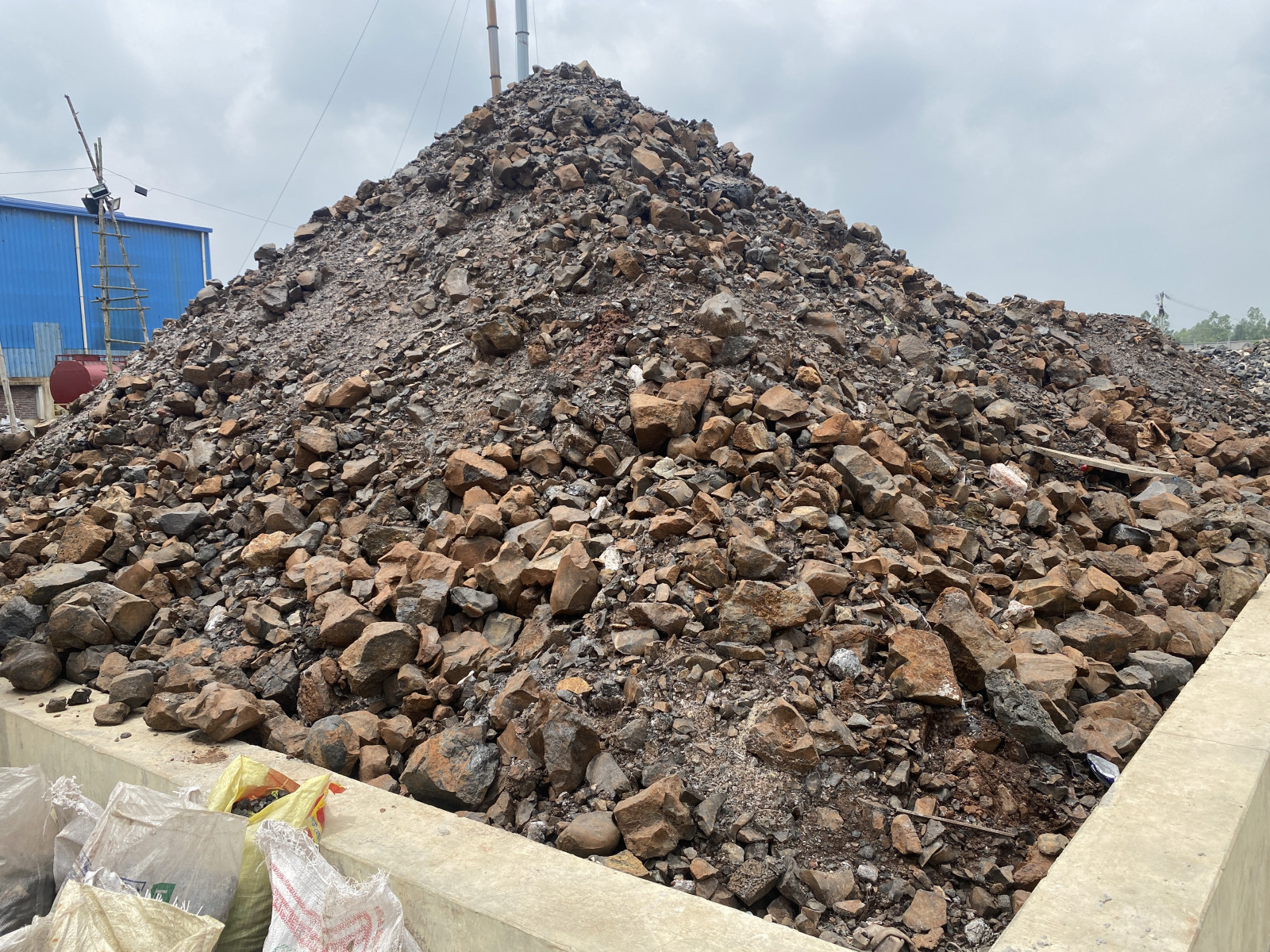
He further alleged that water contaminated by the factory's waste flows into the surrounding paddy fields, spreading pollution, while the smoke released into the air is degrading the environment and posing serious long-term risks. As a result, the fields no longer yield crops, turning the entire area into what he described as an environmental disaster.
According to local residents, the company produces around 1.5 to 2 tonnes of waste every month. They are using this toxic waste to expand their factory grounds, filling the land with it to increase the factory area.
Despite regulations, such as the 2006 gazette requiring environmental clearance and the Hazardous Waste Management Rules 2011, enforcement remains inconsistent.
There are still an estimated 250 recycling plants operating nationwide, far exceeding the number of licensed facilities.
Local accounts suggest that payments to "the right people" once ensured protection. While such claims are difficult to verify, they echo a broader pattern: enforcement actions exist, but sustained oversight is rare.