Govt to reprioritise foreign-funded projects in line with election manifesto
ERD initiates reassessment of projects with $46b in proposed loans to reflect shifting development goals

Bangladesh's foreign-funded pipeline projects:
- Govt revising priority list to align with election manifesto
- $2.27b in loan agreements signed in first seven months of FY26
- $46.6 billion in loan proposals are in the pipeline as of January
- ADB leads lenders with $18.78b in proposals
- Other lenders include South Korea, China, AIIB and World Bank
- Bangladesh typically signs $9-10b in annual foreign loan agreements
- Experts say reprioritisation is standard but warn against dropping vital projects
The government is preparing a revised priority list for foreign-funded projects currently under review in the pipeline to align them with the new administration's election manifesto, according to officials at the Economic Relations Division (ERD).
Since the BNP government assumed office on 17 February, it has placed the highest priority on fulfilling its electoral pledges, already introducing Family Cards and waiving farm loans up to Tk10,000. Its development priorities will be reflected in the annual development programme of the next fiscal year's budget, the first for the new government.
 Keep updated, follow The Business Standard's Google news channel
ERD officials say the government will ensure foreign financing alongside allocations from public funds to support the priority projects. As part of this process, foreign-funded projects currently in the pipeline are being reviewed and various ministries have already started their groundwork under guidance from the finance ministry.
ERD figures updated till January show that $2.27 billion in project loan agreements were signed during the first seven months of the current fiscal year.

Over the last few years, Bangladesh has typically signed $9 billion to $10 billion in annual loan agreements to fund its priority development agenda.
But fewer loan projects were signed during the interim government's 18-month term before the February elections, as the administration then preferred mitigating foreign debt risks to signing new projects.
After the new government took office in February, the ERD has begun drafting a revised priority list for the final quarter of this year and the upcoming fiscal year starting in July, aligning to the ruling party's election manifesto.
As of January, loan proposals for projects in the pipeline stood over $46.6 billion, including $18.7 billion from the Asian Development Bank (ADB), $1.8 billion from the World Bank, $15.2 billion from South Korea, $3.8 billion from China, and $911 million from Japan.
Also, there are proposals from Asian Infrastructure Investment Bank (AIIB), New Development Bank (NDB) and European countries.
Shifting priorities
"The projects currently in the pipeline are undergoing a fresh re-evaluation," said an ERD senior official, speaking on condition of anonymity.
Projects are routinely listed in the borrowing programme pipeline after extensive discussions with development partners. From this list, the government signs loan agreements for priority projects each year, the official explained.
ERD officials suggest the new government may drop some projects from the previous era's pipeline, though widespread cancellations are not expected. Since many projects form part of essential sectoral plans – such as the ADB-backed SASEC Dhirasram Inland Container Depot (ICD) – they are likely to be retained.
Major projects in focus
The World Bank's pipeline under the ERD includes six projects, with the Health, Nutrition and Population Sector Development Programme listed among "highly probable" projects.
ERD data shows that the borrowing programme for the current financial year features 43 South Korean-funded projects, including high-impact infrastructure projects such as the Meghna Bridge on the Shariatpur-Chandpur Road, a railway link to the Bay Terminal of Chattogram Port at Patenga, MRT Line-4 and the MRT Line-5 Southern Route in partnership with the ADB.
According to ERD data, there are nine Chinese projects currently in the pipeline, including conversion of Akhaura-Sylhet railway to dual gauge, expansion of the Joydebpur-Mymensingh-Jamalpur rail corridor, modernisation of Mongla Port and the development of the Chinese Economic and Industrial Zone in Chattogram.
Beyond the major lenders, the AIIB maintains a significant presence with $3.543 billion in proposals across 15 projects, while the NDB accounts for $1.06 billion through six initiatives.
For the current financial year, five projects were also slated for loan agreements with Japanese financing, involving a total proposed credit of $911 million.
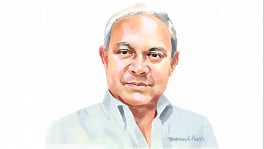
Zahid Hussain, former lead economist at World Bank's Dhaka office, told TBS that the government must evaluate which sectors should be prioritised and which specific projects within those sectors are the most urgent.
He said in the context of the current global crisis – marked by war, fuel shortages, and supply chain uncertainties – the primary objective must be to maintain economic stability. "Consequently, projects related to food security and energy security should receive the highest priority."
"Furthermore, improving the efficiency of port systems is of critical importance. For sustainable growth, developments in education, healthcare, and technical skills remain indispensable," he stressed.
M Masrur Reaz, chairman of the private research organisation Policy Exchange Bangladesh (PEB), said it is natural for the current government to have its own development and project financing strategies.
While reprioritisation is expected, previous projects, which are vital for economic growth, human resource development, should not be outright dropped from the priority list, he cautioned.
Establishing priorities is not enough, the PEB chairman said. "Financing must be sound, and negotiations with development partners must put the country's interests first. Moreover, we must urgently improve our capacity to actually implement these projects."