Education promises risk remaining symbolic without budget support: Citizen's Platform
According to the paper, education spending has remained stagnant at around 1.3% of GDP in recent years despite repeated policy commitments, including a target under the Eighth Five-Year Plan to raise spending to 3% of GDP by FY25.

The Citizen's Platform for SDGs, Bangladesh, a Centre for Policy Dialogue (CPD)-hosted initiative, has urged the government to back its ambitious education promises with credible budgetary commitments, warning that chronic underfunding, weak implementation capacity, and poor governance could undermine the BNP government's 50-point education agenda.
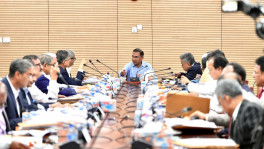
The call came at a discussion titled "Upcoming Budget and Education: Political Pledges and Citizen's Expectations" in Agargaon yesterday, where CPD Additional Director (Research) Towfiqul Islam Khan presented a research paper on behalf of the platform.
"There is broad consensus that Bangladesh's education system needs urgent course correction, the government has shown political intent, and the upcoming budget is the key instrument to translate that intent into reality," he said.
 Keep updated, follow The Business Standard's Google news channel
According to the paper, education spending has remained stagnant at around 1.3% of GDP in recent years despite repeated policy commitments, including a target under the Eighth Five-Year Plan to raise spending to 3% of GDP by FY25.
Budget implementation has also deteriorated significantly. Overall utilisation of the education budget fell to 76% during FY23-25 from 99% in FY09-15. Development budget utilisation dropped further, reaching 53% for the Ministry of Primary and Mass Education and 46% each for the Secondary and Higher Education Division and the Technical and Madrasah Education Division.
The study also mentioned that the tax-to-GDP ratio declined to a record low of 6.8% in FY25, limiting the government's fiscal space for education reforms.
The platform identified major weaknesses in project implementation under the Annual Development Programme (ADP). Of the 101 ongoing education projects across 14 agencies, 34 have already exceeded their completion deadlines and now require extensions to access funds. Another 70 projects have undergone at least one revision.
Reviewing major programmes such as the Third Primary Education Development Programme (PEDP-3), the Secondary Education Sector Development Programme (SESDP), and the Skills and Training Enhancement Project (STEP), the paper identified recurring problems including unrealistic project design, frequent leadership changes, procurement delays, unresolved audit objections, slow spending, and underutilisation of school-level improvement funds.
"The new government will start FY27 with the baggage of many carryover projects," the paper warned.
The study reviewed 50 education-related commitments announced since the government assumed office. Among 13 promises requiring fresh allocations are the recruitment of 9,000 religious teachers, English-language training for 247,000 primary teachers, construction of multipurpose examination halls in every upazila, and doubling scholarship allocations to Tk368 crore annually. However, only the scholarship expansion includes a specific cost estimate.
The platform also criticised what it described as an excessive focus on procurement-based reforms, including tablets, CCTV cameras, multimedia classrooms, free uniforms, and Wi-Fi, without adequate emphasis on improving classroom learning outcomes.
"The government has been specific about purchases, but more clarity is needed about how children will actually learn," the paper observed.
A rapid field assessment conducted in 10 districts between 2 May and 5 May found early implementation gaps in several flagship initiatives.
In the mid-day meal programme, schools were found distributing mostly bakery items such as biscuits and buns, with some students reporting stale or fungus-affected food. On the free uniform initiative, teachers said they had not received official guidelines, while poorer families still struggled with footwear affordability.
The platform recommended direct cash transfers to parents to reduce administrative burden and corruption risks.
Field visits also found many schools still lacked effective Wi-Fi connectivity due to power outages and poor infrastructure, despite existing installations in most institutions. Multimedia classroom use was also hampered by load shedding and limited ICT training for teachers.
The platform said the FY27 education budget presents an opportunity for a "fresh start" through higher allocations and new programmes, including PEDP-5. However, it warned that institutional weakness and governance failures remain major barriers to reform.