Unused 3rd terminal, shrinking fleet, high airfares: New govt’s key aviation challenges
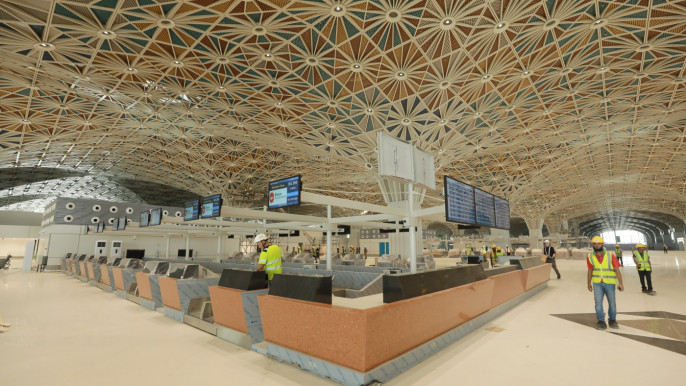
The new leadership at the Ministry of Civil Aviation and Tourism has inherited a strained aviation sector facing mounting challenges, including a long-delayed airport terminal, high airfares, persistent policy gaps and a shrinking national carrier fleet.
Civil Aviation Minister Afroza Khanam Rita and State Minister M Rashiduzzaman Millat are faced with all these challenges, further aggravated by rising global fuel prices stemming from the war on Iran by the US and Israel.
Industry executives say it is not just management lapses but deeper structural issues that need to be addressed.
 Keep updated, follow The Business Standard's Google news channel

At the centre of the immediate agenda is the long-delayed operationalisation of the third terminal at Hazrat Shahjalal International Airport, a project designed to lift annual passenger handling capacity from 8 million to 22 million.
Despite being physically completed, the facility – built at a cost of Tk21,139 crore – has remained idle for more than a year due to a revenue-sharing dispute with a Japanese consortium interested in operating the terminal.
Industry leaders argue that bringing the terminal into full operation within six months would ease congestion and signal policy credibility. "Without activating the third terminal, all other reforms will struggle to gain traction," said Mofizur Rahman, general secretary of the Aviation Operators Association of Bangladesh.
Civil Aviation and Tourism Minister Afroza Khanam told TBS that the government's policy decision is to make the terminal operational as quickly as possible while maintaining international standards.
"There is no reason to leave such a large infrastructure, built with state funding, unused. The government wants to put it into operation," she said.
The minister further stated that the relevant authorities have been instructed to take the necessary steps to ensure the early launch of the Third Terminal.
Fresh negotiations between the civil aviation authority and a Japanese consortium began in March after collapsing in late November last year.
Rashiduzzaman Millat told journalists on 11 March that a meeting with Japan International Cooperation Agency would soon review previous agreements; if unresolved, the project would proceed through an open tender, a process that could take at least nine months.
The new terminal was constructed by Aviation Dhaka Consortium (ADC), a joint venture of Japanese companies Mitsubishi, Samsung, and Fujita.
Meanwhile, on Tuesday, the United Kingdom, through its High Commissioner to Bangladesh, Sarah Cooke, expressed interest in managing ground handling operations at the third terminal during a meeting with Afroza Khanam.
Market share erosion
Domestic airlines are facing growing competitive pressure from foreign carriers, which now command roughly 65% of Bangladesh's international passenger market. Local operators account for only 35%, a figure industry executives describe as unsustainably low for a market of Bangladesh's size.
Wing Commander (retd) Nazrul Islam, a former airline executive, said the government must articulate a clear market strategy. "The question is how much of the market the government wants domestic airlines to retain. Policy support should follow that vision," he said, citing taxation, regulatory simplification and access to long-term financing as priority areas.
Bangladesh's aviation financing structure remains misaligned with industry realities. Aircraft acquisition typically requires financing tenures of 12-15 years, yet domestic banks rarely extend loans beyond five years, placing local carriers at a structural disadvantage compared with foreign competitors.
Airfare pressures and governance questions
Uncontrolled airfares – largely driven by ticketing syndicates – have emerged as a major challenge for the new government, a problem now further aggravated by the ongoing conflict in the Middle East and a sharp surge in jet fuel prices, adding fresh strain to an already stressed aviation sector.
On Tuesday, the BERC raised consumer-level jet fuel prices, citing global market volatility linked to the ongoing Middle East conflict.
Under the revised structure, jet fuel prices for domestic flights have been set at Tk202.29 per litre, up from Tk112.41, while fuel for international flights now costs $1.3216 per litre, compared to $0.738 previously – an increase of around 80%.
Over the past 16 days, jet fuel prices have surged by nearly 115%, pushing the aviation sector towards what industry players describe as a severe crisis.
"For domestic flights, air operators will have to pay Tk1,200 as duties and VAT, which was Tk150. So airfare on domestic routes will be increased," said Sohail Majid, director of sales and marketing at NovoAir.
"The immediate impact of jet fuel prices will be seen within weeks as current tickets were booked before Eid. Passengers who buy tickets now will face higher prices," he added.
Travel agents say the impact is already evident in international markets.
"Currently, due to flight cuts on Middle Eastern routes amid the war, we are not getting any tickets to sell from Biman and Saudi Airlines for the next two months," said Mahmudul Haque Pearu, a Dhaka-based travel agent.
"Some budget carriers like Air Arabia have very limited tickets, but prices are over Tk50,000. Return ticket prices have even crossed Tk1 lakh since the war began – a sharp increase of two to three times. Now, the fuel price hike has added new worries," he said, adding that no visible drive has yet been conducted against alleged ticket syndicates since the new government took charge.
Aviation experts and top officials of private airlines warn that if the new pricing structure remains in place, carriers will face severe financial pressure, with passengers ultimately bearing the brunt.
After assuming office, the new state minister pledged to dismantle alleged ticketing syndicates and improve baggage handling, promising visible changes within weeks.
However, industry insiders say fare volatility also reflects capacity shortages, high operating costs and currency pressures. Addressing pricing distortions will therefore require both enforcement action and supply-side expansion.
Governance reform at CAAB
A central reform question concerns the dual role of the Civil Aviation Authority of Bangladesh as both regulator and operator. The previous interim administration announced plans to separate these functions – a move widely viewed as necessary to improve transparency and align oversight with global standards set by the International Civil Aviation Organization.
Industry representatives are urging swift implementation, arguing that regulatory independence is essential to restore investor confidence and attract private capital into airport management and ancillary services.
The Biman dilemma
Attention is also turning to the state-owned flag carrier, Biman Bangladesh Airlines, whose fleet has shrunk to 19 aircraft, forcing route suspensions and limiting network expansion.
A recently signed agreement with Boeing for 15 new aircraft is under review, with analysts questioning its financial sustainability. Some industry observers advocate partial privatisation or board restructuring to strengthen governance and operational discipline.
"Comprehensive restructuring is overdue," said Kazi Wahidul Alam, an aviation analyst and former Biman board member. "A stable political environment offers a window to act, but that window will narrow quickly if reforms stall."
Regional airports and tourism ambitions
Beyond Dhaka, several airports – including Shamshernagar, Lalmonirhat and Cumilla – have remained largely unused for years. Analysts caution that reopening facilities without rigorous demand assessment risks compounding fiscal burdens.
Better utilisation of existing regional gateways such as Cox's Bazar, Chattogram and Sylhet could yield quicker gains, particularly if cargo facilities damaged by last year's fire are restored to support exporters facing storage constraints.
Rashiduzzaman Millat recently told the media that they are considering reopening closed airports on a priority basis.
A narrow reform window
The new government has pledged zero tolerance for corruption and greater passenger welfare. Yet the scale of institutional change required suggests that symbolic actions alone will not suffice.
Bangladesh's aviation sector is expanding in passenger numbers but remains structurally fragile. Operationalising new infrastructure, clarifying regulatory roles, strengthening airline balance sheets and aligning financing frameworks will determine whether the industry can convert political transition into durable competitiveness.