



What is mobile spectrum, and which frequency bands are most important?
Because the available frequencies are limited, governments allocate them to operators through auctions, renewals or other licensing arrangements.
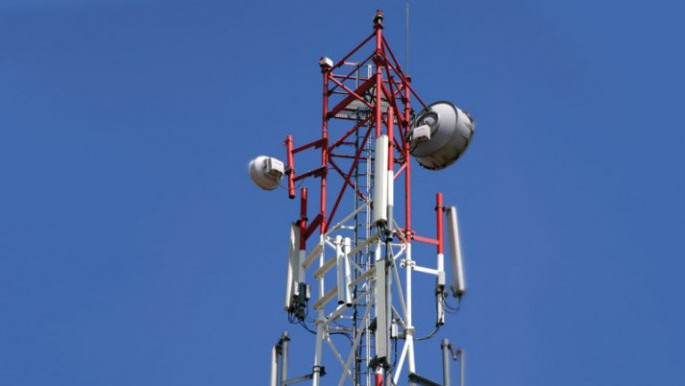
Bangladesh's mobile operators are preparing to renew 79.2MHz of spectrum in November, putting the cost and availability of radio frequencies at the centre of the telecom industry's investment debate.
Spectrum is a limited public resource that allows mobile networks to transmit voice and data between phones and base stations.
Different frequency bands have different technical characteristics, making some more valuable for broad coverage and others for high-capacity data services.
 Keep updated, follow The Business Standard's Google news channel
Mobile spectrum refers to portions of the radio-frequency range that operators use to connect mobile devices with network infrastructure.
Because the available frequencies are limited, governments allocate them to operators through auctions, renewals or other licensing arrangements.
BTRC data shows that mobile operators currently use 463MHz of spectrum nationwide, including 406.6MHz in core bands and 57MHz in specialised extensions.
The 700MHz band is particularly important for expanding coverage because lower-frequency spectrum can travel longer distances and penetrate buildings more effectively than higher frequencies.
Bangladesh auctioned 20MHz of 700MHz spectrum in January 2026, with Grameenphone acquiring 10MHz at Tk237 crore per MHz.
The remaining 10MHz was later allocated to state-owned Teletalk at the same rate.
Higher-frequency bands, including 2.3GHz and 2.6GHz, are also important for increasing network capacity and handling growing data demand.
Bangladesh priced spectrum in these bands at around $6 million per MHz in its 2022 auction.
The operators' existing spectrum holdings vary. Grameenphone holds 137.4MHz, Robi 124MHz and Banglalink 80MHz, while Teletalk holds 65.2MHz.
In November, Grameenphone is due to renew 32.4MHz, Robi 22.4MHz and Banglalink 24.4MHz.
Operators say retaining sufficient spectrum is essential for expanding base stations, modernising networks, improving fibre backhaul and supporting higher-speed services, including 5G.


