What's getting cheaper, what's getting costlier
This is the first budget of the current BNP government after it took office through the 12 February general election.
Finance Minister Amir Khosru Mahmud Chowdhury today (11 June) placed the national budget – with a financial outlay of Tk9.38 lakh crore – for the fiscal year 2026-27 in parliament, mapping out a strategy targeted at stabilisation and fiscal reform.
This is the first budget of the current BNP government after it took office through the 12 February general election.
In line with the proposed budget, the prices of numerous items are set to see an increase and/or decrease in their prices.
 Keep updated, follow The Business Standard's Google news channel
Prices likely to go down
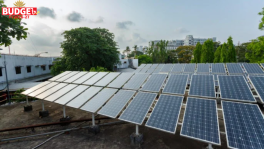
Prices are likely to reduce for air conditioners (locally made), refrigerators (locally made), mobile phones (locally made), laptops and computers, washing machines, dishwashers, geysers, blenders, juicers, cookers, water purifiers, water heaters, garments waste (jhut), solar equipment, rooftop solar installations, electric vehicles, EV charging equipment, medicines (68 types), cardiac stents, eye lenses, kidney dialysis equipment, infant formula, dates, livestock products, poultry products, fish products, locally produced edible oil, zinc sulphate fertiliser, pesticides, crop protection chemicals, fertiliser, veterinary medicine, spices, gold and gold jewellery, lipstick, packaging materials, semiconductor raw materials, mobile network services, transport services, vehicle rental services, detergent, tyres and tubes, skin care products, beauty products, and coffee.

Also, electric vehicles, imported woven fabric, semiconductors, effluent treatment plant, some imported fish including trout and pollack, nitrogen, oxygen and carbon dioxide, compressor oil, cold rolled steel sheet, CR coil, motorboats, musical instruments, dry fish, computer accessories, face and skin cream, lotion, facewash, and door lock will be getting cheaper.
Prices likely to go up
A range of everyday products – from mid-range passenger cars and cigarettes to washing machines and imported paper – are likely to become more expensive.
In a bid to curb the use of fossil fuel-powered vehicles and promote electric alternatives, Khosru in his budget speech proposed raising the overall tax burden on imported internal combustion (IC) engine cars with 1200 to 1600cc capacity from the existing 132.36% to 155.88%, a significant jump that industry insiders say will push up showroom prices for popular mid-range models.
Household washing machines will also face a new 20% supplementary duty under the proposal, a measure aimed at protecting domestic manufacturers.
Similarly, a fresh 20% regulatory duty on imported gypsum boards and sheets is expected to raise construction and interior fitment costs.
Smokers will face a steeper bill as well. The proposed budget sets new minimum retail prices for cigarettes across all tiers, Tk62 per 10 sticks at the lowest tier, Tk92 at the medium tier, Tk160 at the high tier and Tk210 at the premium tier.

Printing and packaging costs could climb after the minister proposed raising import duties on greaseproof and glassine paper from 10% to 25%, along with a new 5% regulatory duty on both products.
Import duties on PVC and PET resin, key raw materials for plastic manufacturing, are also proposed doubling from 5% to 10%, a move likely to ripple into a range of consumer goods.
The import duty on bicycle freewheel components is proposed rising from 15% to 25%, with an additional 5% regulatory duty.
Importers of copper tubes will face a duty increase from 15% to 25%, with copper wire imports attracting a new 10% regulatory duty, changes that could affect electrical installation costs.
Transformers up to 1 KVA capacity will see import duties jump from 10% to 25%, plus a new 5% regulatory duty.
Cold-rolled steel coils and sheets, widely used in manufacturing, will face an additional 10% regulatory duty to shield domestic producers, while maize starch imports would carry a higher duty of 25%, up from the current 15%.
A number of other products are also expected to become costlier, including nicotine pouches, domestically produced alcohol, steel rods, imported cashew nuts, mobile SIM cards, imported man-made fibre, composite LPG gas cylinders, imported flowers, smartwatches, rice bran oil, corrugated items, MS nipples, imported natural honey, filter rods, knit fabric and mattress supports.
The finance minister framed many of the increases as protective measures for nascent domestic industries, while the fossil fuel vehicle surcharge was explicitly tied to an environmental rationale.
The proposed budget sets total expenditure at Tk9,38,000 crore, equivalent to 13.7% of GDP and Tk1,48,000 crore higher than the previous fiscal's budget.