UCB chairman details business agenda in 'constructive, timely' meeting with Tarique Rahman
Sharif Zahir proposed the segregation of distressed assets to ensure that sound borrowers are not adversely affected in the banking sector.

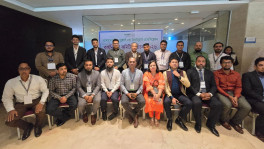
High-profile business leaders met with BNP Acting Chairman Tarique Rahman yesterday evening (4 January) to discuss broad economic agendas and the restoration of business confidence in Bangladesh.
The meeting, held at the BNP Chairperson's Gulshan office, was primarily a condolence visit following the passing of former prime minister Begum Khaleda Zia. However, it transitioned into a substantive two and a half hour-long dialogue covering law and order, energy security, and the structural reforms needed to stabilise the business sector.
In a summary note today (5 January), UCB Chairman Sharif Zahir described the dialogue as constructive, timely, and important.
 Keep updated, follow The Business Standard's Google news channel
He noted that the delegation, representing the core of Bangladesh's productive and financial sectors — including the BGMEA, BKMEA, Bangladesh Association of Banks (BAB), Bangladesh Cement Manufacturers Association, pharmaceutical associations, Dhaka Chamber of Commerce and Industry (DCCI), and several bank chairmen — submitted a consolidated condolence letter before engaging in a detailed sectoral review.

According to the UCB chairman's statement, the business community's foremost concern is the consistent upholding of law and order to restore market confidence.
Sharif emphasised the need for greater respect for the business community and official recognition of its pivotal role in employment generation and economic stability.
The delegation had also called for significant reforms in the National Board of Revenue (NBR) and customs services.
They urged for greater efficiency, transparency, and predictability to reduce compliance burdens that currently hinder trade.
Fiscal concerns were also raised, with a request to reduce VAT to a more reasonable level while widening the tax net to improve revenue sustainability.
Industrial infra, energy
The UCB chairman's statement highlighted that the delegation raised the urgent need for a steady gas supply to energy-intensive industries such as pharmaceuticals, cement, and steel.
The statement noted an urgent requirement to plan and book one or two additional Floating Storage Regasification Units (FSRUs), a process estimated to take approximately two years.
Sharif specifically pointed to the pharmaceutical sector's potential, advocating for backward integration to strengthen domestic value addition and export competitiveness. Meaningful representation of the private sector within the bureaucracy to ensure pragmatic and growth-oriented policymaking was discussed.
Addressing the banking sector, the UCB chairman's note identified capital shortfalls and high non-performing loans (NPLs) as major hurdles. He proposed the segregation of distressed assets to ensure that sound borrowers are not adversely affected.
The meeting also touched upon the necessity of reducing government borrowing from private banks to ease the liquidity crunch. For the capital market, Sharif detailed the requirements for development, including proper valuation of companies, easier exit mechanisms, and clear profit repatriation policies to attract foreign equity.
The meeting, which began at around 7pm yesterday, saw Tarique receiving the delegation with courtesy, personally greeting each participant.
Business leaders later noted that Tarique appeared to have conducted extensive groundwork on every sector while in London.
He assured the leaders that if the BNP forms the government, it will prioritise a private sector-led economy, citing the policy legacy of Ziaur Rahman.
On the issue of LDC graduation, the BNP acting chairman assured business leaders that if the party returns to power and an opportunity arises to defer LDC graduation under a BNP government, the party will actively pursue it.
However, on LDC graduation deferral, BCI President Anwar-ul Alam Chowdhury Parvez, told The Business Standard that, "Tarique said he is not currently in favour of deferring graduation, but if the BNP comes to power and an opportunity arises, the party will try to do so."