Party nominations often determined by money, not merit: Rumeen Farhana
She said that despite public commitments to transparency and meritocracy, major political parties often change their calculations at the last moment when wealthy aspirants emerge.

Independent lawmaker from Brahmanbaria-2, Rumeen Farhana, has criticised the "nomination trading" of the country's mainstream political parties, saying money often outweighs merit when party tickets are distributed.
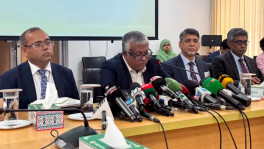
Speaking at a discussion titled "Women's Political Participation: Opportunities and Constraints", organised by BRAC Institute of Governance and Development (BIGD) at the China Friendship Conference Centre in the capital today (20 June), she shared her political experiences and challenges as a woman in politics.
She said that despite public commitments to transparency and meritocracy, major political parties often change their calculations at the last moment when wealthy aspirants emerge.
 Keep updated, follow The Business Standard's Google news channel
"I started working in my constituency in 2018 and never depended blindly on any political party," she said. "This may sound surprising, but I know the character of the bourgeois parties. They make many promises, but if someone shows up with two sacks of money at the time of nomination, there is no room left for ordinary or qualified candidates."
"I will never buy a nomination with money," she said. "That money can be spent on the people during an election campaign, but I will not use it to fill the pockets of party leaders."
Highlighting the realities of electoral politics, she said she had long prepared for the possibility of contesting elections independently if she failed to secure a party nomination.
"My mindset was always clear – there was a 50% chance of getting a party nomination and a 50% chance of running as an independent candidate," she said. "I was fully prepared for either scenario. This was not a one-and-a-half-month preparation; it was a carefully planned preparation spanning eight years."
Rumeen also stressed that women seeking to survive and succeed in politics should not rely solely on political parties. Instead, she said, they must build their own capabilities, maintain close connections with the people and develop the resilience to face adverse situations.