'Lights are on, but burden is heavy,' says power minister on sector debts
He also brought up the issue of system loss in the power sector. “During our past tenure power sector system loss was 6% but has now risen to 10%.”

Power, Energy and Mineral Resources Minister Iqbal Hasan Mahmud Tuku has acknowledged that while electricity supply in Bangladesh has improved, the nation now faces a heavy financial burden in the power sector.
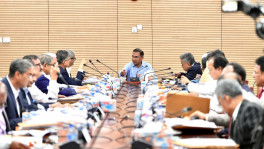
Addressing a programme marking the handover of the executive committee of the Forum for Energy Reporters Bangladesh (FERB) at the Secretariat today (26 February), Tuku said, "It is true that we left load-shedding behind, but we did not leave a burden on the nation's shoulders. Now the lights are on, but the burden on the nation is heavy."
The remarks came amid renewed calls from power producers for the release of outstanding payments by the Bangladesh Power Development Board.
 Keep updated, follow The Business Standard's Google news channel
According to the Bangladesh Independent Power Producers' Association, the government owes between Tk13,000 and Tk14,000 crore.
Tuku stressed that enduring load-shedding in the past was preferable to accumulating massive debt.
He noted that a recent meeting with Economic Adviser Dr Rashed Al Mahmud Titumir highlighted Tk76,000 crore in cumulative outstanding payments in the power and energy sector, warning that uninterrupted electricity supply would be difficult without clearing these liabilities.
The power minister criticised the previous regime's planning, saying power plants were set up without ensuring fuel supply, forcing the government to pay capacity charges to idle plants.
"It's a chaotic situation," he said.
He also brought up the issue of system loss in the power sector. "During our past tenure power sector system loss was 6% but has now risen to 10%."
"Each 1% equals Tk50 lakh. Our target is to bring it down to 3%. Initially, we have directed it to be reduced to 5%," he said, adding that reducing system loss would help contain losses and ease potential pressure from the IMF.
Tuku said the government is considering negotiations with private power producers to reach a "win-win" solution, as the private sector's share in power generation has risen to 82%, far above the 35% ceiling set in a 2004 policy during his earlier tenure.
About the persistent gas crisis, Tuku said inadequate exploration – not mismanagement –was to blame.
"No wells were drilled. We do not want to remain dependent on foreign sources. We will purchase rigs and need skilled manpower. These plans require time," he said, warning that gas pressure would fall further during hotter months.
Responding to a question about billing residential consumers despite gas shortages, the minister said prepaid meters would resolve discrepancies. "We will provide meters. Then don't say we are imposing them."
The programme was chaired by outgoing FERB Chairman Shamim Jahangir, while newly elected Chairman M Azizur Rahman also spoke.