Civil society questions state of reforms, political accountability ahead of polls
They called for political parties to play a more active role in reform efforts, women’s representation, the representation of grassroots people, and anti-corruption commitments.

With the 2026 national election approaching, representatives of civil society today (13 January) raised questions about the state of reforms, meaningful voting, and political accountability.
They called for political parties to play a more active role in reform efforts, women's representation, the representation of grassroots people, and anti-corruption commitments.
Civil society representatives raised their concerns at a dialogue titled "National Election 2026 and Citizens' Expectations," held at the China Friendship Conference Centre in Dhaka.
 Keep updated, follow The Business Standard's Google news channel
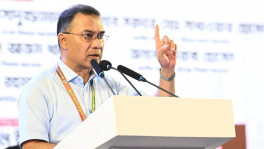
In his opening remarks, economist Debapriya Bhattacharya said Bangladesh's aspiration for a democratic, just and participatory state remained unfulfilled, despite a continuity of state discourse since independence. While the 1990 anti-autocracy movement marked a second major turning point after 1971, he argued that no effective initiative had succeeded in dismantling fragile political and institutional structures.
He noted that shrinking space for freedom of expression, entrenched corruption and excessive centralisation of power over the past decade and a half had created a deep governance crisis, culminating in the 2024 mass uprising.
Rounaq Jahan, honorary fellow of CPD, said the quality of a democracy is determined by how safe and included minority communities feel. She stressed that identity should not be imposed from outside, but defined by communities themselves. According to her, the extent to which marginalised groups are included shapes both democratic consolidation and development, and determines how meaningful elections ultimately are.
Participants from various professions called for stronger anti-corruption measures, greater accountability of elected representatives and increased representation of women and minorities in the next parliament.
Citizen's manifesto
Debapriya, also a distinguished fellow of CPD, presented a Citizen's Manifesto prepared on the basis of nationwide consultations, describing it as both a participatory process and a shared responsibility for implementation.
He said opinions were gathered through regional consultations in all eight divisions, 15 youth workshops, online and in-person feedback, and instant polling tools.
Summarising citizens' views on elections, he said the word most frequently repeated was "neutrality," with demands for impartiality from the Election Commission, administration, law enforcement agencies and the judiciary.
Citizens also called for participation of all political parties, a level playing field for candidates, transparent vote counting and effective control of post-election violence. A notable new demand, Debapriya added, was the registration of regional political parties from the Chattogram Hill Tracts.
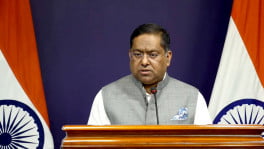
As the chief guest, BNP standing committee member Amir Khasru Mahmud Chowdhury said accountability is the most critical issue, noting that prolonged periods of unelected governance had eroded it.
In response to concerns that elected governments often turn repressive after an initial honeymoon period, he said restoring trust in politics was the responsibility of politicians themselves.
He added that alongside political democratisation, economic democratisation was essential, ensuring that all citizens both contribute to and benefit from the economy.
During this exchange, Debapriya posed a question to him, noting that governments often take a repressive path once their "honeymoon period" ends and they can no longer tolerate criticism. He asked how one could be certain that this trend would not persist in the future.
In response, Khasru said that politicians must take responsibility for restoring public trust. He remarked that any political party failing to embrace the shift in the people's mindset will have no future in politics.
Responding to questions, Jamaat-e-Islami executive council member Saiful Alam Khan Milon said the party would bring women into national elections if given the opportunity to form a government.
He claimed that Jamaat's manifesto prioritised anti-corruption, including public disclosure of MPs' allocations and expenditures, scrapping duty-free vehicle privileges for MPs, and ensuring equal rights for all citizens.
However, when questioned about the absence of female candidates in parliamentary polls, the Jamaat leader acknowledged broader shortcomings across parties and said progress would require collective action.
Former NCP leader and Dhaka-09 parliamentary aspirant Tasnim Jara emphasised the need to strengthen social protection alongside accountability, arguing that the state must take responsibility for workers' welfare, including life after employment.
AB Party Chairman Mujibur Rahman Manju said hopes for a "new arrangement" after July had not materialised, adding that political actors themselves bore much of the responsibility.