Bangladesh expects $1.3b IMF instalment by July
Govt also discusses additional financing for fuel imports.

Bangladesh expects to receive a combined $1.3 billion instalment from the International Monetary Fund by July, merging a delayed December tranche with the next scheduled disbursement under its $5.5 billion loan programme, the finance minister said.
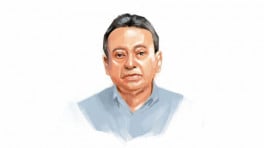
A final round of discussions is set to take place on the sidelines of the IMF's Spring Meetings in Washington in April, Finance Minister Amir Khosru Mahmud Chowdhury told reporters on Tuesday (24 March).
His remarks followed a meeting between Prime Minister Tarique Rahman and Krishna Srinivasan, director of the IMF's Asia and Pacific Department.
 Keep updated, follow The Business Standard's Google news channel
"We discussed the IMF loan disbursement. The review for the $1.3 billion tranche will take place in July. In the meantime, we will prepare the national budget," said the minister, who attended the meeting.

He added that the government had also sought additional financing for fuel imports, an issue expected to feature prominently in the upcoming Spring Meetings.
Bangladesh has been under an IMF programme for several years, which is now under review, the minister said, adding that discussions on reform conditions are ongoing. However, he cautioned that not all conditions can be implemented immediately. "We have to consider what is feasible in the current economic context and implement the remaining conditions gradually."
He also pointed to rising global uncertainty stemming from tensions involving Iran, the United States and Israel, warning that Bangladesh faces similar external pressures.
Srinivasan said discussions had covered the ongoing programme, with further engagement planned ahead of the next review.
The meeting was held at the Bangladesh Secretariat, according to the Prime Minister's Office.
Central bank engagement and next steps
Bangladesh Bank Governor Mostaqur Rahman also held a courtesy meeting with IMF officials.
Following the Spring Meetings, an IMF mission is expected to visit Dhaka to conduct the programme review, a senior central bank official said. Its findings will be submitted to the IMF Executive Board.
Talks are likely to focus on the policy rate, exchange rate stability and banking sector conditions, another official added.
Bangladesh secured a $4.7 billion IMF package in January 2023 amid pressures triggered by the Covid-19 pandemic and the Russia–Ukraine war. The programme was later expanded to $5.5 billion in June last year with an additional $800 million.
So far, the country has received $3.64 billion across four tranches. A scheduled disbursement last December was withheld pending engagement with an elected government.
Dhaka seeks additional $2bn for energy
Amid rising energy costs linked to geopolitical tensions, Bangladesh has sought an additional $2 billion in financing from the IMF, the World Bank and other development partners to support fuel imports.
Prime Minister's adviser Rashed Al Titumir recently said there were "positive indications" that multilateral lenders would step in to support the energy sector and bolster growth.
Officials said securing the next IMF tranche remains a priority in the near term.
In a 23 February letter, the Economic Relations Division said the IMF planned to meet the prime minister to assess reform progress and reaffirm cooperation with the new government.
However, key conditions remain unmet, including revenue mobilisation targets, restructuring of the National Board of Revenue, strengthening central bank independence and full adoption of a market-based exchange rate, according to finance ministry officials.
Reforms, fiscal pressures and public appeal
The finance minister said the government had inherited a fragile economy and a weak banking system, underscoring the need for gradual but sustained reforms.
"The banking sector and capital market remain weak, while the tax-to-GDP ratio is very low. These issues can be addressed through step-by-step reforms," he said.
The government has begun expanding social safety nets, including family support programmes and agricultural loan relief, while stalled development projects are being revived.
Improving the ease of doing business and reducing costs through deregulation will be key priorities in the upcoming budget, he added.
Amid concerns over fuel supply, the minister urged restraint in consumption. "The government alone cannot manage this crisis. People must be cooperative."
Despite global energy pressures, he said transport and the garments sector remained stable during Ramadan and Eid. "Together, we will overcome this crisis."