



What the UAE’s departure from OPEC means for global oil markets
The UAE said it decided to leave the oil producers’ group to focus on “national interests” and to “forge its own path”, ending decades of participation in the cartel that has coordinated production policy among major oil exporters
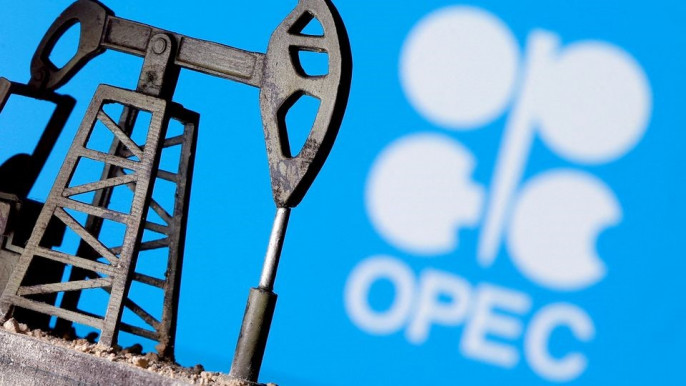
The United Arab Emirates' decision to leave OPEC marks a significant shift in global energy politics, reflecting deepening divisions within the Gulf, competing oil strategies, and disruption from the ongoing war involving Iran.
The UAE said it decided to leave the oil producers' group to focus on "national interests" and to "forge its own path", ending decades of participation in the cartel that has coordinated production policy among major oil exporters, reports Al Jazeera.
The move comes after years of tension over production limits, despite the UAE's heavy investment in expanding its oil capacity to around 5 million barrels per day (bpd) by 2027. Output had been capped at roughly 3.2 million bpd under OPEC arrangements, despite significantly higher production potential.
 Keep updated, follow The Business Standard's Google news channel
Energy strategist Kingsmill Bond of Ember Future said the UAE is positioning itself for a structural shift in global energy markets, arguing that "they are clearly preparing for the period after the war, because now that we have reached peak oil demand and we are entering a new environment – they want to be free from the constraints of OPEC". He added that "the UAE is preparing for a world after the Iran war where oil demand is in decline, and OPEC's power to maintain control and discipline will be weaker".
The departure highlights a widening strategic divide with Saudi Arabia, which continues to lead OPEC+ in managing production to stabilise prices. The UAE, by contrast, has increasingly prioritised production expansion and market share.
Mohammad al-Sabban, a former senior oil adviser to Saudi Arabia, downplayed the significance of the move, saying "it's not a major blow, especially for OPEC+ [which] consists of 23 countries, and one country going out doesn't mean anything". He also described the decision as politically influenced, arguing that Western powers had "sought to stoke division within the cartel", and adding that "this is nonsense because the UAE knows that OPEC adjusts production to maintain an equilibrium and nothing else".
The UAE's exit comes amid the US-Israel war on Iran, which has severely disrupted energy flows through the Strait of Hormuz, a critical chokepoint for global oil and LNG shipments.
Gregory Gause III, an associate fellow at the Middle East Institute, said "it seems that the war might have exacerbated the differences that the Emirates felt".
Tensions have also deepened over regional security approaches, with Abu Dhabi pushing for a more assertive stance toward Iran while Saudi Arabia, Qatar and Oman have favoured diplomacy.
Robin Mills, chief executive of Qamar Energy and fellow at Columbia University, said OPEC's influence would diminish but persist, noting "it will be less influential than before, but it won't disappear", adding that "the ability to act collectively on managing the market and ensure that prices don't go too high – and not too low – that was the reason to form OPEC+".
Former US President Donald Trump has previously criticised the group, accusing OPEC of "ripping off the rest of the world" by inflating oil prices.
Energy consultant Anas Abdoun described the UAE's move as part of a broader regional shift, saying "the UAE's departure is, above all, the visible sign of a deep regional rupture between Riyadh and Abu Dhabi first, but beyond that, between two incompatible visions of what Gulf order should look like". He added that the "real loser" is "the idea of a collective capacity for Arab fuel-producing states to shape the global energy order".
While questions remain over OPEC+ cohesion, analysts note the group still comprises 23 countries and has previously absorbed member departures. Saudi officials have indicated they expect limited impact on overall market management.
For now, however, war-related disruptions, constrained shipping through the Strait of Hormuz, and diverging Gulf strategies point to a more fragmented and uncertain phase for global energy markets.


