India's Lok Sabha passes bill to open civil nuclear sector to private participation
Addressing concerns over nuclear disaster liability—a central theme of the debate— Jitendra said the bill does not dilute compensation for victims

The Lok Sabha, the lower house of the Indian Parliament, passed a bill seeking to open up the tightly controlled civil nuclear sector to private participation, amid a walkout by opposition lawmakers who said the legislation lacked adequate safeguards.
The Sustainable Harnessing and Advancement of Nuclear Energy for Transforming India (SHANTI) bill was passed on Wednesday (17 December) by voice vote amid a walkout by opposition lawmakers, who had demanded that the legislation be referred to a parliamentary committee for further deliberation.
On Wednesday, Congress MP Shashi Tharoor described the government's nuclear energy bill as a "dangerous leap into privatised nuclear expansion" without adequate safeguards, saying the pursuit of capital must not override public safety, environmental protection, and justice for victims.
 Keep updated, follow The Business Standard's Google news channel
Participating in the debate, Tharoor stated that the bill was riddled with exceptions, granted excessive discretionary powers, and showed a limited concern for public welfare.
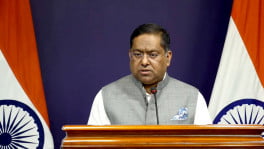
Replying to the debate, Science and Technology Minister Jitendra Singh termed the bill a "milestone" that would give a new direction to India's development journey. He sought to address concerns raised by opposition members by outlining the government's rationale for introducing a comprehensive new nuclear law.
Responding to points raised across party lines, Jitendra said safety standards, security controls over fissile material, spent fuel and heavy water, as well as periodic inspections, would remain firmly under government oversight regardless of private participation.
He clarified that private entities would not have control over sensitive nuclear materials and that spent fuel management would continue to be handled by the government, as has been the practice for decades.
Addressing concerns over nuclear disaster liability—a central theme of the debate— Jitendra said the bill does not dilute compensation for victims.
He explained that operator liability has been rationalised through graded caps linked to reactor size to encourage newer technologies, such as small modular reactors, while ensuring full compensation through a multi-layered mechanism.
This mechanism includes operator liability, a proposed government-backed Nuclear Liability Fund, and additional international compensation through India's participation in the Convention on Supplementary Compensation, he said.
Jitendra also said supplier liability was removed after careful consideration of global practices and advances in reactor safety, while negligence and penal provisions would remain enforceable under the law.
Rejecting the claim that the bill signals a retreat from public-sector capability, Jitendra pointed to a nearly 170% increase in the Department of Atomic Energy's budget over the past decade and a doubling of installed nuclear capacity since 2014.
He noted that nuclear power's contribution to India's energy mix remains modest compared to global peers, and scaling it up is essential to meet rising demand from sectors such as data processing, healthcare, and industry, alongside renewable energy.
The bill, he added, enables responsible private and joint-venture participation to bridge resource constraints, shorten project gestation periods, and support the national goal of achieving 100 gigawatts (GW) of nuclear capacity by 2047 without compromising national security or public interest.
Placing the legislation in a broader context, the minister said nuclear energy has applications beyond power generation, including cancer treatment, agriculture, and industry.
Jitendra later added that the bill, for the first time, explicitly recognises environmental and economic damage within the definition of nuclear harm.
With dedicated investments announced for small modular reactors and research and innovation, the minister said the proposed law aims to create an enabling ecosystem for clean and reliable energy while upholding India's long-standing commitment to the peaceful use of atomic energy.