Budget FY27: Key measures and takeaways
The tax-free income threshold for individual taxpayers has been revised for the next five years.
Finance Minister Amir Khosru Mahmud Chowdhury today (11 June) placed the national budget – with a financial outlay of Tk9.38 lakh crore – for the fiscal year 2026-27 in parliament, mapping out a strategy targeted at stabilisation and fiscal reform.
This is the first budget of the current BNP government after it took office through the 12 February general election.
Below is a summary of the key proposals.
 Keep updated, follow The Business Standard's Google news channel
Reduction of duties on essential goods
To ease inflationary pressure, the advance income tax on around 60 essential commodities, including rice, wheat, potatoes, onions, garlic, ginger, salt, sugar and edible oil, has been proposed to be reduced from 5%, 2% or 1% to just 0.5%.
Revision of income tax exemption limit
The tax-free income threshold for individual taxpayers has been revised for the next five years.
In FY2026–27, the general tax-free income limit has been increased to Tk375,000. For women, senior citizens and persons with disabilities, the limit has been proposed at Tk425,000 and Tk500,000 respectively.
Withdrawal of Tk300 SIM tax; govt to lose Tk1,200 crore in revenue
The existing Tk300 tax on SIM card sales has been withdrawn. Instead, a 15% VAT will be imposed on the sale price.
Although the SIM tax has been removed, the replacement VAT is expected to result in a revenue loss of about Tk1,200 crore for the government.
Free train travel for senior citizens
Citizens aged 65 and above will receive completely free train travel. At the same time, a 25% discount will be offered on metro rail fares for senior citizens.
Digital Single Window system and simplified licensing
To simplify approval procedures for startups and new businesses, a mandatory digital "Single Window" system will be introduced.
All licensing processes must be completed within a maximum of seven days, and company registration within 48 hours.
Tk500 per litre price hike on local liquor
A specific tax of Tk500 per litre has been imposed on locally produced alcohol. As a result, the price per litre is expected to increase by Tk500.
In Bangladesh, locally produced liquor is primarily manufactured by Carew and Company Bangladesh Ltd.
Bank deposit exemption up to Tk400,000
No excise duty will be charged on bank deposits up to Tk400,000 annually.
Currently, deposits up to Tk300,000 are exempt, while Tk150 is charged for deposits between Tk300,000 and Tk500,000.
The change effectively benefits those maintaining up to Tk400,000 in deposits.
Increased honorarium for freedom fighters
Monthly stipends for decorated freedom fighters have been increased by Tk5,000.
Accordingly, Bir Shresthas will receive Tk40,000, Bir Uttoms Tk30,000, Bir Bikrams Tk25,000, and Bir Pratik holders Tk25,000 per month.
Reform in export sector duty and bond facilities
For 100% export-oriented leather, footwear, towel and home textile industries, the general bond validity has been extended from one year to three years.
Regular annual bond audits for compliant garment exporters will also be waived.
Tobacco pricing and supplementary duties
To protect public health and increase revenue, the minimum retail prices per 10 sticks of cigarettes have been set at Tk62 for low tier, Tk92 for mid tier, Tk160 for high tier, and Tk210 for premium tier.
Additionally, supplementary duties of 40% on nicotine pouches and 67% on heated tobacco products will be imposed, along with a "Track and Trace" system for local production to prevent illicit trade.
Immediate stock market settlement (T+0)
To make the stock market more dynamic, settlement cycles will be gradually reduced from the current T+2 system to T+0, enabling same-day trade settlement.
Reduction in medicine prices
Import duties on raw materials for the pharmaceutical sector will be waived, which is expected to reduce production costs and make life-saving medicines more affordable.
One Village, One Product creative hubs
Creative economy products such as handloom products, pottery, weaving crafts, shital pati, shataranji, wooden toys, handmade jewellery and terracotta items will be identified and developed through nationwide creative hubs.
A central world-class creative hub will be established on 160 acres in Purbachal, alongside district and upazila-level hubs. A national pool of designers will also be created.
Nationwide afforestation and carbon trading programme
The government plans to plant 2.5 billion trees over five years, creating 350,000 green jobs.
Under the "One Child, One Tree programme," 100 million saplings will be planted. Additionally, 50% of coastal mangrove forests will be brought under carbon trading.
River dredging and flood management
Rivers and canals spanning 20,000 kilometre will be dredged over five years.
Major projects include a 7-year "Padma Barrage Project" covering 19 districts and the "Teesta Master Plan" for northern development.
Employment and rural development for the ultra-poor
Under the EGPP programme, employment will be ensured for around 2 million rural workers, one-third of whom will be women.
Tk1,510 crore is allocated for rural infrastructure maintenance and Tk1,454 crore for TR programmes.
Social security and religious institutions
Monthly stipends of Tk10,000 for imams, muezzins and caretakers of mosques, and Tk8,000 for priests and caretakers of other religious institutions have been proposed.
Allocation of Tk1,081 crore has been set aside. Widow and abandoned women allowances will continue.
Reduction in healthcare costs
Import taxes on dialysis filters will be fully waived, reducing the cost of each dialysis session by about Tk800.
Tax exemptions for ICT products
All duties, VAT and supplementary taxes on imports of laptops, desktops, servers, printers and monitors will be removed.
A 15% VAT on services provided by content creators and freelancers will also be exempted.
Expansion of solar and renewable energy
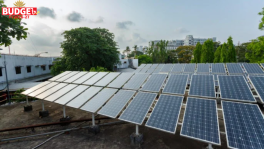
A 0% tax rate on solar power generation until 2035 has been proposed, along with a 5% tax rebate for solar electricity users.
Semiconductor and modern industry investment
All taxes except 1% import duty on raw materials for semiconductor design and packaging industries will be exempted.
Import duties on POS machines will be reduced to 0% to promote cashless transactions.
Mandatory third language education
A third language will be introduced alongside Bangla and English. Students seeking higher education may receive loans up to Tk10 lakh.
Free undergraduate education for girls will also be expanded. A "One Teacher, One Tablet" programme will support AI-driven education.
Fisheries export target
Fish export earnings are targeted to reach $1 billion by 2030. A fisheries insurance scheme will also be introduced.
Support for persons with disabilities
The number of disability allowance beneficiaries will be increased to 3.8 million. Monthly allowances will rise to Tk1,000, while student stipends will range from Tk1,000 to Tk1,400 depending on category.
Nationwide high-speed broadband
High-speed broadband of 100 Mbps will be ensured across urban and rural areas.
A "One Citizen, One ID, One Wallet" system will be introduced for digital service integration.
Tk500 crore startup fund
A Tk500 crore startup fund will be established to support innovation, women entrepreneurs and youth-led enterprises.
Employment exchanges at district and upazila level
A government-run employment exchange system will be introduced to ensure merit-based and non-discriminatory job opportunities.
Pink Bus Service for women
A "Pink Bus Service" managed entirely by women will be launched to reduce harassment and violence against women.
Promotion of electric vehicles
Policy support will be provided for the production of electric buses, trucks, bikes and scooters to reduce fuel consumption and improve mobility.
Automatic approval system for delayed responses
If regulatory bodies fail to respond within the stipulated time, applications will be automatically approved.
Automated tax audit system
Tax audit selection will be fully automated and risk-based, removing human intervention to ensure transparency.
Quarterly VAT returns for small businesses
Small businesses will be allowed to submit VAT returns quarterly instead of monthly to reduce compliance burden.
Digital e-loan system
A fully digital microloan system will provide unsecured loans of up to Tk50,000 with a repayment period of 12 months.
Diversification of capital market financing
The government will reduce reliance on bank loans and promote alternative financing sources such as municipal bonds, corporate bonds, sukuk and other structured instruments.