



Dipu killed and burnt; shattered family awaits justice
The government announced Tk50 lakh in financial assistance for Dipu’s family after the killing. While steps are underway to create two Tk10 lakh savings certificates, discussions continue with the administration over the disbursement of the remaining funds.

On Thursday night, 18 December 2025, Dipu Chandra Das, a garment worker at Pioneer Knitwears BD Limited, was supposed to return home after finishing work. He did return the next day — but as a body burnt to ashes.
Accused of insulting religion, Dipu was dragged out of the factory that night and beaten to death. Hundreds of people took part in the killing. Afterwards, his body was stripped naked, hung from a tree on the divider of the Dhaka–Mymensingh highway, and set on fire.
The flames consumed him so completely that even the bones of his skull melted. It was no longer possible to tell that the remains were those of a human being. News of the incident soon spread and shook the nation.
Nearly three months have passed since that brutal killing. How is Dipu's family coping now? To find out, we visited their home.
 Keep updated, follow The Business Standard's Google news channel
When we arrived, however, none of the family members were there. We only found Babu Ram, Dipu's father-in-law. He said that everyone had gone to Mymensingh Cantonment, where the army was distributing financial assistance.
We asked for the rest of the family to be informed to return home, and while waiting we began speaking with Dipu's father-in-law. By profession, he is a village police officer. Since Dipu's murder, he has lost much of his mental balance. At times he speaks incoherently.
Yet even amid that confusion, he could not stop lamenting the future of his widowed daughter.
"My daughter is only 20 years old," he cried. "At this age she has lost her husband. I am 48 years old — this should have been a time for me to live happily with my one-and-a-half-year-old granddaughter. Instead I must live my life looking at the face of my widowed daughter."

Beating his chest, he went on to say, "Does anyone kill someone like this? I sold my last piece of land to marry off my daughter. They married for love. Now what will happen to her? She will never again receive her husband's affection."
None of his questions had any answer from us. There was nothing we could do except just listen.
A short while later, the rest of Dipu's family arrived — his father Robi, his mother Shefali, his wife Meghna, their one-and-a-half-year-old daughter Gitika, and his two younger brothers, Apu and Hrithik. We spoke with each of them one by one.
We began with Dipu's father, Robi Chandra Das.
"I have never even slapped my son once. And yet that very son of mine was beaten by hundreds of people until he became a corpse," said Robi Chandra Das.
"They tied that corpse to the back of a motorcycle and dragged it along the road. Then they hung it upside down from a tree in the middle of the road, stripped it naked and burnt it. What came back to me was the body of my strong young son — five feet seven inches tall—burnt down to this much," he explained, spreading both hands to show a space of roughly a foot and a half.
"There was no way to recognise him, no way to understand that it was my Dipu."
Recalling Dipu's childhood, he said, "Dipu is the eldest of my three sons. I raised all three of them with great affection. I worked myself so that they would not have to suffer. Dipu had a love for studying from a very young age. But I did not have the means to send him to big schools or colleges. Even so, he studied as much as he could through his own efforts."
"Later, when Dipu realised that I was getting older and that work was becoming difficult for me, he began searching for a job alongside his studies. After he got a job at that garment factory in Bhaluka, he left his studies and went to work in order to support the family."
Dipu's mother, Shefali, constantly sobbing, showed us where her son used to sleep when he came home. Pangas fish and noodles were Dipu's favourite foods. Whenever he returned home, he would make sure to eat those two dishes cooked by Shefali.
Shefali asked through tears, "Will pangas fish or noodles ever go down our throats again, son?"
Perhaps the hardest part was interacting with Dipu's wife Meghna. Journalists often have to ask very sensitive questions. But this time we had to think twice before asking anything to Dipu's 20-year-old widow.
Even so, we gathered the courage to ask: when she first heard that Dipu was no longer alive, how exactly did she feel?
Meghna remained silent for quite some time. It seemed as though a torrent of tears was about to burst from her eyes. But strangely — not a single drop fell. Overwhelmed by grief, Meghna had turned to stone.
After a while, she broke the silence.
"It felt as if someone was playing a joke on me. I couldn't believe it could be true. When more news started coming in, it felt like a nightmare. I thought that if I woke up from sleep, everything would be fine again."

But to Meghna's misfortune, this was not a nightmare. It was harsh reality, and Dipu had met a tragic end.
Robi, Shefali and Meghna did not even have the courage to see what remained of Dipu's burnt body. His two younger brothers, Apu and Hrithik, however, did see their beloved elder brother one last time.
Apu does not study, but Hrithik is a ninth-grade student. He demanded the highest punishment for those responsible for his brother's brutal killing.
"Those who killed my brother like this — they also have children; they also have families. I do not wish that anything like this should happen to them. But those who were involved must receive the harshest punishment."
Although Dipu was burnt to death that night, members of his family went to the police station the following morning to retrieve the body. Even when the body was brought home for the funeral, trouble arose.
News had spread in Dipu's area that he had been killed for "insulting religion". A mob gathered there as well, intending to burn down his house. However, thanks to the firm stance of the local administration, the police and the army, that attempt failed.
Dipu's final rites were carried out under security. Muslim residents of the village, along with people from other religious communities, stood guard. It was they who ultimately protected Dipu's family home.
What exactly happened that night?
We tried to speak with workers from the garment factory where Dipu worked. But none were willing to speak with the media.
According to accounts from RAB, the police and locals, several workers inside the factory began beating Dipu during the evening. They accused him of insulting the Prophet. Soon rumours spread verbally that "Dipu had made such remarks while sitting at a tea shop."
As the news spread outside, people gathered outside the factory demanding that Dipu be handed over to them. At the same time, because nearby factories were ending their shifts, a large number of people gathered there within a short period.
In an attempt to control the situation, the factory's production manager immediately dismissed Dipu from his job. Even that could not save him.

According to a press briefing issued by RAB, "An unidentified agitated mob accused the victim of insulting the Prophet and religion. At approximately 9pm on Thursday night they forcibly took him out of the factory and beat him to death with punches, kicks and local weapons."
"Later, the victim's body was hung from a tree on the median of the Dhaka–Mymensingh road near Jamirdia Square Masterbari bus stand and set on fire."
RAB Company Commander Mohammad Shamsuzzaman said, "When the situation became volatile, factory officials handed the victim over to the crowd to protect the factory. The incident began around 5pm, but the police were informed around 8pm."
Some people also claim that while Dipu was being beaten inside, outsiders entered through a pocket gate and dragged him outside.
"They took him onto the Dhaka–Mymensingh highway, beat him, hung his body from a tree and then set it on fire," a local shopkeeper said. "At one point the rope burnt through, and Dipu's body fell. Later the police and army arrived and brought the situation under control," he added.
Videos circulating on social media also show scenes consistent with these descriptions.
My brother was killed because of a personal dispute. If he had committed any crime, they could have handed him over to the police. The matter could have been judged in court. Even if the court had sentenced him to death, at least we would have received his body properly. The people at the factory could have saved my brother if they had wanted to. I want a proper trial for my brother's killing—from society and from the state."
So far, 24 people have been arrested in connection with the incident. Half of those detained were Dipu's co-workers at the factory, including two managers from the floor where he worked. A local mosque imam has also been arrested.
Most of the suspects are aged between 22 and 30. Police estimate that around 150 people were directly involved in the attack, with many more present as onlookers, while others are still being sought by police.
About a few of the arrested, Mymensingh's Additional Superintendent of Police (Administration), Abdullah Al Mamun, said, "Some are students, some are passersby, some are locals. Everyone was beating Dipu, so they beat him too. But we are treating this as a hate crime."
Did Dipu actually insult religion?
There is no clear answer to this question, nor is there any way to prove whether Dipu actually said anything of that nature. However, RAB said, "Everyone we have questioned says they heard that he made insulting remarks, but that they heard it from someone else. None of them directly heard him making such comments."
The police also investigated the allegation. However, they too found no evidence to support it. Abdullah Al Mamun said, "We have heard allegations of religious insult, but all of them are based on hearsay. The accusation that he made derogatory remarks about religion is being verified and examined. So far, the police have not found any truth in these claims."
He added that no one has the right to take the law into their own hands by forming a mob and killing someone.
"Why that young man was handed over to a crowd instead of being given to the police is also being investigated. After reviewing video footage, RAB and the police have already arrested several individuals. They are being interrogated, and operations are ongoing to arrest the others involved," he said.
We also spoke with local residents and tea stall owners in the area. Although they were reluctant to reveal their identities, they all said the same thing — Dipu had never come to their shops and made any such remarks, nor had they ever heard him say anything of that sort.
The entire allegation that Dipu insulted religion appears to have been fabricated.
Dipu's father, Robi, is also certain that his son never spoke disrespectfully about any religion. He claimed Dipu maintained good relationships with everyone in the area, including Muslims and people of other faiths.
Idris Ali, a neighbour in Dipu's village, also praised Dipu's gentle nature. "Dipu was not the kind of boy who would say bad things about religion," he said. "I am a Muslim myself, but Dipu always behaved very politely with us and showed respect. We have always lived together peacefully in this area."
Was something being covered up?
Family members and local residents say Dipu may have been killed because of conflicts with co-workers at the garment factory where he worked. According to Dipu's family, this was not a sudden act by an enraged crowd. Rather, they believe the accusation of insulting religion was deliberately fabricated to justify killing him.
Dipu's cousin, Kartik Chandra Das, said that "many things happened inside the factory," and those incidents are the reason they believe Dipu was killed. However, he did not want to elaborate on exactly what had taken place inside the factory.
"You can see in the videos who did what. We only want justice. We want to know why my brother was killed like this on the basis of a false accusation," he said.
According to Dipu's younger brother, Apu, Dipu had recently taken an examination to be appointed as a supervisor after working as a floor manager. On the afternoon of the incident, Dipu had an argument with several colleagues at the office over positions and titles. That same day, he was dismissed from his job. To cover up the matter, they allegedly accused him of insulting religion and beat him as they forced him out of the office. Even though his brother reportedly fell at their feet and begged for forgiveness, he was not spared.
Apu further said that on the day of the incident, his brother's friend, Himel, called him and said, "Your brother has been taken to the police station because he spoke badly about the Holy Prophet (PBUH)." Hearing this, Apu ran out of the house immediately. A short while later, he received another call informing him that his brother had been killed. When he reached the scene, he saw that his brother's body had been burnt.
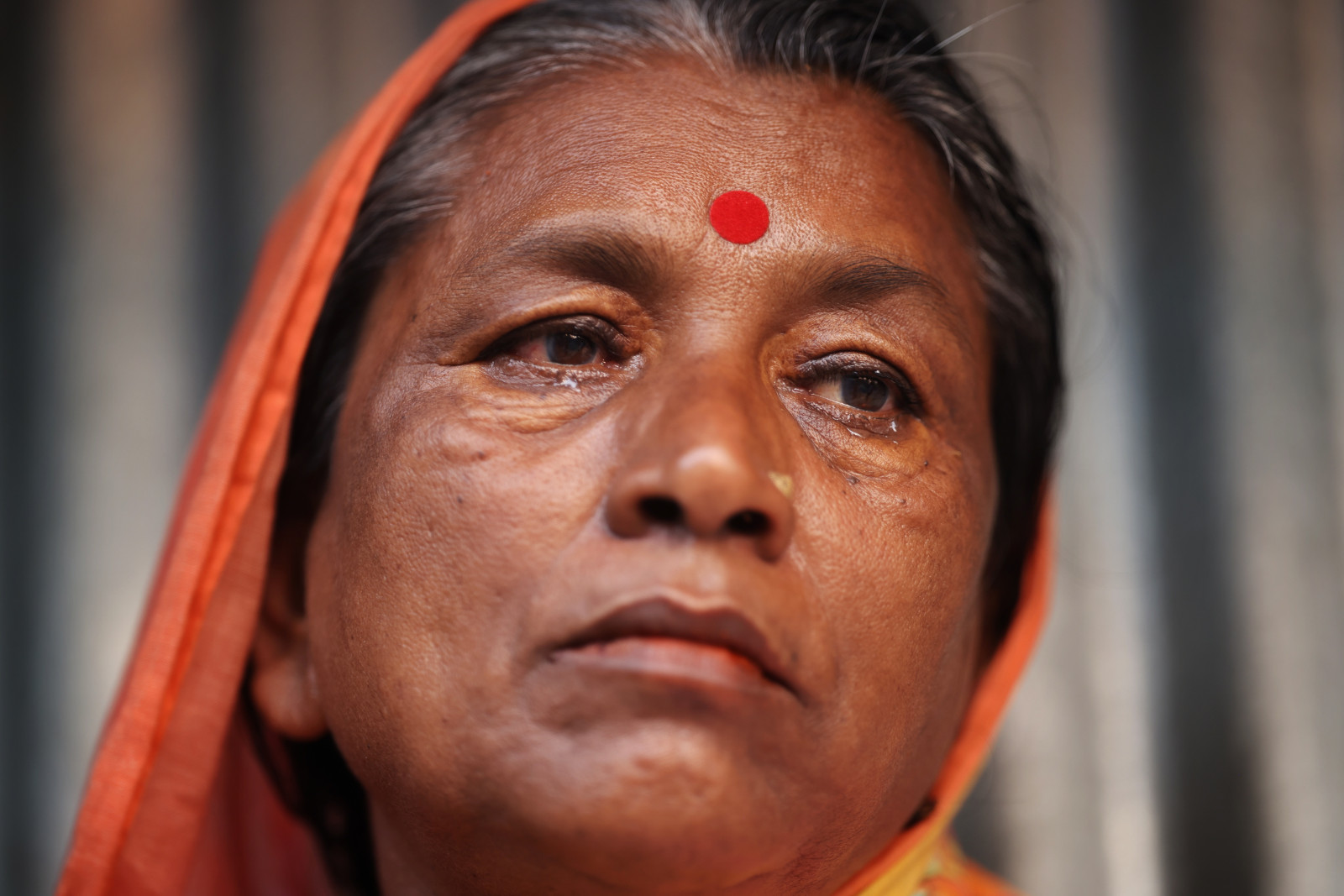
Speaking in a voice choked with tears, Apu said, "My brother was killed because of a personal dispute. If he had committed any crime, they could have handed him over to the police. The matter could have been judged in court. Even if the court had sentenced him to death, at least we would have received his body properly. How can human beings be this cruel to another human being? The people at the factory could have saved my brother if they had wanted to. Because of their negligence, my brother met this fate. I want a proper trial for my brother's killing—from society and from the state."
What future awaits Dipu's family?
Dipu had been the only earning member of his family. His father did occasional small jobs as well. Dipu had promised that once he received a promotion at the garment factory, he would no longer allow his father to go out to work. But that day never came for Dipu's family.
When Dipu was killed, the country was under an interim government. In a statement issued on 19 December, the government said, "We strongly condemn the beating to death of a Hindu man in Mymensingh. There is no place for such violence in the new Bangladesh. None of those involved in this brutal crime will be spared."
Alongside this, financial assistance worth Tk50 lakh was announced for Dipu's family. According to local lawyer Sushanta Babu of Tarakanda, the process is currently underway to create two savings certificates worth Tk10 lakh each. Discussions are also ongoing with the current government and the local administration regarding the remaining assistance.
He said, "The government at the time made a promise. We believe the present government will implement it as well. Even if Dipu had lived, he might not have earned this much money in his entire life through his job. But no matter how much money or assistance his family receives now, Dipu will never return."
Even two and a half months after the incident, Dipu's one-and-a-half-year-old daughter, Gitika, still believes that her father will come back to her. She stands by the window of the house and looks out toward the road, waiting, as if her father will return at any moment and lift her into his arms.
Pointing toward Dipu's photograph hanging on the wall, she shows us and says that this is her father. She believes that Dipu will come back, bringing lots of tasty food for her.
But when Gitika grows up and learns that her father was brutally beaten and burnt to death because of nothing more than a rumour—how will she look at the state and the society around her? Will society have an answer for her?


