US probes Bangladesh's export incentives, BGMEA 'uncomfortable'
US alleges the government of Bangladesh provided cash incentives for exports across 43 sectors in Bangladesh, including domestic textiles and leather products

The Office of the United States Trade Representative (USTR) has opened investigations into the manufacturing sectors of 16 economies, including Bangladesh, over concerns of structural excess capacity and production under Section 301 of the Trade Act of 1974.
According to a Federal Register notice, Bangladesh faces scrutiny over government-provided cash incentives for export sectors, which the USTR says have contributed to a $6.15 billion bilateral goods trade surplus with the United States.
Bangladesh ships more than $8 billion worth of goods to the US each year, with ready-made garments making up the bulk of exports. The government offers cash incentives across 43 sectors, including textiles and leather products.
 Keep updated, follow The Business Standard's Google news channel
The notice also singled out Bangladesh's cement industry, claiming it is operating well below its production capacity. In 2024, national cement consumption fell to 38 million tonnes, less than 40% of production capacity, and is expected to decline further in 2025.
US Trade Representative Jamieson Greer said the investigation will examine whether the policies of these economies are "unreasonable or discriminatory" and whether they burden or restrict US commerce. "The United States will no longer sacrifice its industrial base to other countries exporting their problems with excess capacity," Greer added.
Other economies under review include China, the European Union, India, Vietnam, Indonesia, Malaysia, Thailand, Cambodia, South Korea, Japan, Mexico, Singapore, Switzerland, Norway, and Taiwan.

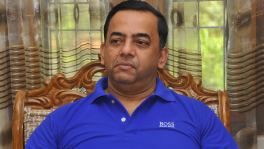
Mahmud Hasan Khan, president of the Bangladesh Garment Manufacturers and Exporters Association (BGMEA), described Bangladesh's inclusion in the investigation as "uncomfortable" and "without logical basis".
"If such allegations are proven, they may impose additional tariffs," he said.
"Export incentives in Bangladesh are minimal," Mahmud said, adding that while questions might arise about agricultural subsidies, the US itself heavily subsidises its farmers, whereas Bangladesh primarily subsidises fertilisers.
Mostafa Abid Khan, former member of the Bangladesh Trade and Tariff Commission, told The Business Standard, "The incentives fall within the WTO policy. I do not think the level of support encourages overcapacity, though production levels may be questioned."
The USTR has requested consultations with Bangladesh and other countries under review. A public comment docket opens on 17 March, with a hearing scheduled for 5 May, allowing stakeholders to submit written comments and testify.