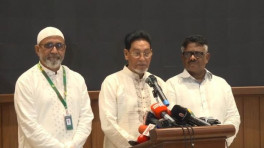
Govt finalising national strategy to eliminate lead pollution
At a meeting of the “Multisectoral Steering Committee” held today (2 December) at the Ministry of Environment, Forest and Climate Change, the draft strategy was reviewed, and relevant ministries were instructed to incorporate their respective action plans.

The government has initiated the finalisation of a national strategy to address the silent public health crisis caused by lead pollution in Bangladesh.
At a meeting of the "Multisectoral Steering Committee" held today (2 December) at the Ministry of Environment, Forest and Climate Change, the draft strategy was reviewed, and relevant ministries were instructed to incorporate their respective action plans.
The formulation of this strategy has been identified as a national priority, aimed at protecting children, workers, and other vulnerable populations from the severe impacts of lead exposure.
 Keep updated, follow The Business Standard's Google news channel
The strategy seeks to establish a coordinated and effective national action plan to reduce lead exposure nationwide, safeguard public health, and ensure long-term environmental stability.
The strategy will outline strict measures to control key sources of lead in the environment, including lead-based paint, unauthorised recycling of used lead-acid batteries (ULAB), lead-contaminated cookware, toys, and industrial products.
It will also address the rapidly growing flow of e-waste generated from the expansion of electric rickshaws and other battery-powered vehicles, identifying it as a major environmental and occupational hazard and calling for improved management and regulation.
To achieve these goals, the strategy aims to harmonise ongoing efforts across multiple ministries and agencies—including health screening, curriculum revisions, industrial policies, labour protection, environmental regulation, and waste management—into a unified national framework.
The meeting was chaired by Farhina Ahmed, secretary of the Ministry of Environment, Forest, and Climate Change.
Farhina Ahmed said, "Once finalised, the strategy will play a pivotal role in protecting children, workers, and other vulnerable groups across the country from the harmful effects of lead exposure."
She emphasised that the strategy will serve as a significant milestone toward ensuring a safe, healthy, and sustainable future for all.
Attendees included Fahmida Khanom, additional secretary (environment); Md Kamruzzaman, director general of the Department of Environment; Siddhartha Sankar Kundu, deputy secretary (Environment Pollution Control); and Sabrina Rahman, the ministry's focal point for lead pollution control.
Representatives from the ministries of health, labour, agriculture, and education were also present, along with development partners including Unicef, the World Health Organization, and Pure Earth.